
How to grow kale
Family Brassicaceae. Hardy to USDA hardiness zone 3a+ (U.S. Department of Agriculture). Full sun to part shade. Ready in 50-65 days.
Sun
Full sun to part shade
Spacing
18 in
Days to harvest
50-65 days
Hardiness
Zone 3a+
What growers actually recorded
Loading zone 7b results…
When to plant kale
- Start indoors: ~6 weeks before last frost.
- Transplant out: ~-3 weeks after last frost.
- Direct sow: ~-3 weeks after last frost.
Companion plants for kale
Plant with: Onion, Beet, Herbs.
Avoid near: Tomato, Strawberry.
Common pests & problems
Cabbage worm. Row cover or Bt spray.
Feeding & fertilizer
N-P-K ratio: High N (10-5-5): heavy feeders
Organic options: Aged manure or compost worked in deep · Blood meal or feather meal side-dress at 3 wks · Fish emulsion every 2 wks
When to feed: Feed heavily every 2-3 weeks. Brassicas want steady nitrogen for tight heads.
Watch for: Pale/yellow leaves = needs N. Loose heads = feed harder next round.
N = nitrogen (leaves), P = phosphorus (roots and flowers), K = potassium (fruit and disease resistance). How to read a fertilizer label →
Grower's tip
Fall crop sweetens after first frost. Plan a July sowing for the best flavor.
When to plant kale in your zone
Free month-by-month sowing and transplanting lists, built from frost dates for your USDA (United States Department of Agriculture) hardiness zone.
Soil & water for kale
Soil & pH
6.5-7.5: near neutral (raises club-root resistance)
Fertile loam with strong drainage. Firm soil beats fluffy for heading brassicas.
Compost 2 in + 1 cup of alfalfa or feather meal per 10 sq ft. Lime if pH is under 6.5. It also blocks club-root.
Watering
1-1.5 in / week, consistent
Ground-level drip. Uneven water during heading = split heads or bolting.
Lift an edge of the row and check soil at 3 inches. If it clings in a damp ball, hold off. If it crumbles, water until the top 6 inches are evenly moist.
Knowing when to harvest
- Harvest outer 2-3 leaves at a time from bottom-up; center keeps producing.
- Frost sweetens kale. Most flavorful after first freeze.
- Full leaves 8-10 in; baby leaves 4 in.
Storing & keeping
Wash, dry, wrap in a towel in a bag. 10-14 days in crisper. Blanch and freeze in portions.
What to expect
Per plant: 1-2 lb per plant over the season
Troubleshooting kale
Holes in leaves
Likely cause: Cabbage worm
What to do: Bt weekly + row cover; handpick worms daily.
Yellow leaves clustered on new growth
Likely cause: Aphid infestation on the underside
What to do: Blast with water; predator release if severe.
Varieties worth growing
Lacinato / Dinosaur
Deep flavor, holds through hard frosts.
Red Russian
Tender, mild, great for salads.
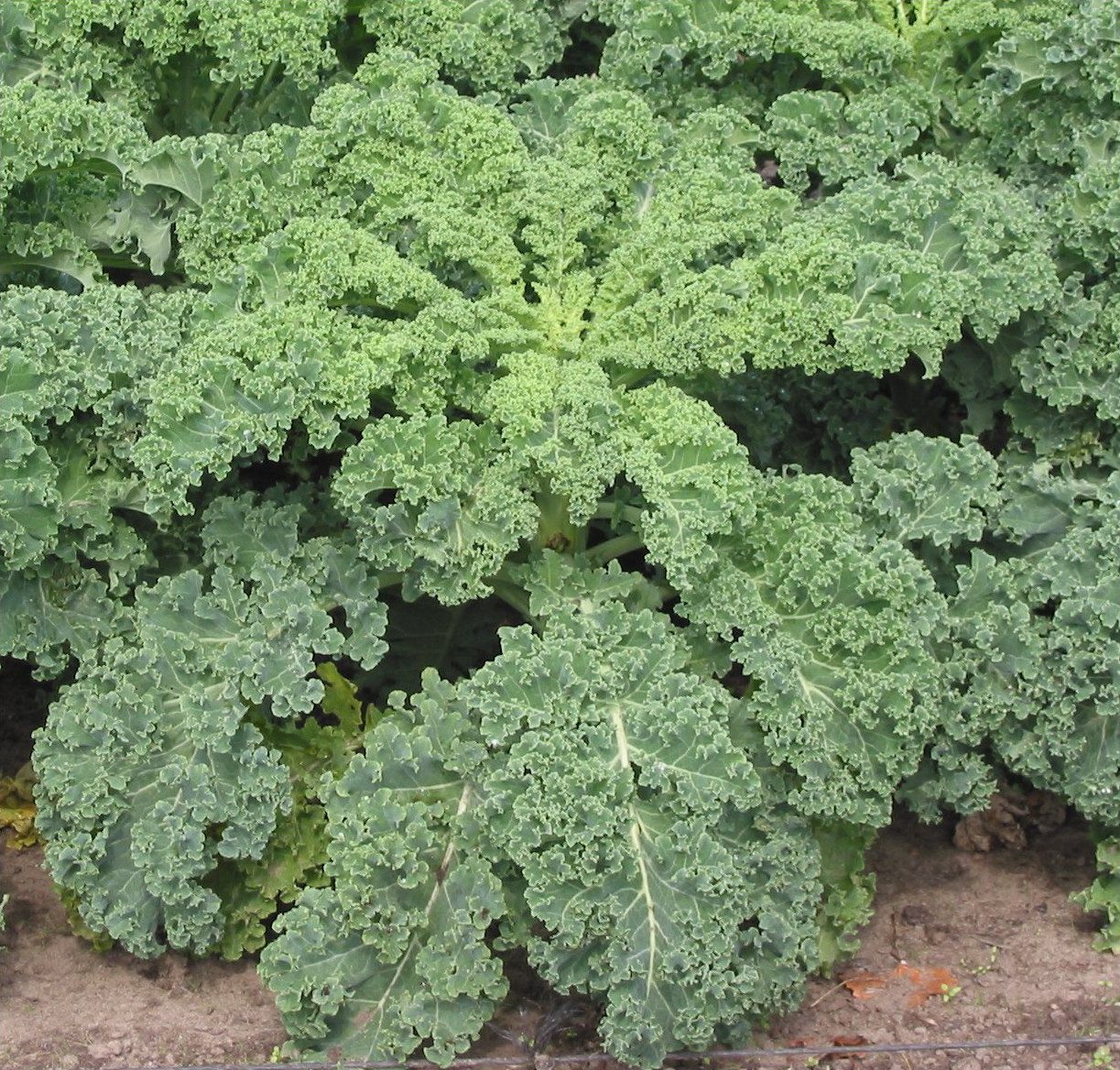
Winterbor (curly)
Cold-hardy to 0°F under mulch.
Growing kale in containers
5-gallon per plant; kale takes container life well.
Nutrition
Sulforaphane, glucosinolates, vitamin K, calcium. Brassicas are the vegetable powerhouse.
Common questions
Can kale survive winter?
In zone 6+, yes. Mulch 6 in deep and harvest through snow. In colder zones, extend with a low tunnel.
Where these numbers come from
- USDA Plant Hardiness Zone Map (2023 revision). Zone assignment and the 30-year normals behind every cold-hardiness figure.
- NOAA NCEI 1991-2020 Climate Normals. Frost dates, growing-season length, and the probability bands on both.
- Cornell, UMN, and UC Davis Cooperative Extension crop guides. Spacing, days to maturity, soil pH targets, and per-plant yield ranges.
- USDA FSIS / FDA Produce Safety guidance. Wash, cure, and cold-storage handling numbers.
Ranges are regional guidance, not a promise for your yard. Your own logged results always override the published range.