How to grow lemon balm
Family Lamiaceae. Hardy to USDA hardiness zone 4a+ (U.S. Department of Agriculture). Full sun to part shade. Ready in 70-75 days (perennial).
Sun
Full sun to part shade
Spacing
18-24 in
Days to harvest
70-75 days (perennial)
Hardiness
Zone 4a+
What growers actually recorded
Loading zone 7b results…
When to plant lemon balm
- Start indoors: ~8 weeks before last frost.
- Transplant out: ~2 weeks after last frost.
Companion plants for lemon balm
Plant with: Tomato, Squash.
Avoid near: Anything it can crowd out: it self-sows aggressively.
Common pests & problems
Rarely bothered; the citronella-like scent deters mosquitoes and some aphids nearby.
Feeding & fertilizer
N-P-K ratio: Low fertilizer: herbs go bland when overfed
Organic options: Compost once at planting · Weak fish emulsion once mid-season if pale · Nothing after that
When to feed: Feed lightly if at all. Mediterranean herbs (rosemary, thyme, oregano) thrive in lean soil.
Watch for: Fast, floppy, weak-flavored growth = too rich.
N = nitrogen (leaves), P = phosphorus (roots and flowers), K = potassium (fruit and disease resistance). How to read a fertilizer label →
Grower's tip
Cut back hard before it flowers and sets seed, or it self-sows into every corner of the garden.
When to plant lemon balm in your zone
Free month-by-month sowing and transplanting lists, built from frost dates for your USDA (United States Department of Agriculture) hardiness zone.
Soil & water for lemon balm
Soil & pH
6.0-7.5
Well-drained, on the lean side. Mediterranean herbs rot in rich wet soil.
Compost once at planting, then leave the bed alone. Add grit or perlite for rosemary and thyme.
Watering
1 in / week
Base watering; lemon balm tolerates average to moist soil, more forgiving of water than most Lamiaceae herbs.
Wilting in full sun heat is common but the plant recovers quickly with water; it is more heat-stressed than drought-stressed.
Knowing when to harvest
- Snip leaves and stems any time after the plant is established; flavor and lemon-scent oils are strongest just before flowering.
- Cut back hard (to a few inches) two to three times a season; this refreshes leaf quality and helps prevent it from setting seed.
Storing & keeping
Best used fresh or dried quickly at low heat, since lemon balm's volatile citral oils fade faster than sturdier herbs like oregano. Store dried leaf in a sealed jar out of light for up to 6 months for best flavor.
What to expect
Per plant: Repeated cuttings of a cup or more of leaf through the season from an established clump
Troubleshooting lemon balm
Lemon balm has spread well beyond where it was planted
Likely cause: Lemon balm self-sows prolifically and its rootstock also spreads; it behaves like a mildly invasive plant in a garden bed
What to do: Deadhead before seed sets, divide and contain the clump, or grow it in a buried container or dedicated bed to limit spread.
Powdery mildew coating leaves in late summer
Likely cause: Humid weather and crowded planting
What to do: Thin plants for airflow, water at the base, remove badly affected leaves.
Varieties worth growing
Common lemon balm (seed-grown standard)
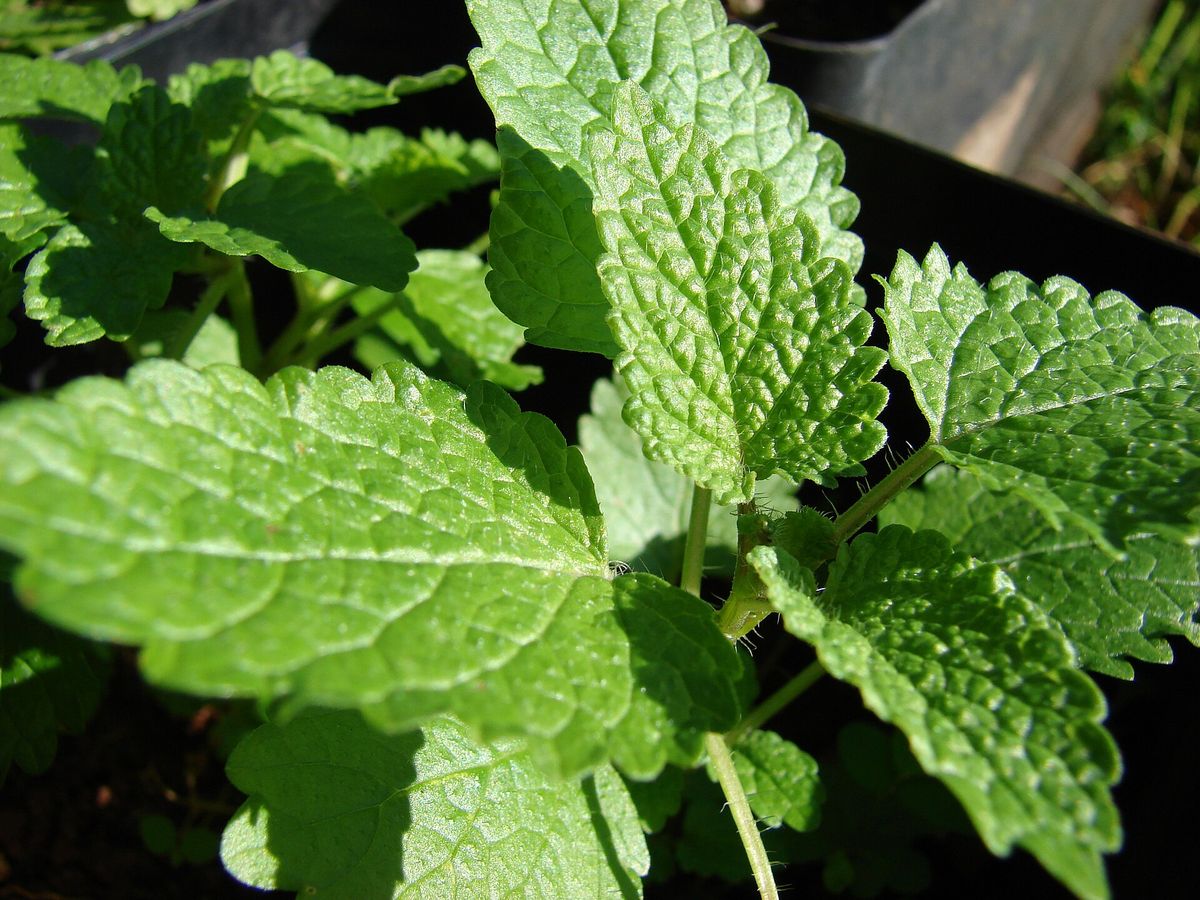
The typical culinary and tea type; strong lemon scent.
Aurea (variegated)
Gold-splashed leaves, ornamental value alongside culinary use.
Growing lemon balm in containers
A container is the recommended way to grow lemon balm for most gardeners, since it self-sows and spreads readily in open ground; a pot keeps it contained.
Nutrition
Volatile oils that hold up after drying: rosmarinic acid in rosemary, thymol in thyme, menthol in mint, eugenol in basil and oregano. That's why a pinch of dried herb often tastes stronger than a handful of fresh. The oils are concentrated once the water leaves.
Common questions
Is lemon balm invasive?
It spreads aggressively by both self-seeding and its root system, similar to mint. It is not typically classified as a noxious weed, but many gardeners treat it as a container plant for exactly this reason.
Why does my dried lemon balm have almost no scent?
Lemon balm's citral oils are more fragile than those in herbs like oregano or rosemary. Dry it quickly at low heat, out of direct sun, and use it within a few months for the strongest flavor.
Where these numbers come from
- USDA Plant Hardiness Zone Map (2023 revision). Zone assignment and the 30-year normals behind every cold-hardiness figure.
- NOAA NCEI 1991-2020 Climate Normals. Frost dates, growing-season length, and the probability bands on both.
- Cornell, UMN, and UC Davis Cooperative Extension crop guides. Spacing, days to maturity, soil pH targets, and per-plant yield ranges.
- USDA FSIS / FDA Produce Safety guidance. Wash, cure, and cold-storage handling numbers.
Ranges are regional guidance, not a promise for your yard. Your own logged results always override the published range.