
How to grow lemongrass
Family Poaceae. Hardy to USDA hardiness zone 9a+ (U.S. Department of Agriculture). Full sun. Ready in 100 days (perennial in zone 9+).
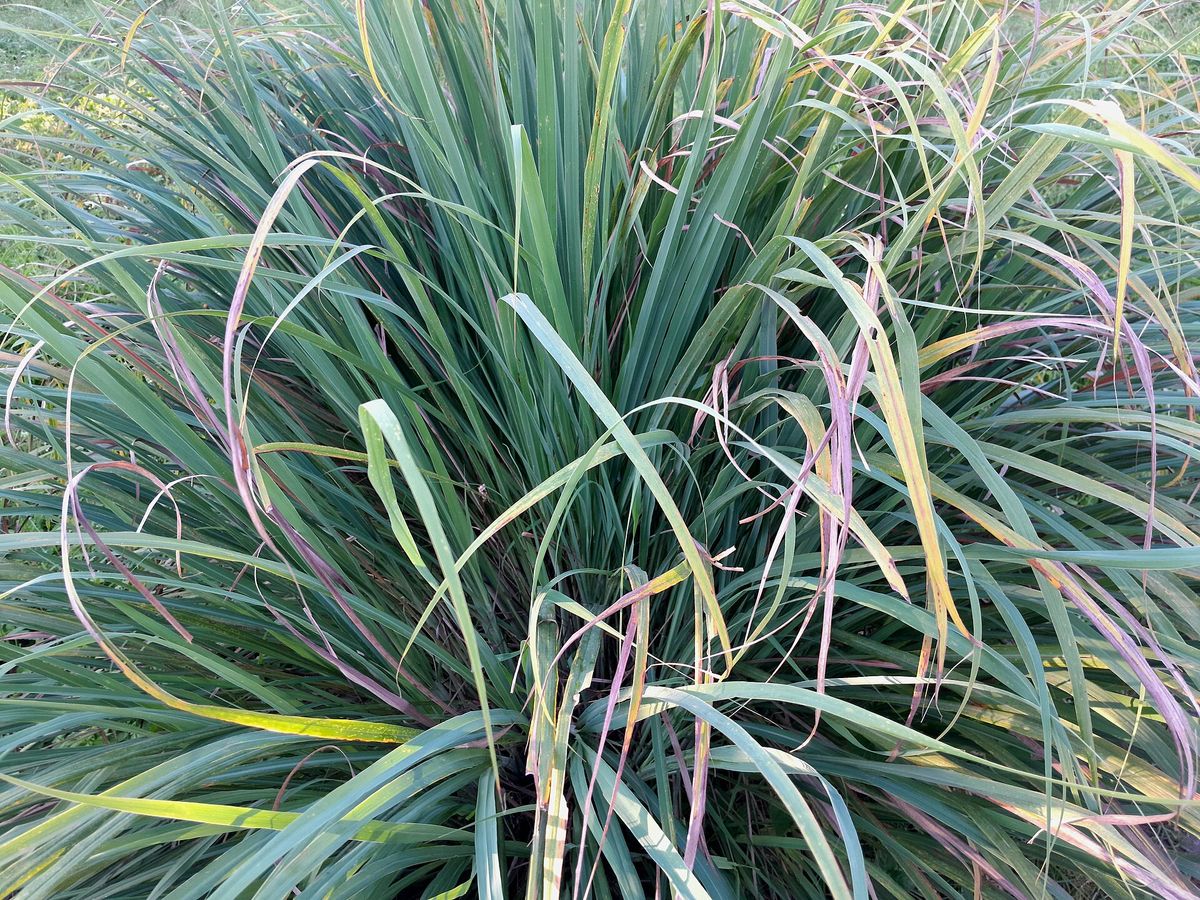
Sun
Full sun
Spacing
24 in
Days to harvest
100 days (perennial in zone 9+)
Hardiness
Zone 9a+
What growers actually recorded
Loading zone 7b results…
When to plant lemongrass
- Start indoors: ~10 weeks before last frost.
- Transplant out: ~3 weeks after last frost.
Companion plants for lemongrass
Plant with: Tomato, Pepper.
Common pests & problems
Rarely bothered; the citronella oil in its leaves deters mosquitoes nearby.
Feeding & fertilizer
N-P-K ratio: High N (10-5-5): corn is a nitrogen hog
Organic options: Compost + aged manure deep in the row · Blood meal side-dress at knee-high · Fish emulsion at tasseling
When to feed: Feed at planting, knee-high, and tasseling: three big meals.
Watch for: Small ears / missing kernels = under-feeding or poor pollination.
N = nitrogen (leaves), P = phosphorus (roots and flowers), K = potassium (fruit and disease resistance). How to read a fertilizer label →
Grower's tip
Pot it up and bring it indoors before frost north of zone 9; a clump easily overwinters on a sunny windowsill.
When to plant lemongrass in your zone
Free month-by-month sowing and transplanting lists, built from frost dates for your USDA (United States Department of Agriculture) hardiness zone.
Soil & water for lemongrass
Soil & pH
6.0-7.5
Rich, well-drained loam. A tender tropical perennial grown as an annual or container plant in most of the US.
Compost generously; lemongrass is a heavy feeder during its active growing season.
Watering
1-1.5 in / week during active growth
Consistent moisture in the growing season; reduce watering substantially in winter if overwintering indoors, when the plant is semi-dormant.
Keep soil evenly moist through summer; in winter storage, water only enough to keep roots from fully drying out.
Knowing when to harvest
- Stalks reach at least 0.5 in thick at the base and 12+ in tall before cutting, usually several months after planting.
- Cut or twist individual stalks at the base rather than harvesting the whole clump at once, allowing continued regrowth.
- In zones colder than about 9-10, the plant must be dug up and moved indoors before the first frost, since it is not cold-hardy.
Storing & keeping
Fresh stalks keep in the refrigerator, wrapped, for 2-3 weeks. Freeze whole or chopped stalks for several months, or dry sliced stalks for tea use, though dried lemongrass loses much of its aromatic oil compared to fresh or frozen.
What to expect
Per plant: A mature clump can be divided into multiple new plants and yields a steady supply of stalks through the growing season rather than a single harvest
Troubleshooting lemongrass
Plant dies over winter left outdoors
Likely cause: Lemongrass is hardy only to roughly USDA zone 9-10 and cannot survive freezing temperatures
What to do: Dig up and pot the clump before first frost, and overwinter indoors in a sunny window or under grow lights, watering sparingly.
Stalks stay thin and blade-like, never thickening
Likely cause: Insufficient heat, sunlight, or feeding during the growing season
What to do: Grow in full sun with regular feeding through the warm months; lemongrass is a tropical grass that wants heat to bulk up.
Varieties worth growing
East Indian lemongrass (Cymbopogon flexuosus)
The type more often grown for essential oil, with a stronger citronella-like scent.
West Indian lemongrass (Cymbopogon citratus)
The culinary type most commonly sold at nurseries and grocery stores for cooking use.
Growing lemongrass in containers
Well suited to a 5-gallon pot or larger; container culture is in fact the standard approach outside the tropics, since it allows the whole plant to be moved indoors for winter.
Nutrition
Complex carbohydrate, fiber, folate; pair with beans for complete protein.
Common questions
Can I regrow lemongrass from a grocery-store stalk?
Yes. Set the root end in a few inches of water until roots develop, then pot it up; this is a common and reliable way to start a plant.
Do I need to bring lemongrass inside every winter?
In any climate that sees frost, yes. It is a tropical perennial with no meaningful cold tolerance, so gardeners outside zone 9-10 either treat it as an annual or overwinter it indoors.
Where these numbers come from
- USDA Plant Hardiness Zone Map (2023 revision). Zone assignment and the 30-year normals behind every cold-hardiness figure.
- NOAA NCEI 1991-2020 Climate Normals. Frost dates, growing-season length, and the probability bands on both.
- Cornell, UMN, and UC Davis Cooperative Extension crop guides. Spacing, days to maturity, soil pH targets, and per-plant yield ranges.
- USDA FSIS / FDA Produce Safety guidance. Wash, cure, and cold-storage handling numbers.
Ranges are regional guidance, not a promise for your yard. Your own logged results always override the published range.