
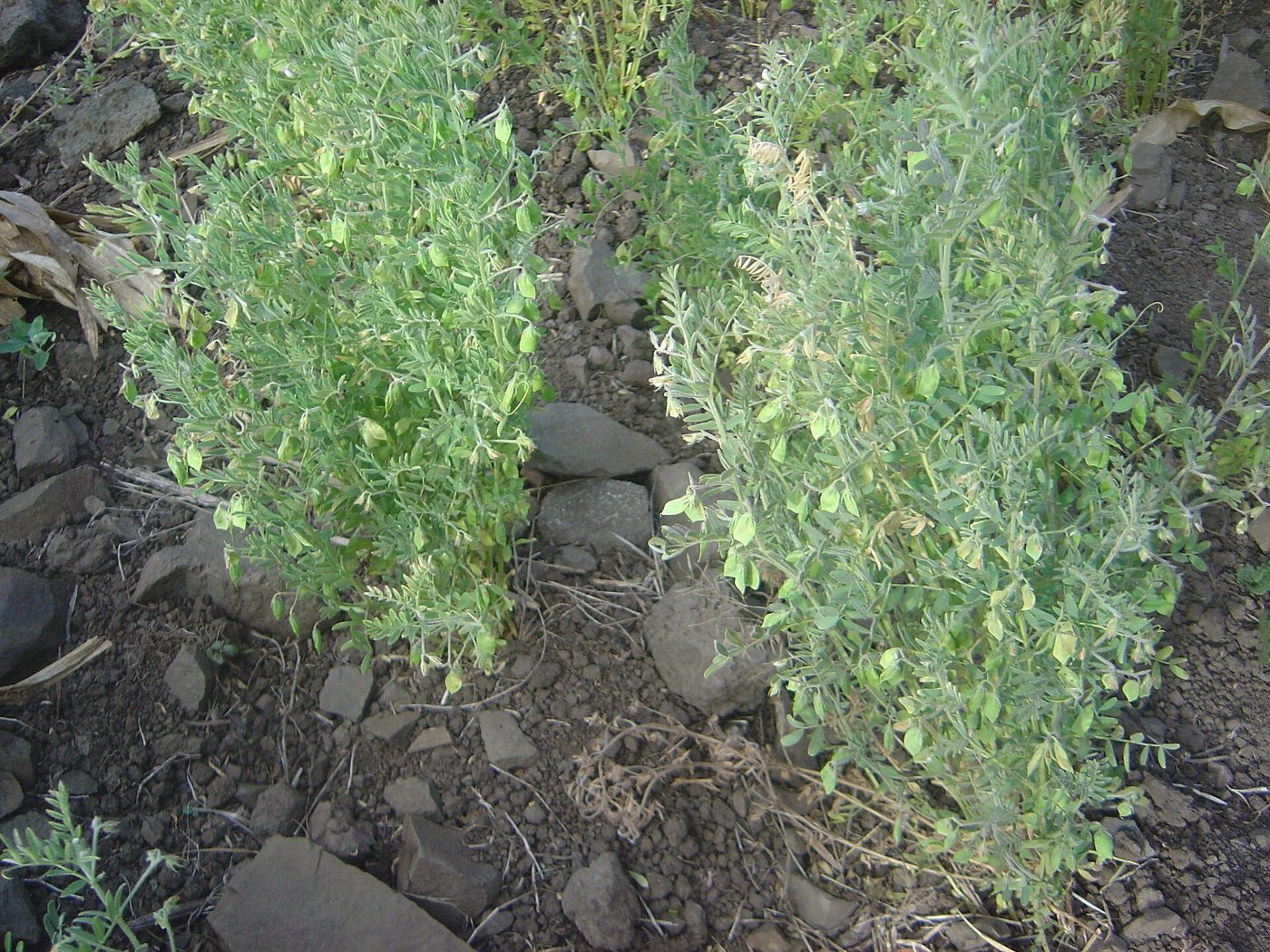
How to grow lentil
Family Fabaceae. Hardy to USDA hardiness zone 4a+ (U.S. Department of Agriculture). Full sun. Ready in 80-110 days.
Sun
Full sun
Spacing
2-3 in
Days to harvest
80-110 days
Hardiness
Zone 4a+
What growers actually recorded
Loading zone 7b results…
When to plant lentil
- Direct sow: ~-3 weeks after last frost.
Companion plants for lentil
Plant with: Carrot, Cucumber.
Avoid near: Onion, Garlic.
Common pests & problems
Aphid, rarely serious.
Feeding & fertilizer
N-P-K ratio: LOW N: beans fix their own nitrogen
Organic options: Compost at planting is enough · Rock phosphate for pods · Wood ash for potassium if soil is deficient
When to feed: Do not add nitrogen fertilizer. You'll get leaves, no pods. One compost dose at planting.
Watch for: Inoculate seeds with rhizobia the first time you grow legumes in a bed.
N = nitrogen (leaves), P = phosphorus (roots and flowers), K = potassium (fruit and disease resistance). How to read a fertilizer label →
Grower's tip
Let pods dry brown on the plant before threshing; a light frost doesn't hurt maturing lentils.
When to plant lentil in your zone
Free month-by-month sowing and transplanting lists, built from frost dates for your USDA (United States Department of Agriculture) hardiness zone.
Soil & water for lentil
Soil & pH
6.0-7.5: tolerates slightly alkaline soil
Light, well-drained soil; lentil is prone to root rot in heavy, wet ground.
Skip nitrogen; inoculate seed with the appropriate rhizobia strain the first time lentils are grown in a bed.
Watering
0.5-1 in / week: drought-tolerant once established
Base watering; lentil is grown as a dryland crop in most regions and resents wet feet more than dry conditions.
Water only during clearly dry stretches; excess water during pod fill delays the dry-down needed for harvest.
Knowing when to harvest
- Lower pods rattle and turn tan/brown while upper pods are still filling: harvest the whole plant when roughly two-thirds of pods have dried.
- Pull or cut whole plants and finish drying under cover for 1-2 weeks before threshing.
- Thresh at seed moisture around 13% or lower (seeds hard and rattle-dry) to prevent mold in storage.
Storing & keeping
Fully dried, threshed lentils store a year or more in a sealed container in a cool, dark, dry spot; check seed moisture before storage since damp seed molds.
What to expect
Per plant: A few tablespoons of dry seed per plant; lentil is a low per-plant, high-density crop
Per sq ft: Best grown in a dense block rather than judged plant by plant
Troubleshooting lentil
Plants lodge (fall over) before harvest
Likely cause: Lentil has a short, weak stem and is prone to lodging, worse with rich soil or heavy rain
What to do: Grow at moderate density for mutual support; avoid high-nitrogen soil.
Pods shatter and drop seed before harvest
Likely cause: Left too long past maturity, especially in hot, dry weather
What to do: Harvest promptly once the majority of pods are dry rather than waiting for every pod to finish.
Uneven ripening across the row
Likely cause: Normal for lentil; pods mature from the bottom of the plant up
What to do: Harvest whole plants when roughly two-thirds of pods have dried rather than waiting for all of them.
Varieties worth growing
Eston (green lentil)
Small green lentil, a common commercial and garden type.
French Green (Le Puy type)
Holds its shape when cooked, popular for salads.
Red Chief (red lentil)
Fast-cooking split-type red lentil for home dal and soups.
Growing lentil in containers
Lentil grows in containers but the yield per square foot of space is low; it is best suited to a dedicated garden bed grown in a dense block.
Nutrition
Complete plant protein (with grains), folate, iron, molybdenum.
Common questions
How do I know when to pull the whole plant?
Watch the lower pods: once roughly two-thirds of pods on the plant have turned tan and dry, pull the whole plant rather than trying to pick individual pods.
How dry do the seeds need to be before storing?
Seeds should be hard and rattle-dry in the pod, roughly 13% moisture or lower, before threshing and sealing in storage; damp seed molds quickly.
Where these numbers come from
- USDA Plant Hardiness Zone Map (2023 revision). Zone assignment and the 30-year normals behind every cold-hardiness figure.
- NOAA NCEI 1991-2020 Climate Normals. Frost dates, growing-season length, and the probability bands on both.
- Cornell, UMN, and UC Davis Cooperative Extension crop guides. Spacing, days to maturity, soil pH targets, and per-plant yield ranges.
- USDA FSIS / FDA Produce Safety guidance. Wash, cure, and cold-storage handling numbers.
Ranges are regional guidance, not a promise for your yard. Your own logged results always override the published range.