
How to grow lingonberry
Family Ericaceae. Hardy to USDA hardiness zone 3a+ (U.S. Department of Agriculture). Part shade to full sun. Ready in 2-3 years to bearing (perennial groundcover).
Sun
Part shade to full sun
Spacing
12-18 in
Days to harvest
2-3 years to bearing (perennial groundcover)
Hardiness
Zone 3a+
What growers actually recorded
Loading zone 7b results…
When to plant lingonberry
- Transplant out: ~2 weeks after last frost.
Companion plants for lingonberry
Plant with: Blueberry, Cranberry.
Common pests & problems
Rarely bothered.
Feeding & fertilizer
N-P-K ratio: Acid-loving: 4-3-4 for blueberries, pH 4.5-5.5
Organic options: Pine bark or peat worked into the planting hole · Cottonseed meal or soy meal in spring · Elemental sulfur to hold pH down
When to feed: Feed twice: bud break and again 6 weeks later. Never after midsummer.
Watch for: Yellow leaves with green veins = pH is too high, not a nitrogen shortage.
N = nitrogen (leaves), P = phosphorus (roots and flowers), K = potassium (fruit and disease resistance). How to read a fertilizer label →
Grower's tip
Mulch with pine needles or peat to hold the acidic soil pH it needs; it can produce two crops a year in longer seasons.
When to plant lingonberry in your zone
Free month-by-month sowing and transplanting lists, built from frost dates for your USDA (United States Department of Agriculture) hardiness zone.
Soil & water for lingonberry
Soil & pH
4.0-5.5: strongly acidic
Peaty, sandy, well-drained but moisture-retentive, similar to blueberry but even more acid-loving.
Amend with peat moss and pine bark fines; mulch with pine needles. Standard garden pH will stunt this plant.
Watering
1-2 in / week, always
Drip: chlorine-heavy tap water is fine short-term, but rainwater is better for pH.
Yellowing between leaf veins = iron chlorosis from creeping pH. Acidify.
Knowing when to harvest
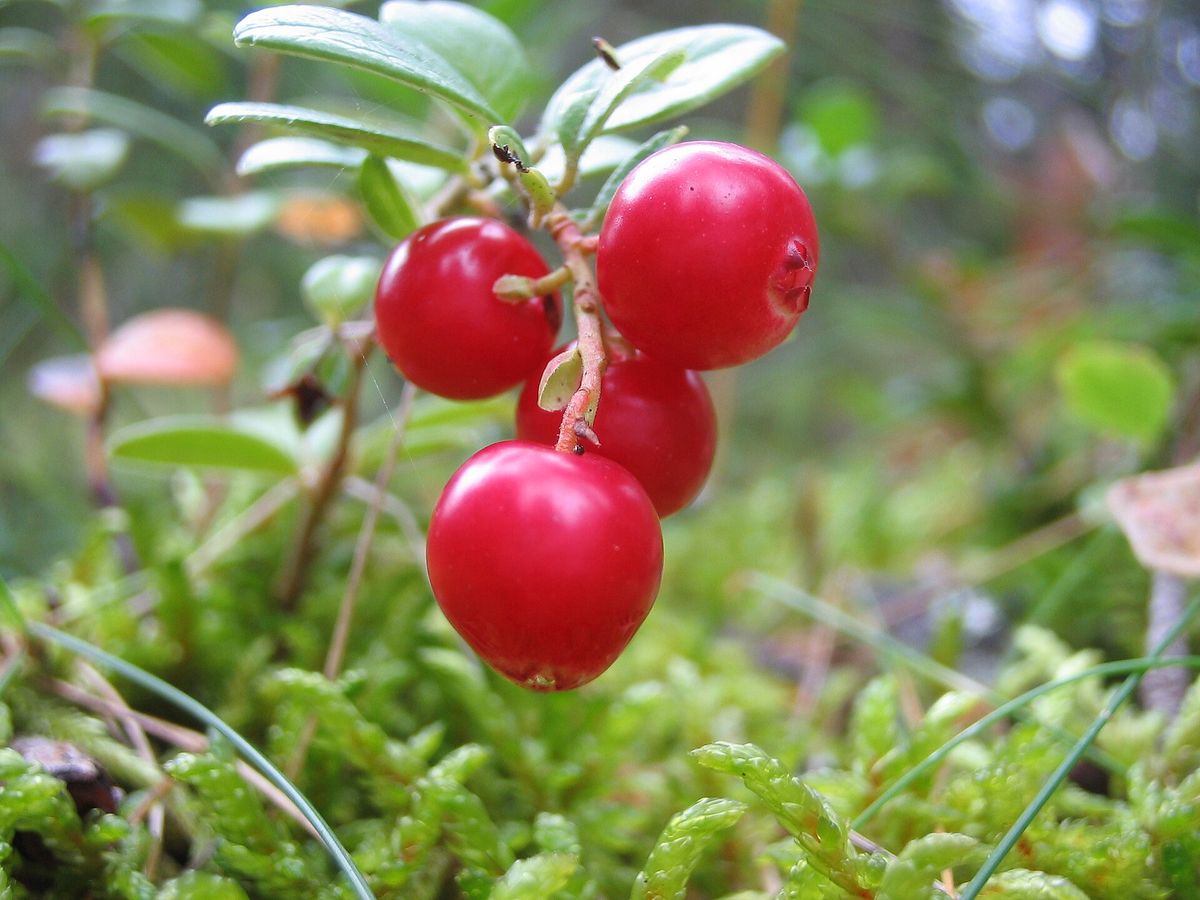
- Berries turn bright to deep red and are firm, not mushy.
- Many varieties bear two crops a year, a smaller summer flush and a larger fall crop.
- Fruit is naturally tart; it does not sweeten much further once picked.
Storing & keeping
Fridge 32-35°F for several weeks: lingonberries have natural benzoic acid that helps them keep longer than most berries. Freezes well for a year or more.
What to expect
Per plant: 1-2 lb per mature groundcover plant, bearing by year 2-3
Troubleshooting lingonberry
Weak growth, yellowing leaves
Likely cause: Soil pH too high for this acid-loving groundcover
What to do: Test and correct pH into the 4.0-5.5 range with elemental sulfur or an acidic peat amendment.
Sparse fruit despite healthy foliage
Likely cause: Lingonberry benefits from cross-pollination between two varieties even though it's partially self-fertile
What to do: Plant two different cultivars for a fuller crop.
Varieties worth growing
Red Pearl
Large-fruited, reliable double-cropping selection.
Sanna
Compact and productive, good pollinizer partner for Red Pearl.
Growing lingonberry in containers
Viable in a shallow pot with peat-based acidic soil; its low, spreading habit suits container and edging use well.
Nutrition
Anthocyanins, vitamin C, manganese: top-tier antioxidant score per cup.
Common questions
Is lingonberry the same as cranberry?
No, a related but distinct species (Vaccinium vitis-idaea) with a lower, denser evergreen habit and typically two harvests per year.
Where these numbers come from
- USDA Plant Hardiness Zone Map (2023 revision). Zone assignment and the 30-year normals behind every cold-hardiness figure.
- NOAA NCEI 1991-2020 Climate Normals. Frost dates, growing-season length, and the probability bands on both.
- Cornell, UMN, and UC Davis Cooperative Extension crop guides. Spacing, days to maturity, soil pH targets, and per-plant yield ranges.
- USDA FSIS / FDA Produce Safety guidance. Wash, cure, and cold-storage handling numbers.
Ranges are regional guidance, not a promise for your yard. Your own logged results always override the published range.