How to grow lovage
Family Apiaceae. Hardy to USDA hardiness zone 3a+ (U.S. Department of Agriculture). Full sun to part shade. Ready in 75-85 days (perennial).
Sun
Full sun to part shade
Spacing
24-36 in
Days to harvest
75-85 days (perennial)
Hardiness
Zone 3a+
What growers actually recorded
Loading zone 7b results…
When to plant lovage
- Start indoors: ~8 weeks before last frost.
- Transplant out: ~2 weeks after last frost.
Companion plants for lovage
Plant with: Bean, Potato.
Common pests & problems
Leaf miner, aphid; rarely serious.
Feeding & fertilizer
N-P-K ratio: Low N, higher P (3-6-6)
Organic options: Compost only in bed prep · Bone meal at sowing · Skip nitrogen top-dress
When to feed: Feed the bed, not the plant. Carrots/parsnips fork or hair-root with fresh manure.
Watch for: Forked roots = too much N or fresh manure; use only well-aged compost.
N = nitrogen (leaves), P = phosphorus (roots and flowers), K = potassium (fruit and disease resistance). How to read a fertilizer label →
Grower's tip
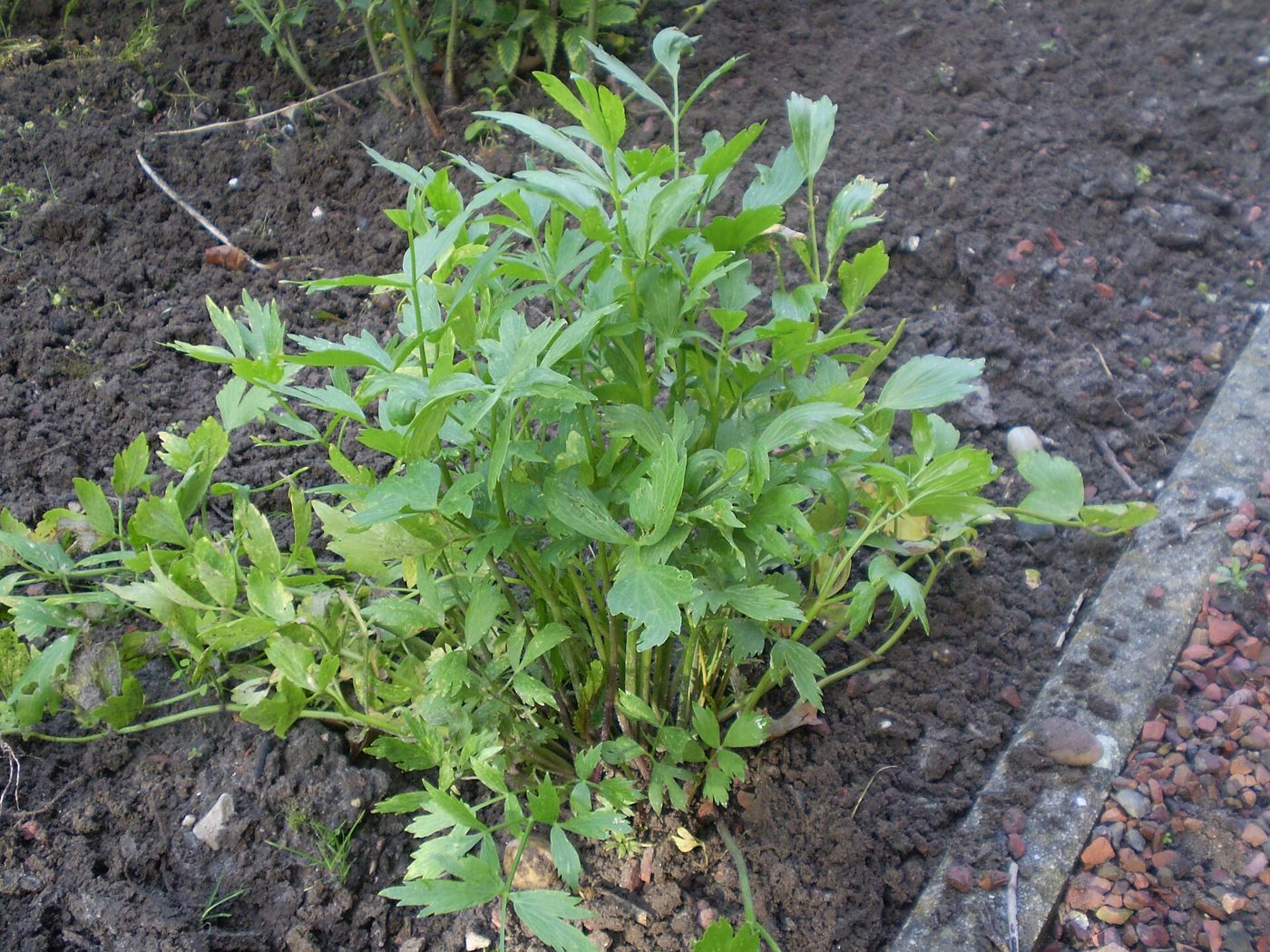
Grows 4-6 ft tall once established; give it the back of the bed and divide the crown every few years to keep it productive.
When to plant lovage in your zone
Free month-by-month sowing and transplanting lists, built from frost dates for your USDA (United States Department of Agriculture) hardiness zone.
Soil & water for lovage
Soil & pH
6.0-7.0
Deep, fertile, moisture-retentive loam. A large, long-lived perennial that rewards a permanent, well-prepared spot.
Compost the planting hole generously once; established lovage needs little further amendment beyond an annual spring top-dress.
Watering
1 in / week; more in extended heat
Deep, infrequent watering once established; consistent moisture while young.
Wilting, floppy stalks by mid-afternoon in hot weather signal it is time to water; established plants are otherwise fairly drought-tolerant.
Knowing when to harvest
- Cut young leaves and hollow stalks anytime after the second year once the plant is well established.
- Harvest stalks like celery when 12-18 in tall for the mildest flavor; older stalks turn strong and slightly bitter.
- Cut back the whole plant to the crown in late fall after frost kills the top growth; it resprouts vigorously each spring.
Storing & keeping
Best used fresh; leaves lose potency quickly when dried but hold reasonably in the fridge wrapped loosely for about a week. Freeze chopped leaves in ice cube trays with a little water or oil for cooking use.
What to expect
Per plant: A single mature plant can produce several pounds of stalks and leaves per season once established
One plant is usually enough for most households; lovage is intensely flavored and used sparingly.
Troubleshooting lovage
Leaf miners tunneling in leaves
Likely cause: Same leaf-miner pressure that affects celery and other Apiaceae
What to do: Remove and destroy affected leaves; row cover in early season deters the adult flies.
Plant flops over in mid-summer
Likely cause: Lovage grows 4-6 ft tall and can become top-heavy, especially after heavy rain
What to do: Stake or grow against a fence for support; cutting back hard mid-season also controls size.
Varieties worth growing
Common lovage (species type)
Lovage is typically grown as the straight species; named cultivars are rare in the trade.
Growing lovage in containers
Poor long-term container crop: it is a perennial that reaches 4-6 ft and develops a substantial root system; if grown in a container, use at least a 15-gallon pot and expect to divide or replant every few years.
Nutrition
Beta-carotene, vitamin K, luteolin (parsley). A nutrient bargain per square foot.
Common questions
How is lovage different from celery in cooking?
Lovage tastes like a much more concentrated, slightly peppery celery. A single leaf can flavor a whole pot of soup, unlike stalk celery used by the cup.
Does lovage come back every year?
Yes, it is a hardy perennial (to roughly USDA zone 3) that dies back to the crown in winter and regrows each spring for many years from the same planting.
Where these numbers come from
- USDA Plant Hardiness Zone Map (2023 revision). Zone assignment and the 30-year normals behind every cold-hardiness figure.
- NOAA NCEI 1991-2020 Climate Normals. Frost dates, growing-season length, and the probability bands on both.
- Cornell, UMN, and UC Davis Cooperative Extension crop guides. Spacing, days to maturity, soil pH targets, and per-plant yield ranges.
- USDA FSIS / FDA Produce Safety guidance. Wash, cure, and cold-storage handling numbers.
Ranges are regional guidance, not a promise for your yard. Your own logged results always override the published range.