
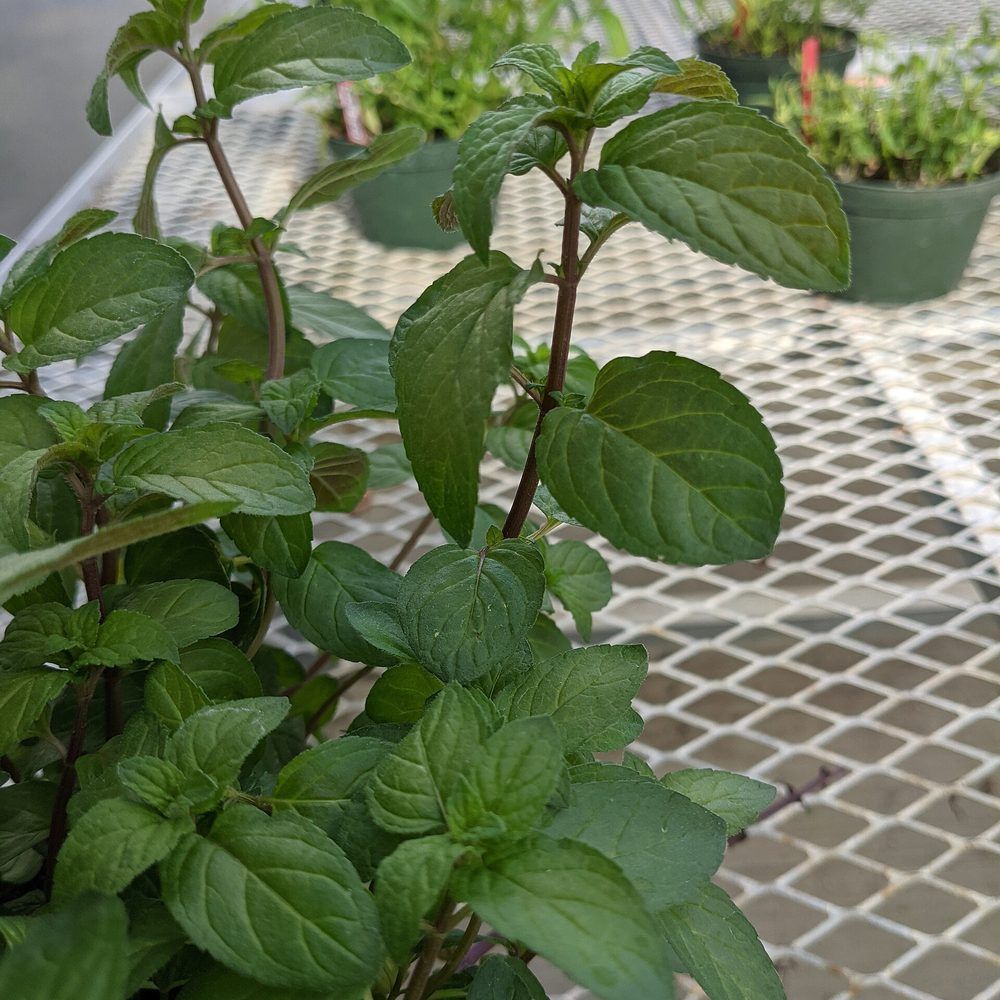
How to grow mint
Family Lamiaceae. Hardy to USDA hardiness zone 3a+ (U.S. Department of Agriculture). Part shade to full sun. Ready in 60-90 days (perennial).
Sun
Part shade to full sun
Spacing
18-24 in (contain!)
Days to harvest
60-90 days (perennial)
Hardiness
Zone 3a+
What growers actually recorded
Loading zone 7b results…
When to plant mint
- Transplant out: ~-2 weeks after last frost.
Companion plants for mint
Plant with: Cabbage, Tomato.
Avoid near: Everything perennial nearby: it takes over.
Common pests & problems
None serious; deters cabbage moths and ants.
Feeding & fertilizer
N-P-K ratio: Low fertilizer: herbs go bland when overfed
Organic options: Compost once at planting · Weak fish emulsion once mid-season if pale · Nothing after that
When to feed: Feed lightly if at all. Mediterranean herbs (rosemary, thyme, oregano) thrive in lean soil.
Watch for: Fast, floppy, weak-flavored growth = too rich.
N = nitrogen (leaves), P = phosphorus (roots and flowers), K = potassium (fruit and disease resistance). How to read a fertilizer label →
Grower's tip
Grow only in a pot or sunk container. In-ground mint will swallow a bed in one season.
When to plant mint in your zone
Free month-by-month sowing and transplanting lists, built from frost dates for your USDA (United States Department of Agriculture) hardiness zone.
Soil & water for mint
Soil & pH
6.0-7.5
Well-drained, on the lean side. Mediterranean herbs rot in rich wet soil.
Compost once at planting, then leave the bed alone. Add grit or perlite for rosemary and thyme.
Watering
0.5-1 in / week: under-water rather than over-water
Deep, infrequent watering builds essential oils and flavor.
Pinch a leaf and smell it. If the aroma is weak and the growth is soft and floppy, the plant is over-watered or over-fed. If the leaf is stiff and fragrant, you're doing it right.
Knowing when to harvest
- Cut stems at 6-8 in above a leaf node.
- Best flavor just before flowers open.
- Cut hard: the plant explodes back.
Storing & keeping
Stems in water on counter, or dried in a paper bag for tea (holds flavor).
What to expect
Per plant: 0.5-1 lb per cut, 4-6 cuts per season
Troubleshooting mint
Rust (orange leaf pustules)
Likely cause: Wet foliage in humidity
What to do: Cut plants back to ground; new growth is often clean.
Runners escape the planting and appear across the bed
Likely cause: Mint spreads by stolons and will colonise open ground
What to do: Grow it in a sunken pot with a solid bottom, or a bed edged 12 in deep. Cut back and pull stray runners while they are still shallow.
Orange-brown pustules on leaf undersides, leaves drop
Likely cause: Mint rust, a systemic fungus that overwinters in the crown
What to do: Cut the planting to the ground and remove the debris. Severely infected crowns are best replaced with clean nursery stock rather than treated.
Varieties worth growing
Peppermint
Menthol-forward, for tea and desserts.
Spearmint
Milder; for savory dishes and cocktails.
Chocolate mint
Novelty; mild cocoa aroma.
Growing mint in containers
MUST be contained. 12 in deep pot only; in-ground mint takes over.
Nutrition
Volatile oils that hold up after drying: rosmarinic acid in rosemary, thymol in thyme, menthol in mint, eugenol in basil and oregano. That's why a pinch of dried herb often tastes stronger than a handful of fresh. The oils are concentrated once the water leaves.
Common questions
Can I ever plant mint in the ground?
Only if you sink a 12-in-deep bottomless bucket. Otherwise, runners spread 3 ft/year and outcompete everything.
Where these numbers come from
- USDA Plant Hardiness Zone Map (2023 revision). Zone assignment and the 30-year normals behind every cold-hardiness figure.
- NOAA NCEI 1991-2020 Climate Normals. Frost dates, growing-season length, and the probability bands on both.
- Cornell, UMN, and UC Davis Cooperative Extension crop guides. Spacing, days to maturity, soil pH targets, and per-plant yield ranges.
- USDA FSIS / FDA Produce Safety guidance. Wash, cure, and cold-storage handling numbers.
Ranges are regional guidance, not a promise for your yard. Your own logged results always override the published range.