
How to grow mulberry
Family Moraceae. Hardy to USDA hardiness zone 4a+ (U.S. Department of Agriculture). Full sun. Ready in 2-3 years to bearing (perennial tree).
Sun
Full sun
Spacing
15-30 ft
Days to harvest
2-3 years to bearing (perennial tree)
Hardiness
Zone 4a+
What growers actually recorded
Loading zone 7b results…
When to plant mulberry
- Transplant out: ~2 weeks after last frost.
Companion plants for mulberry
Plant with: Currant, Raspberry.
Common pests & problems
Rarely bothered; birds are the main competition for fruit.
Feeding & fertilizer
N-P-K ratio: Low N (3-5-5): figs fruit better lean
Organic options: Compost mulch each spring · Wood ash or kelp for potassium · Skip nitrogen on established trees
When to feed: One compost mulch in spring. Feed potted figs monthly, in-ground figs almost never.
Watch for: Big leaves, no figs = too much nitrogen or too much shade.
N = nitrogen (leaves), P = phosphorus (roots and flowers), K = potassium (fruit and disease resistance). How to read a fertilizer label →
Grower's tip
Plant it as a decoy near berry patches: birds strongly prefer mulberries and will often leave raspberries alone if both are ripening.
When to plant mulberry in your zone
Free month-by-month sowing and transplanting lists, built from frost dates for your USDA (United States Department of Agriculture) hardiness zone.
Soil & water for mulberry
Soil & pH
6.0-7.5
Well-drained; tolerates poor soil once established.
Compost + mulch at planting. Almost no feeding needed after year 2: figs fruit better in lean soil.
Watering
1 in / week established; deep, infrequent
Drip. Container figs may need daily water in July.
Fruit drop = drought stress during ripening. Deep water once and mulch.
Knowing when to harvest
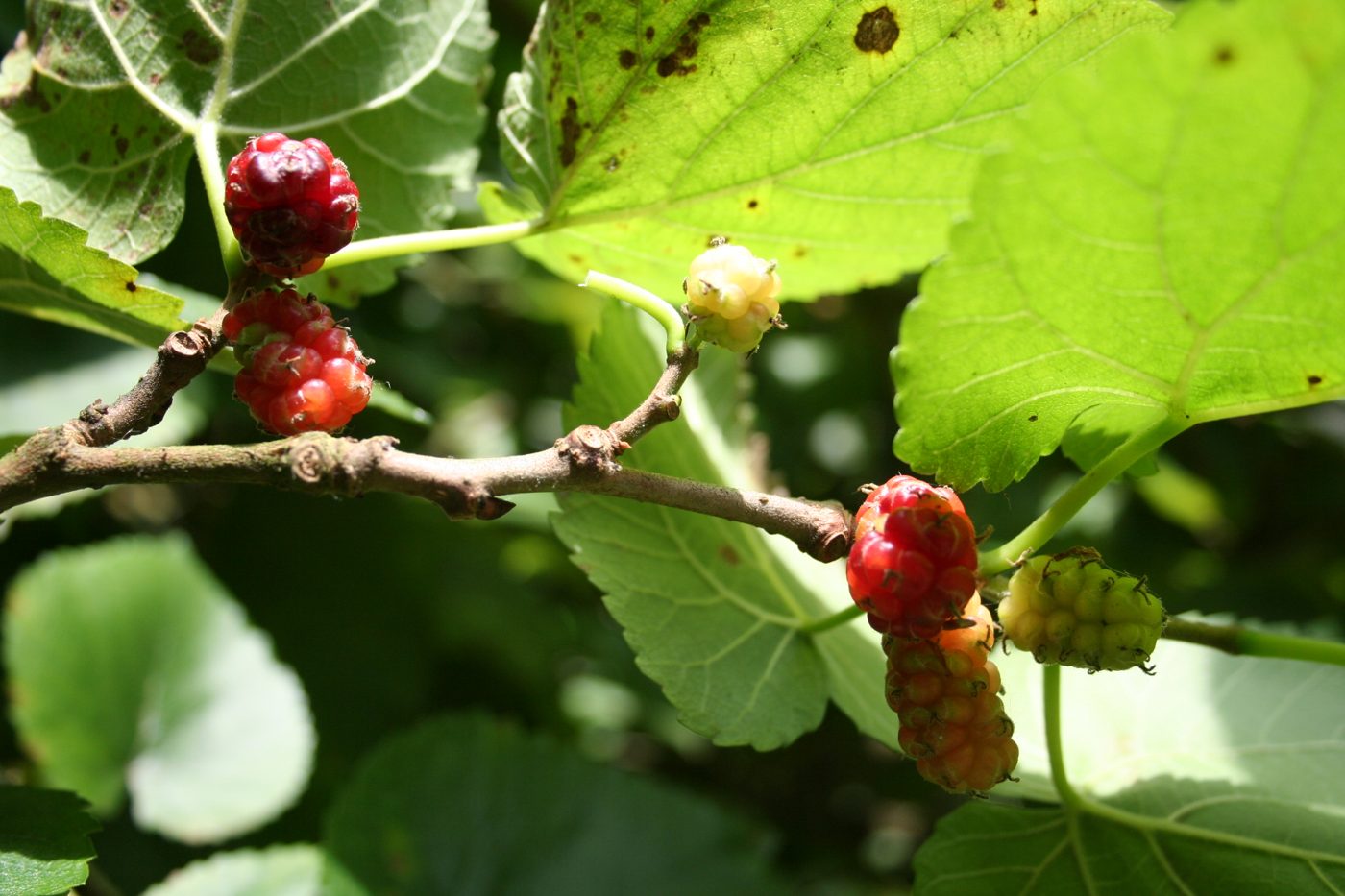
- Fruit detaches with the lightest touch when fully ripe; unripe berries cling tightly.
- Color varies by variety (black, red, or white) but full ripeness always means very easy release from the stem.
- Spread a tarp or sheet under the tree and gently shake branches for the fastest harvest.
Storing & keeping
Highly perishable; fridge 32-35°F for only 2-3 days. Freezes very well for a year and dries into a raisin-like snack.
What to expect
Per plant: 50-100 lb from a mature tree, bearing by year 2-3
Troubleshooting mulberry
Massive fruit drop staining a patio or driveway
Likely cause: Normal heavy fruiting habit of mulberry, especially in unmanaged trees near hardscape
What to do: Site new trees away from walkways and parking, or choose a fruitless male cultivar for purely ornamental use.
Birds strip the crop before it can be harvested
Likely cause: Mulberry is a favorite bird fruit
What to do: Net smaller trees, or accept some sharing since mulberry is highly productive.
Varieties worth growing
Illinois Everbearing
Cold-hardy, heavy-yielding, extended harvest season.
Pakistan
Very large, sweet fruit in warmer climates.
Growing mulberry in containers
Viable while young in a 15-20 gallon pot with regular pruning to control size, though mulberry naturally wants to become a large tree.
Nutrition
Calcium, potassium, fiber; fresh fruit is exceptionally high in polyphenols.
Common questions
Is mulberry self-fertile?
Yes, most fruiting cultivars are self-fertile or produce fruit without a second tree.
Why is there fruit litter everywhere under my mulberry?
It's simply a very heavy-bearing tree; siting away from patios and driveways or choosing a fruitless male ornamental cultivar avoids the mess.
Where these numbers come from
- USDA Plant Hardiness Zone Map (2023 revision). Zone assignment and the 30-year normals behind every cold-hardiness figure.
- NOAA NCEI 1991-2020 Climate Normals. Frost dates, growing-season length, and the probability bands on both.
- Cornell, UMN, and UC Davis Cooperative Extension crop guides. Spacing, days to maturity, soil pH targets, and per-plant yield ranges.
- USDA FSIS / FDA Produce Safety guidance. Wash, cure, and cold-storage handling numbers.
Ranges are regional guidance, not a promise for your yard. Your own logged results always override the published range.