
How to grow okra
Family Malvaceae. Hardy to USDA hardiness zone 4a+ (U.S. Department of Agriculture). Full sun, 8+ hrs. Ready in 50-65 days.
Sun
Full sun, 8+ hrs
Spacing
12-18 in, rows 36 in
Days to harvest
50-65 days
Hardiness
Zone 4a+
What growers actually recorded
Loading zone 7b results…
When to plant okra
- Start indoors: ~4 weeks before last frost.
- Transplant out: ~3 weeks after last frost.
- Direct sow: ~3 weeks after last frost.
Companion plants for okra
Plant with: Pepper, Basil, Bush bean, Sweet potato.
Avoid near: Squash vine crops (shared borer pressure).
Common pests & problems
Aphid, stink bug, corn earworm in pods, root-knot nematode.
Feeding & fertilizer
N-P-K ratio: Balanced 5-5-5, steady through the heat
Organic options: Compost + aged manure in the row · Fish emulsion every 3 wks while podding · Kelp meal for potassium
When to feed: Feed at planting, then light and regular once pods start: okra produces for months.
Watch for: Pods slowing down usually means missed picking, not missed fertilizer.
N = nitrogen (leaves), P = phosphorus (roots and flowers), K = potassium (fruit and disease resistance). How to read a fertilizer label →
Grower's tip
Okra wants hot soil, 70F+, or seed rots. Pick pods at 3-4 in every other day: one pod left to toughen tells the plant to stop producing.
When to plant okra in your zone
Free month-by-month sowing and transplanting lists, built from frost dates for your USDA (United States Department of Agriculture) hardiness zone.
Soil & water for okra
Soil & pH
6.0-7.0: near neutral
Loose, well-drained loam with 3-5% organic matter.
Compost 2 in worked into the top 6 in of soil each spring.
Watering
1 in / week; okra is more drought-tolerant than most fruiting crops
Deep, infrequent soak; okra thrives in heat and doesn't need the constant moisture cucurbits or tomatoes require.
Established plants handle short dry spells well; wilting that recovers by evening is not a concern in this heat-loving crop.
Knowing when to harvest
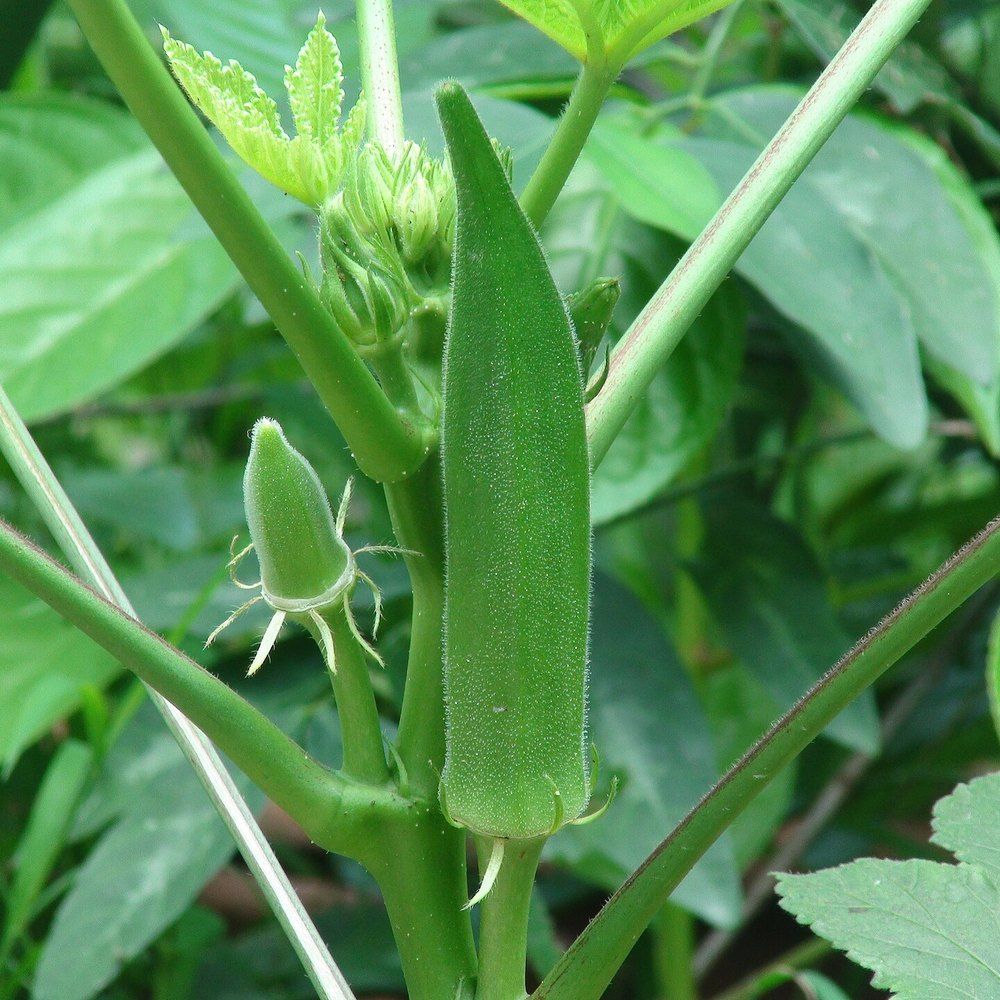
- Pods reach 2-4 in and snap easily from the stem with a gentle bend; larger pods turn woody within days.
- Check plants daily during peak heat; okra can go from tender to fibrous in as little as 24-48 hours.
- A pod that resists snapping and requires cutting is already past its prime for eating.
Storing & keeping
Fridge crisper, 45-50°F, 2-3 days only; okra is notably short-keeping and best used fresh. Blanch and freeze whole or sliced for long-term storage, or pickle in vinegar brine.
What to expect
Per plant: 20-30+ pods per plant over a long season with daily picking
Troubleshooting okra
Pods are tough and fibrous even though small
Likely cause: A day or two too late; okra toughens fast once past 3-4 in
What to do: Harvest daily during peak production and don't let any pods linger on the plant.
Skin irritation or itching after harvesting
Likely cause: Fine spines on okra leaves and pods cause contact irritation for many growers
What to do: Wear long sleeves and gloves when picking, especially with fuzzy-podded varieties.
Plants stop producing mid-season
Likely cause: Old pods left on the plant signal it to stop setting new fruit
What to do: Remove any pods that were missed and grew large, even if not intended for eating, to keep the plant flowering.
Varieties worth growing
Clemson Spineless
The industry-standard variety with reduced spine irritation and reliable yields.
Jing Orange
Ornamental red-orange pods that stay tender slightly longer than green types.
Burgundy
Deep red pods and stems, attractive in the garden and in mixed harvests.
Growing okra in containers
10-gallon minimum, one plant per pot; okra tolerates heat and some root confinement well but needs full sun and warmth to fruit reliably.
Nutrition
A meaningful source of vitamins, minerals, and fiber when eaten fresh.
Common questions
Why do my hands itch after picking okra?
Fine spines on the pods and leaves cause contact irritation for many people; gloves and long sleeves prevent it.
How often do I really need to pick?
Daily in hot weather; pods can turn from tender to woody within 24-48 hours once they pass 3-4 in.
Where these numbers come from
- USDA Plant Hardiness Zone Map (2023 revision). Zone assignment and the 30-year normals behind every cold-hardiness figure.
- NOAA NCEI 1991-2020 Climate Normals. Frost dates, growing-season length, and the probability bands on both.
- Cornell, UMN, and UC Davis Cooperative Extension crop guides. Spacing, days to maturity, soil pH targets, and per-plant yield ranges.
- USDA FSIS / FDA Produce Safety guidance. Wash, cure, and cold-storage handling numbers.
Ranges are regional guidance, not a promise for your yard. Your own logged results always override the published range.