
How to grow papaya
Family Caricaceae. Hardy to USDA hardiness zone 10a+ (U.S. Department of Agriculture). Full sun. Ready in 9-12 months to fruit.
Sun
Full sun
Spacing
8-10 ft
Days to harvest
9-12 months to fruit
Hardiness
Zone 10a+
What growers actually recorded
Loading zone 7b results…
When to plant papaya
- Start indoors: ~8 weeks before last frost.
- Transplant out: ~4 weeks after last frost.
Companion plants for papaya
Plant with: Bean, Marigold.
Common pests & problems
Papaya ringspot virus, fruit flies, spider mites.
Grower's tip
Plants can be male, female, or bisexual. Set three or four seedlings per spot and thin to the one that flowers with fruit behind it.
When to plant papaya in your zone
Free month-by-month sowing and transplanting lists, built from frost dates for your USDA (United States Department of Agriculture) hardiness zone.
Soil & water for papaya
Soil & pH
6.0-7.0: near neutral
Loose, well-drained loam with 3-5% organic matter.
Compost 2 in worked into the top 6 in of soil each spring.
Watering
1 in / week
Deep drip at the base twice a week beats a daily shallow sprinkle.
Consistent moisture prevents most crop problems.
Knowing when to harvest
- Skin develops yellow streaks or a full yellow blush over the green background.
- Fruit gives slightly to gentle pressure, similar to a ripe avocado.
- Fruit continues ripening off the plant if picked with some yellow already showing.
Storing & keeping
Ripens at room temperature over a few days. Once ripe, refrigerate and use within a week. Freezes as puree for smoothies but texture suffers if frozen whole.
What to expect
Per plant: 30-70 lb per plant in a single fast-growing season, fruiting within 6-9 months of planting
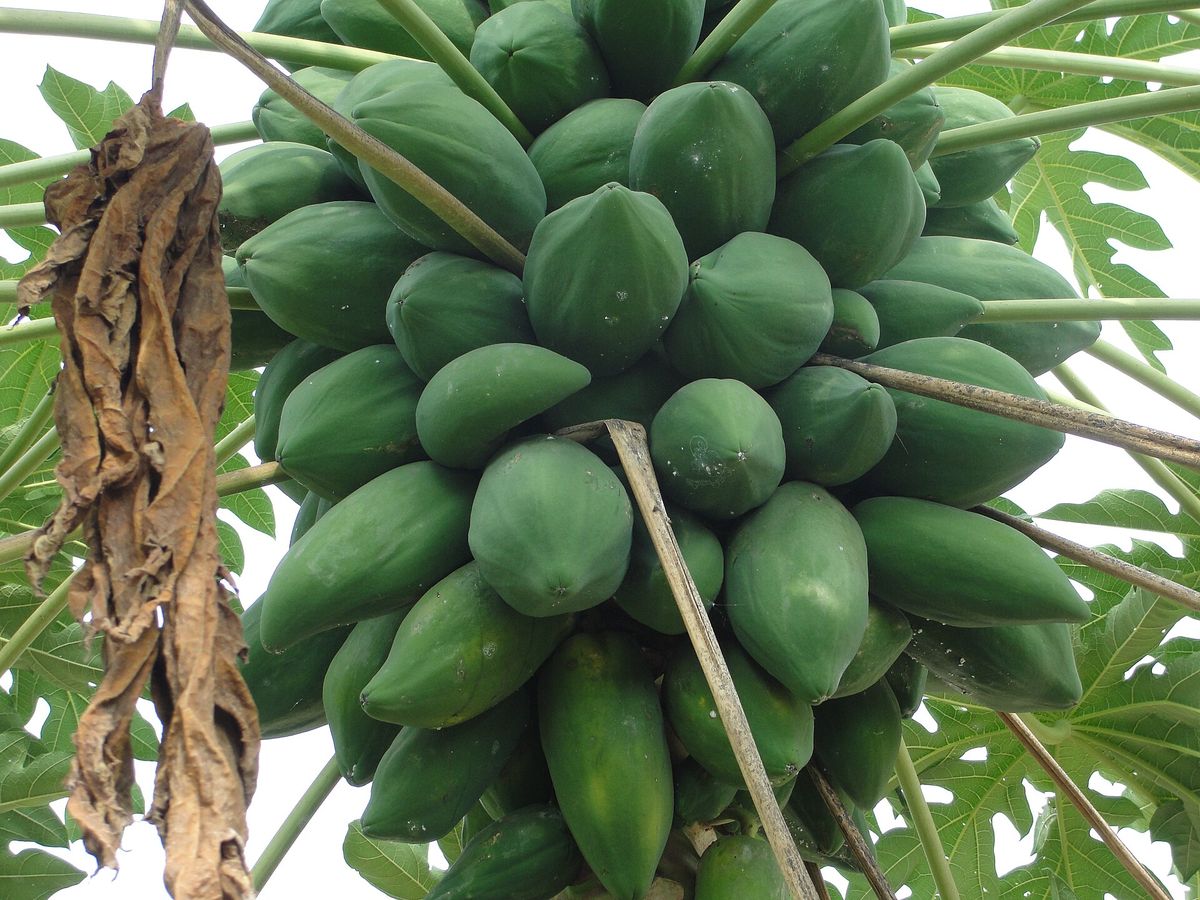
Papaya is a fast-growing, short-lived, herbaceous, tree-like plant, not a true woody perennial tree, and is usually grown as an annual or short-lived planting outside the tropics.
Troubleshooting papaya
Plant grows tall and flowers but sets no fruit
Likely cause: Papaya can be male, female, or self-fertile hermaphrodite depending on seed strain; a male plant never fruits
What to do: Grow several seedlings and remove excess males once flower type is visible, or start from a known hermaphrodite variety.
Plant collapses in a cold snap
Likely cause: Papaya has no frost tolerance and is killed outright by freezing temperatures
What to do: Grow in a container that can be moved indoors, or treat as a warm-season annual outside true tropical and subtropical zones.
Varieties worth growing
Red Lady
Self-fertile hermaphrodite, compact, reliable for home growers without needing multiple plants.
Solo
Compact, early-fruiting, popular dooryard variety in warm climates.
Growing papaya in containers
Viable in a 15-20 gallon pot, and often the only realistic way to grow papaya outside zones 10-11, since it can be moved to shelter for winter.
Nutrition
A meaningful source of vitamins, minerals, and fiber when eaten fresh.
Common questions
Is papaya a tree?
It grows tree-like and tall but is technically an herbaceous plant with a soft, hollow trunk, and is short-lived, usually productive for 2-4 years.
Can papaya survive any frost?
No, it has essentially no cold tolerance and is killed by freezing temperatures.
Where these numbers come from
- USDA Plant Hardiness Zone Map (2023 revision). Zone assignment and the 30-year normals behind every cold-hardiness figure.
- NOAA NCEI 1991-2020 Climate Normals. Frost dates, growing-season length, and the probability bands on both.
- Cornell, UMN, and UC Davis Cooperative Extension crop guides. Spacing, days to maturity, soil pH targets, and per-plant yield ranges.
- USDA FSIS / FDA Produce Safety guidance. Wash, cure, and cold-storage handling numbers.
Ranges are regional guidance, not a promise for your yard. Your own logged results always override the published range.