
How to grow pea
Family Fabaceae. Hardy to USDA hardiness zone 3a+ (U.S. Department of Agriculture). Full sun to part shade. Ready in 55-70 days.
Sun
Full sun to part shade
Spacing
2-4 in
Days to harvest
55-70 days
Hardiness
Zone 3a+
What growers actually recorded
Loading zone 7b results…
When to plant pea
- Direct sow: ~-5 weeks after last frost.
Companion plants for pea
Plant with: Carrot, Radish, Cucumber.
Avoid near: Onion, Garlic.
Common pests & problems
Aphid, pea moth.
Feeding & fertilizer
N-P-K ratio: LOW N: beans fix their own nitrogen
Organic options: Compost at planting is enough · Rock phosphate for pods · Wood ash for potassium if soil is deficient
When to feed: Do not add nitrogen fertilizer. You'll get leaves, no pods. One compost dose at planting.
Watch for: Inoculate seeds with rhizobia the first time you grow legumes in a bed.
N = nitrogen (leaves), P = phosphorus (roots and flowers), K = potassium (fruit and disease resistance). How to read a fertilizer label →
Grower's tip
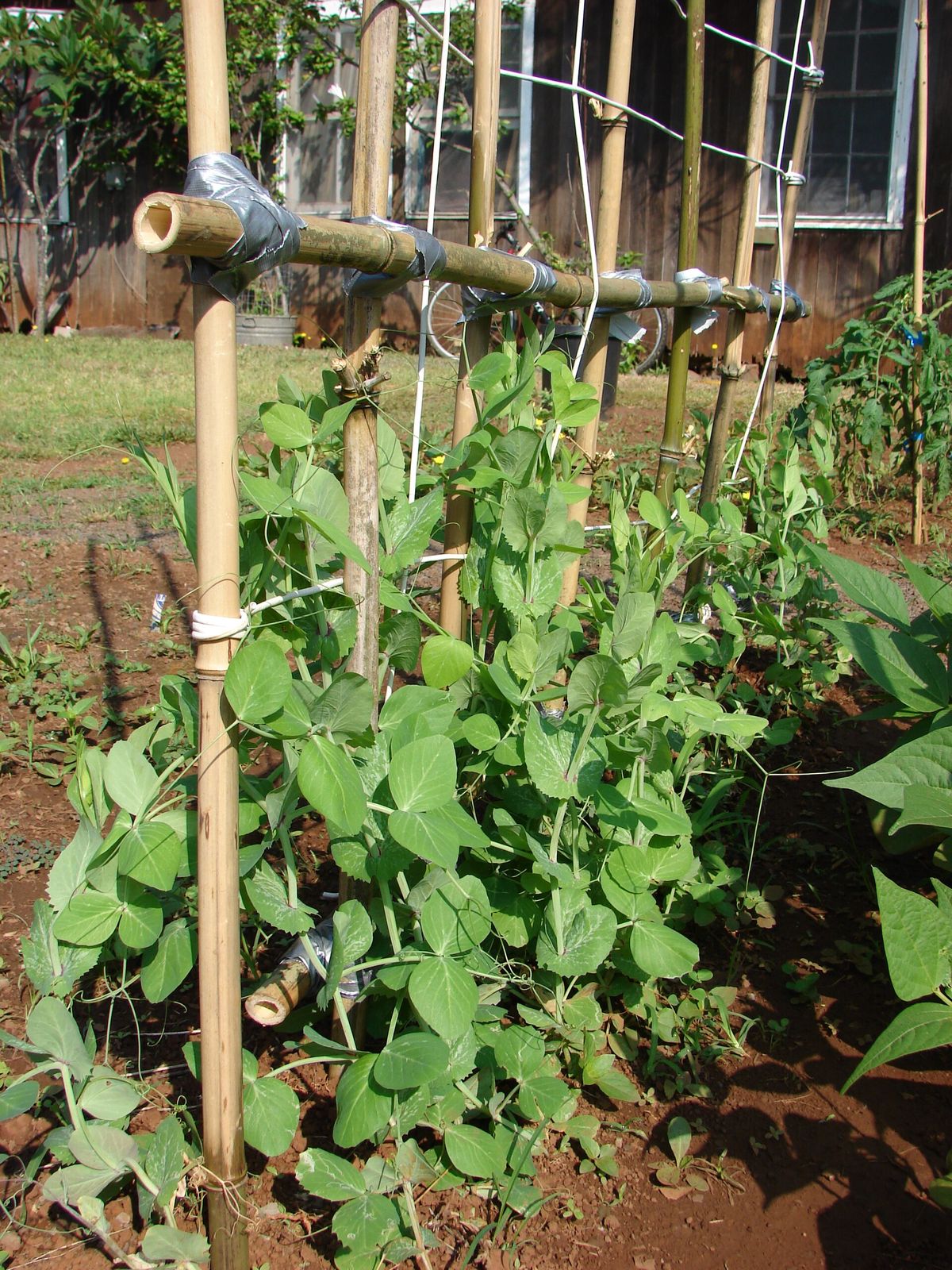
Sow as soon as soil can be worked. A trellis keeps pods clean and doubles yield.
When to plant pea in your zone
Free month-by-month sowing and transplanting lists, built from frost dates for your USDA (United States Department of Agriculture) hardiness zone.
Soil & water for pea
Soil & pH
6.0-7.0
Loose, well-drained. Beans dislike heavy clay; loosen with compost or grow in a raised bed.
Skip nitrogen fertilizer entirely. Inoculate seed with rhizobia inoculant the first time you grow legumes in a bed: pod set doubles.
Watering
1 in / week; 1.5 in during flowering & pod fill
Morning soak at the base. Wet foliage spreads bean rust and bacterial blight.
Pick a plant at the bottom of the row and dig a small hole 4 inches down. If it is dry enough to dust, water. If it's still dark and cool, hold. Legumes are more drought-tolerant than most people think; overwatering is the bigger mistake.
Knowing when to harvest
- Snap peas: pods 3 in, still bright and glossy.
- Shell peas: pods rounded and full; test one for sweetness.
- Snow peas: pods flat, seeds barely showing.
Storing & keeping
Refrigerate immediately; sugars convert to starch in hours. Blanch and freeze for months.
What to expect
Per plant: 0.25-0.5 lb
Per sq ft: 1 lb / sq ft trellised
Troubleshooting pea
Yellowing bottom leaves, no pods
Likely cause: Heat above 80°F ends the season
What to do: Sow as early as soil can be worked; fall crop for warm zones.
Vines yellow from the bottom up and roots are brown and rotted
Likely cause: Fusarium or Aphanomyces root rot, favoured by cool waterlogged soil
What to do: Plant on a raised ridge for drainage, rotate legumes off the bed for 3-4 years, and choose wilt-resistant cultivars.
Flowers open but few pods form
Likely cause: Daytime temperatures above 80°F during bloom
What to do: Peas are a cool-season crop. Sow as early as the soil can be worked and again 8 weeks before first frost rather than pushing through summer heat.
Varieties worth growing
Sugar Snap
Eat pod and all; the classic snap.
Green Arrow (shell)
Heavy yields on 30-in vines.
Oregon Sugar Pod II
Snow pea, disease-resistant.
Growing pea in containers
12 in deep pot + trellis; dwarf varieties (Little Marvel) work best.
Nutrition
Complete plant protein (with grains), folate, iron, molybdenum.
Common questions
Why are pods empty?
Pollination happens inside the flower before it opens, but heat can abort embryos. Sow early.
Where these numbers come from
- USDA Plant Hardiness Zone Map (2023 revision). Zone assignment and the 30-year normals behind every cold-hardiness figure.
- NOAA NCEI 1991-2020 Climate Normals. Frost dates, growing-season length, and the probability bands on both.
- Cornell, UMN, and UC Davis Cooperative Extension crop guides. Spacing, days to maturity, soil pH targets, and per-plant yield ranges.
- USDA FSIS / FDA Produce Safety guidance. Wash, cure, and cold-storage handling numbers.
Ranges are regional guidance, not a promise for your yard. Your own logged results always override the published range.