
How to grow peach
Family Rosaceae. Hardy to USDA hardiness zone 5a+ (U.S. Department of Agriculture). Full sun. Ready in Yr 2-4 fruiting (perennial tree).
Sun
Full sun
Spacing
12-15 ft (semi-dwarf)
Days to harvest
Yr 2-4 fruiting (perennial tree)
Hardiness
Zone 5a+
What growers actually recorded
Loading zone 7b results…
When to plant peach
- Transplant out: ~-6 weeks after last frost.
Companion plants for peach
Plant with: Basil, Chives, Garlic.
Common pests & problems
Peach leaf curl (spray dormant oil), oriental fruit moth, borers.
Feeding & fertilizer
N-P-K ratio: Balanced 5-5-5, avoid fresh manure
Organic options: Compost mulch every spring · Blood meal + bone meal before flowering · Kelp meal after harvest
When to feed: Base feeding on a soil test and on how much new growth the plant made last year.
Watch for: Lots of leafy growth but little fruit = too much nitrogen.
N = nitrogen (leaves), P = phosphorus (roots and flowers), K = potassium (fruit and disease resistance). How to read a fertilizer label →
Grower's tip
Thin fruit to 6 in apart in June. You get bigger, sweeter peaches and prevent limb breakage.
When to plant peach in your zone
Free month-by-month sowing and transplanting lists, built from frost dates for your USDA (United States Department of Agriculture) hardiness zone.
Soil & water for peach
Soil & pH
6.0-7.0 for most; confirm with a soil test
Deep, well-drained soil. Standing water around the roots causes root and crown rot.
Test soil before planting and correct pH then. Mulch with compost each spring, kept a few inches off the stem or trunk.
Watering
1-1.5 in / week; 2 in during fruit swell
Drip or soaker at the root zone. Keeping leaves and fruit dry lowers fungal disease.
Check soil 6 in down; water when it is dry there. Drought while fruit is sizing gives small fruit.
Knowing when to harvest
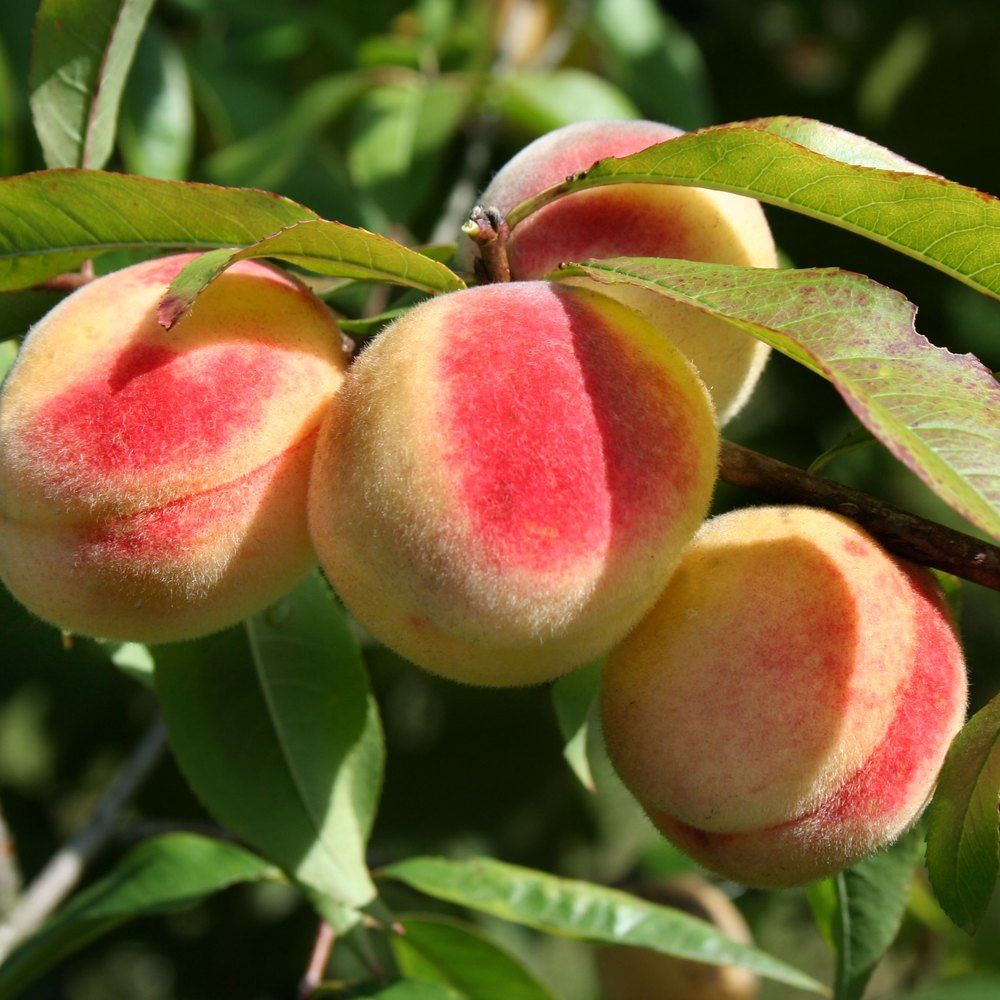
- Ground color between blush shifts from green to yellow.
- Gentle twist: ripe fruit releases easily.
- Full fragrance at the shoulder.
Storing & keeping
Ripe: fridge for 3-5 days. Peel and freeze in sugar syrup. Can (pressure or water-bath acidified).
What to expect
Per plant: 80-150 lb mature semi-dwarf
Troubleshooting peach
Distorted, blistered leaves in spring
Likely cause: Peach leaf curl
What to do: Copper or lime-sulfur spray at bud swell in late winter, before buds open.
Fruit riddled with cat-facing
Likely cause: Stink bug / tarnished plant bug
What to do: Clean around trees; kaolin clay early season.
Varieties worth the space
Not every name in a seed catalog. These are the ones growers order again, with what each one is actually good at and what it asks of you.
Reliance
Zone 4-hardy; the most cold-tolerant peach.
Redhaven
Standard freestone; excellent flavor.
Contender
Cold-hardy zone 5, late bloom escapes frost.
Growing peach in containers
Genetic dwarfs (Bonanza, El Dorado) in 20 gallon; short-lived.
Nutrition
Varies by crop: see the crop notes above.
Common questions
Should I thin fruit?
Yes. Thin to 6 in apart in June. You'll get bigger fruit, prevent limb breakage, and reduce alternate bearing.
Where these numbers come from
- USDA Plant Hardiness Zone Map (2023 revision). Zone assignment and the 30-year normals behind every cold-hardiness figure.
- NOAA NCEI 1991-2020 Climate Normals. Frost dates, growing-season length, and the probability bands on both.
- Cornell, UMN, and UC Davis Cooperative Extension crop guides. Spacing, days to maturity, soil pH targets, and per-plant yield ranges.
- USDA FSIS / FDA Produce Safety guidance. Wash, cure, and cold-storage handling numbers.
Ranges are regional guidance, not a promise for your yard. Your own logged results always override the published range.