
How to grow peanut
Family Fabaceae. Hardy to USDA hardiness zone 5a+ (U.S. Department of Agriculture). Full sun, 8+ hrs. Ready in 100-150 days.
Sun
Full sun, 8+ hrs
Spacing
8-10 in
Days to harvest
100-150 days
Hardiness
Zone 5a+
What growers actually recorded
Loading zone 7b results…
When to plant peanut
- Start indoors: ~4 weeks before last frost.
- Transplant out: ~2 weeks after last frost.
- Direct sow: ~2 weeks after last frost.
Companion plants for peanut
Plant with: Corn, Squash.
Avoid near: Nothing documented; needs loose sandy soil to peg well.
Common pests & problems
Wireworm, southern blight in wet clay soil.
Feeding & fertilizer
N-P-K ratio: LOW N: beans fix their own nitrogen
Organic options: Compost at planting is enough · Rock phosphate for pods · Wood ash for potassium if soil is deficient
When to feed: Do not add nitrogen fertilizer. You'll get leaves, no pods. One compost dose at planting.
Watch for: Inoculate seeds with rhizobia the first time you grow legumes in a bed.
N = nitrogen (leaves), P = phosphorus (roots and flowers), K = potassium (fruit and disease resistance). How to read a fertilizer label →
Grower's tip
Flowers self-pollinate then push a stalk (peg) into the soil to form the pod underground: keep soil loose around the base.
When to plant peanut in your zone
Free month-by-month sowing and transplanting lists, built from frost dates for your USDA (United States Department of Agriculture) hardiness zone.
Soil & water for peanut
Soil & pH
5.8-6.2: slightly acidic, and calcium matters as much as pH
Loose, sandy, well-drained soil is essential; peanut pegs (pods) must penetrate the soil surface easily, and heavy clay blocks pod formation.
Work soil deep and loose; add gypsum (calcium sulfate) at flowering, since peanut takes up calcium for pod fill directly through the developing pod, not just through the roots.
Watering
1-1.5 in / week, most critical during flowering and pegging
Base watering; keep the soil surface around the base of the plant loose and slightly moist during pegging to let pegs penetrate.
Consistent moisture during flowering through pegging (when stalks called pegs grow down from the flower into the soil) has the largest effect on final pod count.
Knowing when to harvest
- Pull a few test plants: pods should show a dark, netted shell interior and shake loosely from the hull.
- Foliage begins to yellow and pegs give some resistance when tugged, typically 100-150 days from planting depending on variety and climate.
- After digging, cure whole plants (pods still attached) upside down or on a rack in a warm, airy spot for 1-2 weeks before stripping pods.
Storing & keeping
Cured, unshelled peanuts keep several months at cool room temperature in a mesh bag or paper sack with airflow. Shelled raw peanuts store several months refrigerated or up to a year frozen. Roasted peanuts stay fresh in an airtight container 1-2 months at room temperature.
What to expect
Per plant: 0.5-1 lb pods per plant
Peanut is a legume whose flowers self-pollinate above ground, then send a stalk (peg) down into the soil where the pod actually develops; poor digging technique loses a meaningful share of pods left behind in the soil.
Troubleshooting peanut
Pods poorly filled or empty ('pops')
Likely cause: Calcium shortage during pegging, common in soil that tests fine for calcium at depth but is deficient right at the soil surface where pods form
What to do: Apply gypsum in a band along the row at first flowering; peanut pods absorb calcium directly, not just through roots.
Few pegs reach the soil or few pods form
Likely cause: Compacted or crusted soil surface, or plants spaced so pegs can't reach open ground
What to do: Keep soil loose around the base and avoid heavy mulch right at the crown during flowering.
Moldy or discolored kernels after harvest
Likely cause: Inadequate curing before storage
What to do: Cure pods thoroughly, 1-2 weeks in a warm, dry, ventilated spot, before shelling and storing.
Varieties worth growing
Jumbo Virginia
Large-seeded type typically sold as roasted in-shell peanuts.
Tennessee Red Valencia
Sweet-flavored, 3-4 seeds per pod, popular for boiling and home gardens.
Georgia Green
Widely adapted Spanish-runner type suited to home gardens in warm regions.
Growing peanut in containers
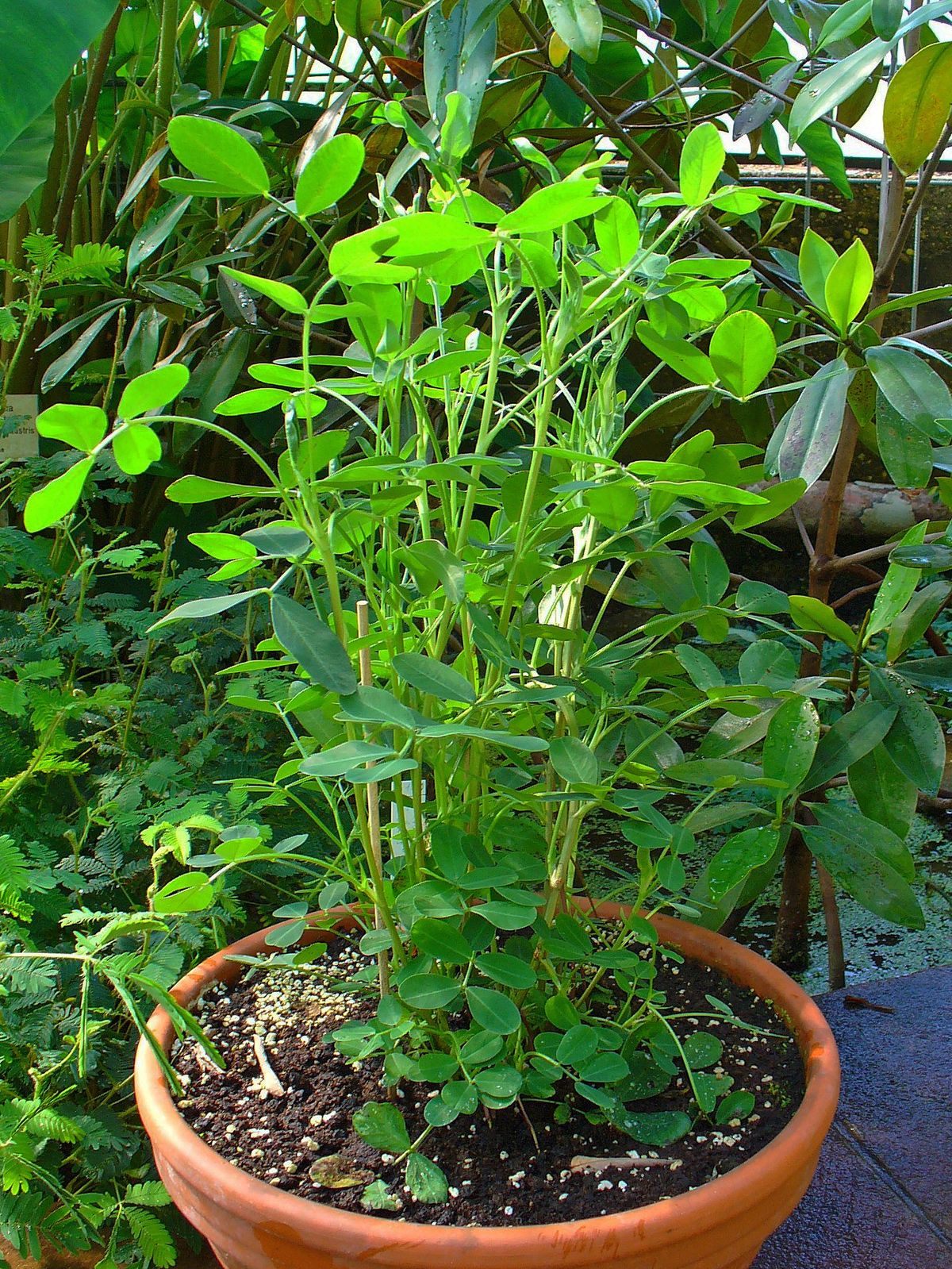
A deep (12+ in), wide container with loose, sandy soil can work in a long, warm season, but pegging requires open soil around the plant's base, which is easier to provide in the ground.
Nutrition
Peanut is a major food allergen; anaphylaxis risk means it should never be introduced to someone with a known peanut allergy, and home growers sharing produce should disclose it clearly.
Common questions
Is a peanut a nut?
No. Peanut is a legume, botanically related to bean and pea, not to tree nuts, though it triggers a distinct and often severe allergy of its own.
Why do peanuts grow underground if they flower above ground?
After the above-ground flower self-pollinates, it produces a stalk called a peg that grows downward and pushes into the soil; the pod then develops underground at the tip of the peg.
Do I need a long, hot season to grow peanuts?
Yes, generally 100-150 frost-free days with warm soil; gardeners in short-season climates should choose an early Spanish or Valencia type and start plants indoors before transplanting after soil warms.
Where these numbers come from
- USDA Plant Hardiness Zone Map (2023 revision). Zone assignment and the 30-year normals behind every cold-hardiness figure.
- NOAA NCEI 1991-2020 Climate Normals. Frost dates, growing-season length, and the probability bands on both.
- Cornell, UMN, and UC Davis Cooperative Extension crop guides. Spacing, days to maturity, soil pH targets, and per-plant yield ranges.
- USDA FSIS / FDA Produce Safety guidance. Wash, cure, and cold-storage handling numbers.
Ranges are regional guidance, not a promise for your yard. Your own logged results always override the published range.