
How to grow popcorn
Family Poaceae. Hardy to USDA hardiness zone 4a+ (U.S. Department of Agriculture). Full sun. Ready in 100-110 days.
Sun
Full sun
Spacing
10-12 in (block plant)
Days to harvest
100-110 days
Hardiness
Zone 4a+
What growers actually recorded
Loading zone 7b results…
When to plant popcorn
- Direct sow: ~2 weeks after last frost.
Companion plants for popcorn
Plant with: Bean, Squash.
Avoid near: Sweet corn (cross-pollination ruins both crops' flavor and texture).
Common pests & problems
Corn earworm, corn borer, raccoons at harvest.
Feeding & fertilizer
N-P-K ratio: High N (10-5-5): corn is a nitrogen hog
Organic options: Compost + aged manure deep in the row · Blood meal side-dress at knee-high · Fish emulsion at tasseling
When to feed: Feed at planting, knee-high, and tasseling: three big meals.
Watch for: Small ears / missing kernels = under-feeding or poor pollination.
N = nitrogen (leaves), P = phosphorus (roots and flowers), K = potassium (fruit and disease resistance). How to read a fertilizer label →
Grower's tip
Isolate at least 300 ft or by 2 weeks' planting time from any sweet corn to keep kernels from cross-pollinating starchy.
When to plant popcorn in your zone
Free month-by-month sowing and transplanting lists, built from frost dates for your USDA (United States Department of Agriculture) hardiness zone.
Soil & water for popcorn
Soil & pH
6.0-6.8
Deep, fertile, well-drained loam, same general demands as sweet corn.
Compost + aged manure worked in deep; popcorn is a heavy nitrogen feeder like other corn types.
Watering
1-1.5 in / week; 2 in during silking
Drip or furrow irrigation; water stress during silking causes poor kernel fill just as it does in sweet corn.
Rolled leaves that have not recovered by mid-morning signal it is time to water that day.
Knowing when to harvest
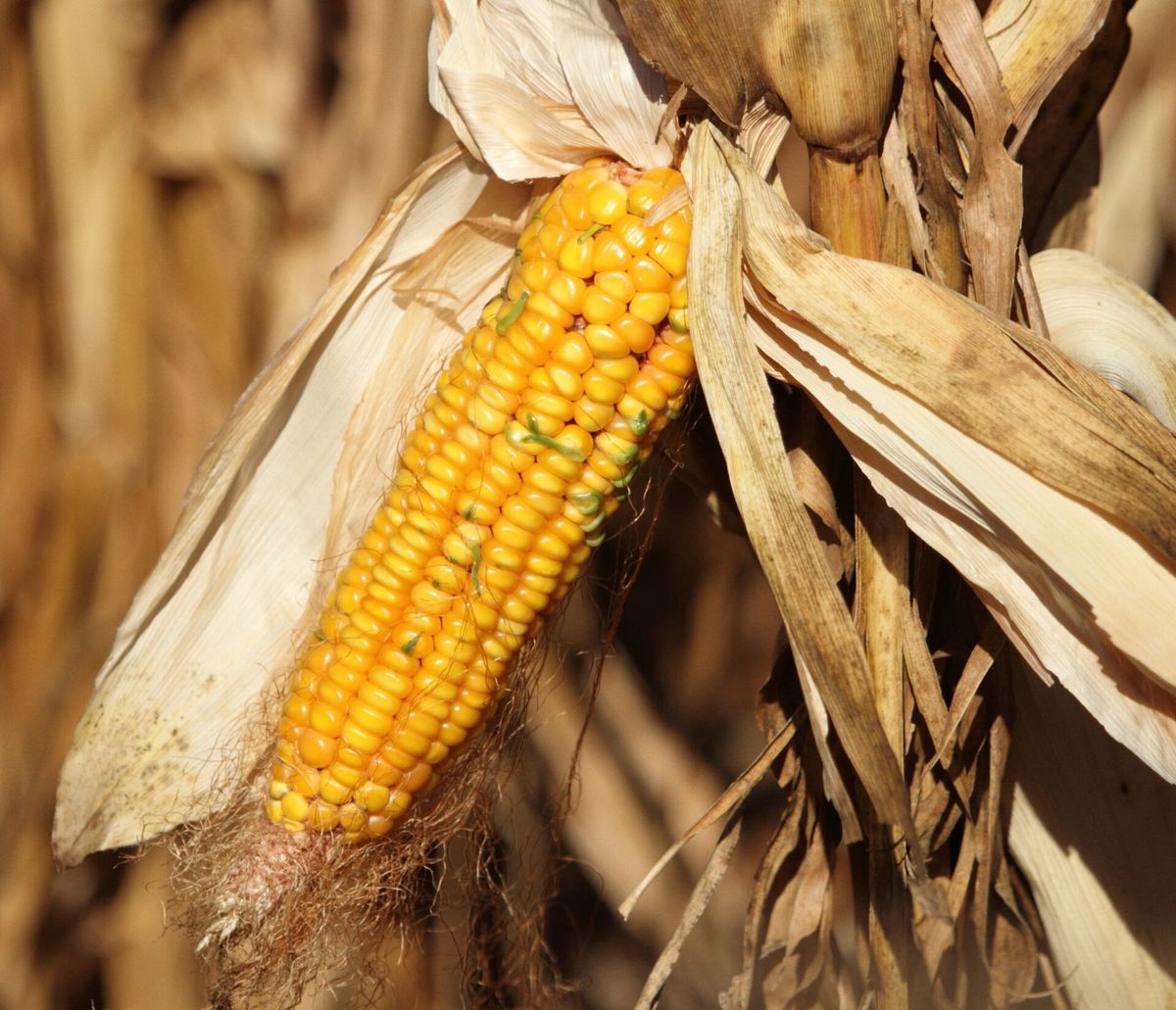
- Husks turn fully brown and dry and kernels are hard, glassy, and dented, unlike the milky stage used for sweet corn.
- Kernel moisture must drop to roughly 13-15% while still on the stalk before shelling; wet kernels will not pop reliably and can mold in storage.
- Leave ears on the stalk well past the point sweet corn would be picked, often until close to the first fall frost, then finish drying husked ears indoors if needed.
Storing & keeping
After field- and indoor-drying to the target moisture range, shell kernels off the cob and store airtight in a cool, dry spot; properly dried popcorn keeps a year or more, though popping quality gradually declines. Rehydrate slightly under-dry batches by adding a tablespoon of water per quart jar and shaking daily for a few days if pops are chewy or fail to pop.
What to expect
Per plant: 1-2 ears; roughly 0.25-0.5 lb of shelled kernels per plant
Troubleshooting popcorn
Kernels won't pop or pop weakly
Likely cause: Moisture content is off, either too dry (below about 13%) or still too wet from insufficient field-drying
What to do: Test-pop a small batch; if weak, rehydrate slightly by adding water to a sealed jar and shaking daily for several days before retesting.
Ears show a mix of kernel types, some starchy instead of popping cleanly
Likely cause: Cross-pollination with sweet corn or field corn growing nearby
What to do: Isolate popcorn from other corn types by at least 300-400 ft, or by 2+ weeks of difference in tasseling time, since corn is wind-pollinated and readily crosses.
Mold on stored ears before shelling
Likely cause: Ears left to dry outdoors in wet fall weather without enough airflow
What to do: Bring ears indoors to finish drying in a warm, airy spot with husks pulled back once outdoor conditions turn damp.
Varieties worth growing
Robust 990Y (yellow hybrid)
High-yielding and reliable for home gardens wanting a straightforward hybrid.
Strawberry (ornamental-edible)
Small, deep-red ears that are both decorative and genuinely poppable.
Dakota Black
Dark-hulled heirloom kernels with good popping quality and strong drought tolerance.
Growing popcorn in containers
Poor container crop given corn's wind-pollination needs and the block-planting (multiple short rows rather than one long row) required for reliable pollination; a large raised bed is a better minimum than a pot.
Nutrition
Complex carbohydrate, fiber, folate; pair with beans for complete protein.
Common questions
Can I grow popcorn next to my sweet corn?
Not without risking cross-pollination, which can leave both crops with starchy, non-popping or non-sweet kernels. Separate by distance (300-400 ft) or by staggering planting dates so tasseling does not overlap.
How do I know when popcorn is dry enough to shell?
Kernels should be hard and dent only slightly under a thumbnail; the classic field test is twisting a kernel off the cob; if it snaps off cleanly rather than smearing, moisture is likely in the right range, though a moisture meter is more reliable.
Where these numbers come from
- USDA Plant Hardiness Zone Map (2023 revision). Zone assignment and the 30-year normals behind every cold-hardiness figure.
- NOAA NCEI 1991-2020 Climate Normals. Frost dates, growing-season length, and the probability bands on both.
- Cornell, UMN, and UC Davis Cooperative Extension crop guides. Spacing, days to maturity, soil pH targets, and per-plant yield ranges.
- USDA FSIS / FDA Produce Safety guidance. Wash, cure, and cold-storage handling numbers.
Ranges are regional guidance, not a promise for your yard. Your own logged results always override the published range.