
How to grow quince
Family Rosaceae. Hardy to USDA hardiness zone 5a+ (U.S. Department of Agriculture). Full sun. Ready in 3-5 years to bearing (perennial tree).
Sun
Full sun
Spacing
12-18 ft
Days to harvest
3-5 years to bearing (perennial tree)
Hardiness
Zone 5a+
What growers actually recorded
Loading zone 7b results…
When to plant quince
- Transplant out: ~2 weeks after last frost.
Companion plants for quince
Plant with: Apple, Pear.
Common pests & problems
Fire blight, codling moth, quince rust.
Feeding & fertilizer
N-P-K ratio: Balanced 5-5-5, avoid fresh manure
Organic options: Compost mulch every spring · Blood meal + bone meal before flowering · Kelp meal after harvest
When to feed: Once in spring, once after fruiting. Renovate strawberry beds every 3 yrs.
Watch for: Runner overload but few berries = too much N.
N = nitrogen (leaves), P = phosphorus (roots and flowers), K = potassium (fruit and disease resistance). How to read a fertilizer label →
Grower's tip
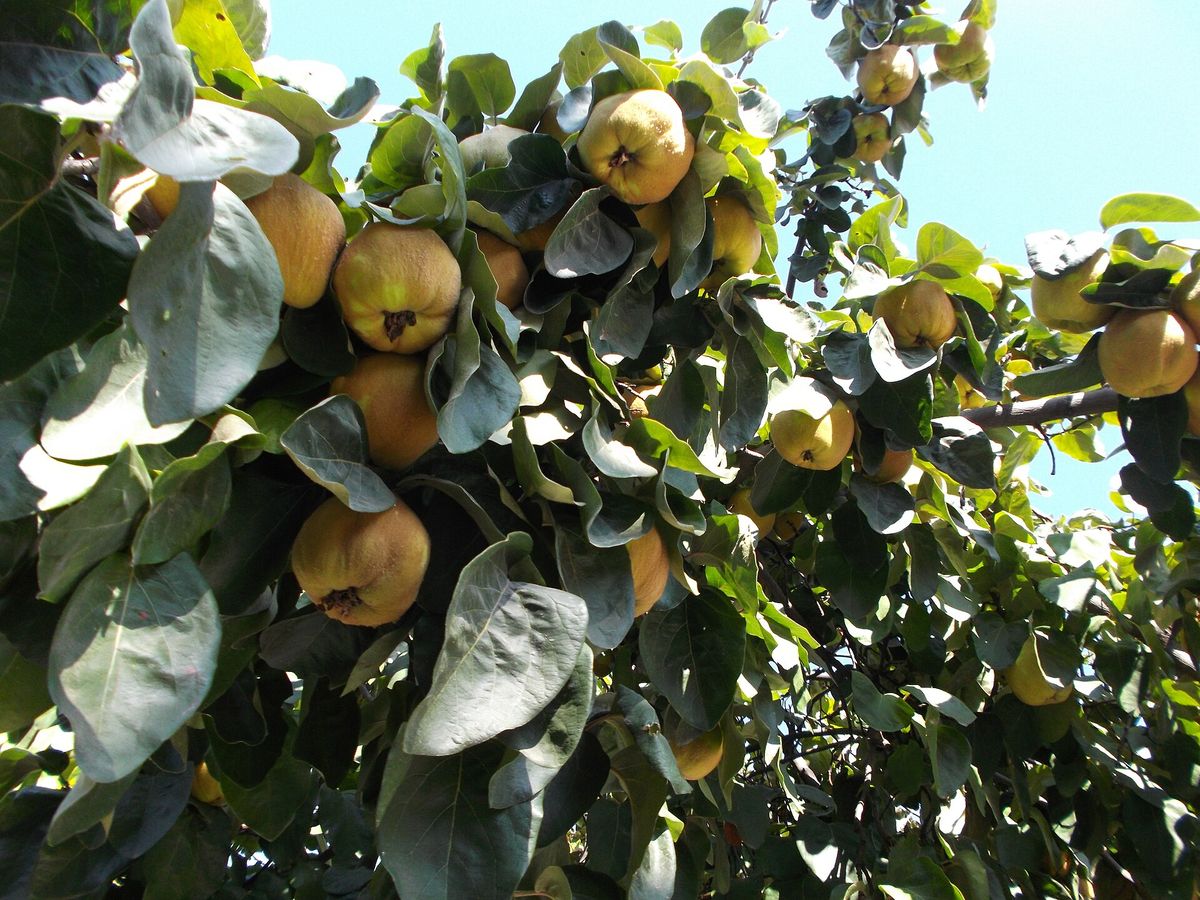
Fruit is too astringent to eat raw; pick once golden and fragrant and cook it down for jam, paste, or poached quince.
When to plant quince in your zone
Free month-by-month sowing and transplanting lists, built from frost dates for your USDA (United States Department of Agriculture) hardiness zone.
Soil & water for quince
Soil & pH
5.8-6.5 (berries lower; apples/pears 6.0-7.0)
Deep loam with sharp drainage. Berries dislike heavy clay and wet feet.
Compost mulch each spring. For strawberries, renovate the bed every 3 years to keep yields up.
Watering
1-1.5 in / week; 2 in during fruit swell
Drip. Overhead watering causes berry rot and apple scab.
Small, seedy fruit = drought during ripening. Steady water two weeks before harvest fixes it.
Knowing when to harvest
- Skin turns from green to golden yellow and develops a strong floral aroma.
- Fuzz rubs off easily; fruit is still hard when ripe, unlike apples or pears.
- Harvest before hard frost; quince stores better picked slightly under-ripe.
Storing & keeping
Cool, humid storage (40-50°F) for 1-3 months; fruit continues to soften and sweeten slowly. Quince is normally cooked into paste, jelly, or poached rather than eaten raw.
What to expect
Per plant: 50-100 lb from a mature tree, bearing by year 4-5
Troubleshooting quince
Rust-colored spots on leaves and fruit
Likely cause: Quince rust, a fungal disease shared with nearby juniper hosts
What to do: Remove infected leaves, avoid planting near junipers, apply a fungicide at bloom if pressure is high.
Fruit hard and unpalatable even after long storage
Likely cause: Quince is astringent raw regardless of storage time
What to do: Cook it: poach, stew, or process into membrillo or jelly, where the flesh turns tender and pink.
Varieties worth growing
Smyrna
Large fruit, classic for paste and preserves.
Pineapple
Milder flavor, cooks up less gritty than other types.
Growing quince in containers
Viable in a 15-20 gallon pot; a naturally small tree that tolerates root restriction reasonably well.
Nutrition
Vitamin C, anthocyanins, ellagic acid (berries); pectin and quercetin (pome fruit).
Common questions
Can quince be eaten raw?
Technically yes but the flesh is hard, dry, and astringent; it is grown to be cooked.
Does quince need a pollinizer?
No, quince is self-fertile.
Where these numbers come from
- USDA Plant Hardiness Zone Map (2023 revision). Zone assignment and the 30-year normals behind every cold-hardiness figure.
- NOAA NCEI 1991-2020 Climate Normals. Frost dates, growing-season length, and the probability bands on both.
- Cornell, UMN, and UC Davis Cooperative Extension crop guides. Spacing, days to maturity, soil pH targets, and per-plant yield ranges.
- USDA FSIS / FDA Produce Safety guidance. Wash, cure, and cold-storage handling numbers.
Ranges are regional guidance, not a promise for your yard. Your own logged results always override the published range.