
How to grow raspberry
Family Rosaceae. Hardy to USDA hardiness zone 3a+ (U.S. Department of Agriculture). Full sun. Ready in Yr 2 fruiting (perennial cane).
Sun
Full sun
Spacing
24-36 in in rows 6 ft apart
Days to harvest
Yr 2 fruiting (perennial cane)
Hardiness
Zone 3a+
What growers actually recorded
Loading zone 7b results…
When to plant raspberry
- Transplant out: ~-6 weeks after last frost.
Companion plants for raspberry
Plant with: Garlic, Chives, Yarrow.
Avoid near: Potato, Tomato, Blackberry (shared disease).
Common pests & problems
Japanese beetle, spotted-wing drosophila, cane borer.
Feeding & fertilizer
N-P-K ratio: Balanced 5-5-5, avoid fresh manure
Organic options: Compost mulch every spring · Blood meal + bone meal before flowering · Kelp meal after harvest
When to feed: Once in spring, once after fruiting. Renovate strawberry beds every 3 yrs.
Watch for: Runner overload but few berries = too much N.
N = nitrogen (leaves), P = phosphorus (roots and flowers), K = potassium (fruit and disease resistance). How to read a fertilizer label →
Grower's tip
Prune old floricanes (fruited canes) to the ground each winter. Everbearers can be mowed for one fall crop.
When to plant raspberry in your zone
Free month-by-month sowing and transplanting lists, built from frost dates for your USDA (United States Department of Agriculture) hardiness zone.
Soil & water for raspberry
Soil & pH
5.8-6.5 (berries lower; apples/pears 6.0-7.0)
Deep loam with sharp drainage. Berries dislike heavy clay and wet feet.
Compost mulch each spring. For strawberries, renovate the bed every 3 years to keep yields up.
Watering
1-1.5 in / week; 2 in during fruit swell
Drip. Overhead watering causes berry rot and apple scab.
Small, seedy fruit = drought during ripening. Steady water two weeks before harvest fixes it.
Knowing when to harvest
- Berry pulls off the receptacle with a gentle tug: leaves a hollow center.
- Pick every 2-3 days at peak; berries do not store.
- Refrigerate within an hour; sugar peaks at picking.
Storing & keeping
Single layer in fridge. 3-5 days. Freeze on a tray then bag; keeps a year.
What to expect
Per plant: 1-2 lb per cane; 5-10 lb per mature row
Troubleshooting raspberry
Wormy berries
Likely cause: Spotted-wing drosophila (SWD)
What to do: Netting (0.98 mm mesh); pick every 2 days; refrigerate to kill larvae.
Wilting canes with a swollen ring near soil
Likely cause: Cane borer
What to do: Cut and destroy affected canes below the ring.
Varieties worth growing
Heritage (everbearer)
Fall crop; mow the whole patch each winter for effortless management.
Nova (summer-bearer)
Cold-hardy zone 3; big traditional summer crop.
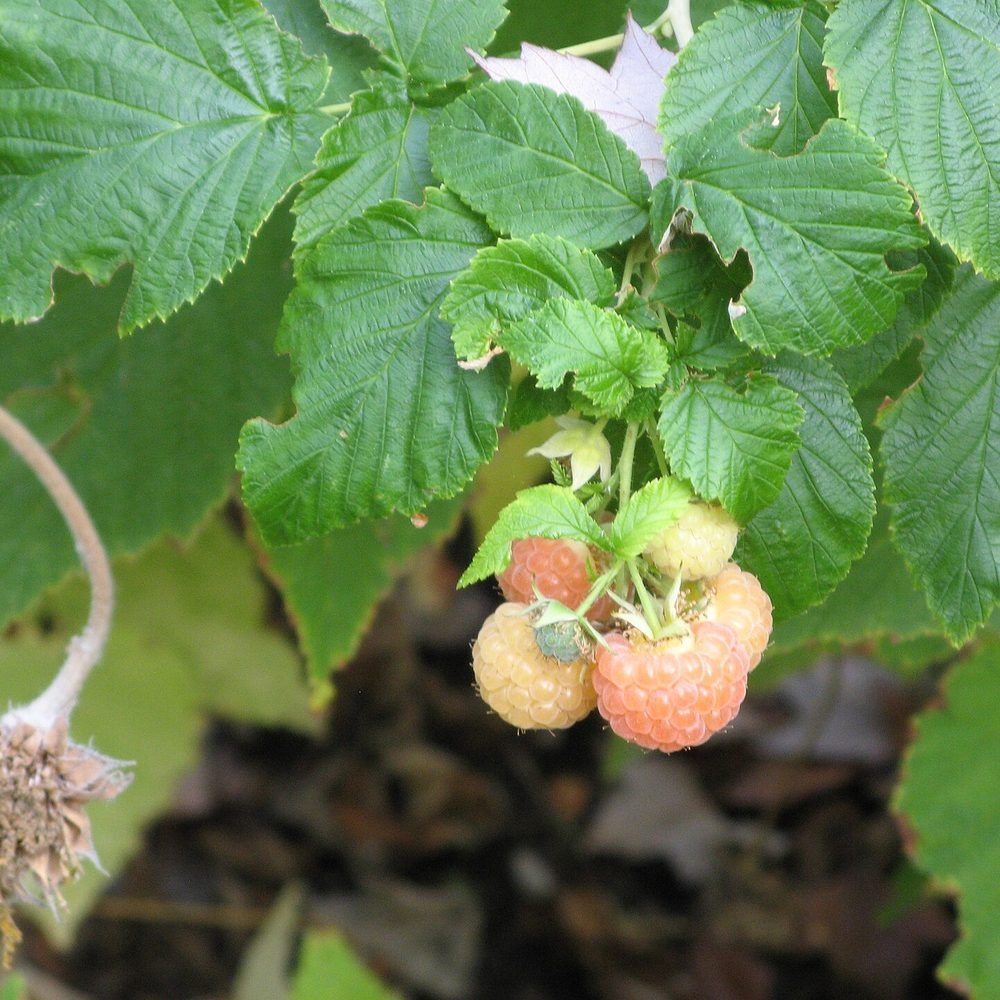
Anne (yellow everbearer)
Golden berries, honey-sweet, ignored by birds.
Growing raspberry in containers
20+ gallon container; everbearing varieties only.
Nutrition
Vitamin C, anthocyanins, ellagic acid (berries); pectin and quercetin (pome fruit).
Common questions
Everbearer or summer-bearer?
Everbearer if you want simple pruning (mow to ground each winter). Summer-bearer if you want a bigger, concentrated harvest.
Where these numbers come from
- USDA Plant Hardiness Zone Map (2023 revision). Zone assignment and the 30-year normals behind every cold-hardiness figure.
- NOAA NCEI 1991-2020 Climate Normals. Frost dates, growing-season length, and the probability bands on both.
- Cornell, UMN, and UC Davis Cooperative Extension crop guides. Spacing, days to maturity, soil pH targets, and per-plant yield ranges.
- USDA FSIS / FDA Produce Safety guidance. Wash, cure, and cold-storage handling numbers.
Ranges are regional guidance, not a promise for your yard. Your own logged results always override the published range.