How to grow rhubarb
Family Polygonaceae. Hardy to USDA hardiness zone 3a+ (U.S. Department of Agriculture). Full sun to part shade. Ready in Yr 2 harvest (perennial).
Sun
Full sun to part shade
Spacing
36-48 in
Days to harvest
Yr 2 harvest (perennial)
Hardiness
Zone 3a+
What growers actually recorded
Loading zone 7b results…
When to plant rhubarb
- Transplant out: ~-6 weeks after last frost.
Companion plants for rhubarb
Plant with: Cabbage, Bean, Broccoli.
Common pests & problems
Rarely bothered.
Feeding & fertilizer
N-P-K ratio: High N (10-5-5): rhubarb is a heavy feeder
Organic options: 4 in aged manure over the crown each spring · Blood meal as leaves push · Compost again after harvest
When to feed: Feed hard in early spring, then once more after the last pull.
Watch for: Thin, short stalks = the crown is hungry or overcrowded; divide every 5 years.
N = nitrogen (leaves), P = phosphorus (roots and flowers), K = potassium (fruit and disease resistance). How to read a fertilizer label →
Grower's tip
Never eat the leaves (oxalic acid). Don't harvest year 1; take a light crop year 2; full harvest year 3+.
When to plant rhubarb in your zone
Free month-by-month sowing and transplanting lists, built from frost dates for your USDA (United States Department of Agriculture) hardiness zone.
Soil & water for rhubarb
Soil & pH
6.0-6.8
Deep, rich, moisture-retentive loam.
Compost 3 in + aged manure at planting. Rhubarb is a heavy feeder for a perennial; top-dress every spring.
Watering
1-1.5 in / week during active growth
Deep soak weekly. Mulch heavily to keep roots cool.
Thin stalks = time to divide (every 5-7 years) or feed harder.
Knowing when to harvest
- Stalks 12-18 in and thumb-thick.
- Twist and pull at the base, never cut (leaves a stub that rots).
- Take no more than 1/3 of stalks at once; leave leaves to feed the crown.
Storing & keeping
Wrapped in the crisper. 2 weeks. Freeze chopped raw for 1 year.
What to expect
Per plant: 3-5 lb per crown per year, mature (year 3+)
Troubleshooting rhubarb
Thin, small stalks
Likely cause: Old crown or drought
What to do: Divide every 5-7 years; heavy compost + water.
Stalks are thin and few by midseason
Likely cause: Overharvesting, or an overcrowded crown after 6-8 years
What to do: Take no more than a third of the stalks at once, stop pulling by midsummer, and divide the crown into pieces with at least one bud each in early spring.
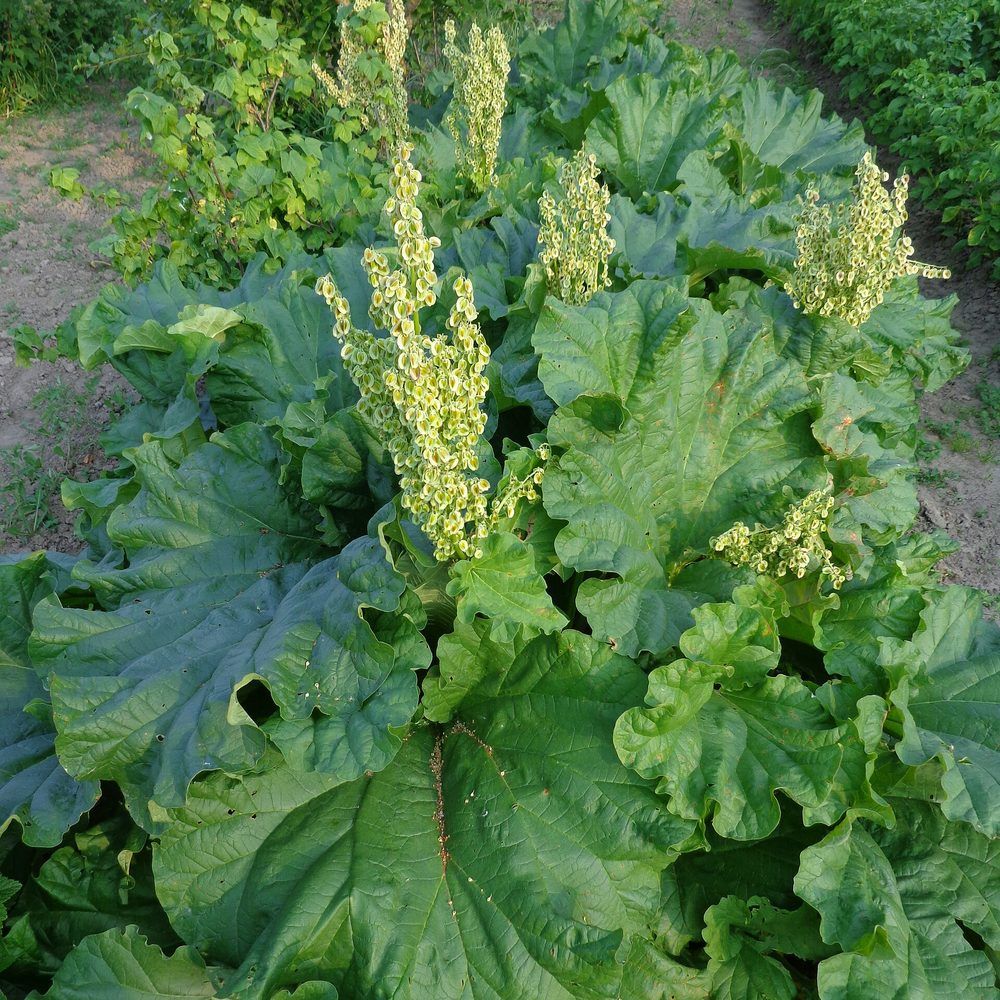
A thick flower stalk rises from the centre of the plant
Likely cause: Bolting from heat, age, or stress
What to do: Cut the flower stalk at the base as soon as it appears so the plant puts its energy into leaf stalks rather than seed.
Varieties worth growing
Victoria
Reliable heirloom, green-red stalks.
Canada Red
Deep red stalks, sweet flavor.
Growing rhubarb in containers
20+ gallon; not ideal but possible.
Nutrition
Vitamin K, calcium, fiber. Leaves are toxic (oxalic acid), never eat.
Common questions
Are the leaves really toxic?
Yes. High oxalic acid causes kidney damage. Compost the leaves (they break down safely) but never eat them.
Where these numbers come from
- USDA Plant Hardiness Zone Map (2023 revision). Zone assignment and the 30-year normals behind every cold-hardiness figure.
- NOAA NCEI 1991-2020 Climate Normals. Frost dates, growing-season length, and the probability bands on both.
- Cornell, UMN, and UC Davis Cooperative Extension crop guides. Spacing, days to maturity, soil pH targets, and per-plant yield ranges.
- USDA FSIS / FDA Produce Safety guidance. Wash, cure, and cold-storage handling numbers.
Ranges are regional guidance, not a promise for your yard. Your own logged results always override the published range.