
How to grow shiso (perilla)
Family Lamiaceae. Hardy to USDA hardiness zone 4a+ (U.S. Department of Agriculture). Full sun to part shade. Ready in 45-50 days.
Sun
Full sun to part shade
Spacing
10-12 in
Days to harvest
45-50 days
Hardiness
Zone 4a+
What growers actually recorded
Loading zone 7b results…
When to plant shiso (perilla)
- Start indoors: ~6 weeks before last frost.
- Transplant out: ~2 weeks after last frost.
- Direct sow: ~1 weeks after last frost.
Companion plants for shiso (perilla)
Plant with: Cucumber, Tomato.
Common pests & problems
Flea beetle, slug on seedlings.
Feeding & fertilizer
N-P-K ratio: Low fertilizer: herbs go bland when overfed
Organic options: Compost once at planting · Weak fish emulsion once mid-season if pale · Nothing after that
When to feed: Feed lightly if at all. Mediterranean herbs (rosemary, thyme, oregano) thrive in lean soil.
Watch for: Fast, floppy, weak-flavored growth = too rich.
N = nitrogen (leaves), P = phosphorus (roots and flowers), K = potassium (fruit and disease resistance). How to read a fertilizer label →
Grower's tip
Self-sows aggressively once established; pinch spent flower spikes if you don't want volunteers taking over next spring.
When to plant shiso (perilla) in your zone
Free month-by-month sowing and transplanting lists, built from frost dates for your USDA (United States Department of Agriculture) hardiness zone.
Soil & water for shiso (perilla)
Soil & pH
6.0-7.5
Well-drained, on the lean side. Mediterranean herbs rot in rich wet soil.
Compost once at planting, then leave the bed alone. Add grit or perlite for rosemary and thyme.
Watering
1-1.5 in / week
Base watering; shiso wants consistently moist soil, more like a leafy annual vegetable than a lean Mediterranean herb.
Shiso wilts and turns bitter quickly in dry soil; keep it more evenly watered than basil or oregano.
Knowing when to harvest
- Pick individual leaves any time after the plant has several sets of true leaves; younger leaves are more tender and less bitter.
- Harvest before flowering for the best leaf flavor; once flower spikes form, leaves turn more bitter, though the flower spikes and seed pods are also edible and traditionally pickled.
Storing & keeping
Fresh leaves keep only a few days refrigerated, wrapped loosely in a damp towel; shiso does not dry or freeze well and loses most of its distinctive flavor. Best used fresh or quickly pickled.
What to expect
Per plant: Continuous small harvests totaling dozens of leaves over a season from one plant
Troubleshooting shiso (perilla)
Volunteer seedlings appear all over the garden the following year
Likely cause: Shiso self-sows readily once it flowers and sets seed
What to do: Harvest or cut back flower spikes before seed matures if self-seeding isn't wanted.
Leaves turn bitter and tough
Likely cause: Plant has begun flowering, or is drought-stressed
What to do: Pinch out flower spikes to extend leaf quality, and keep soil consistently moist.
Varieties worth growing
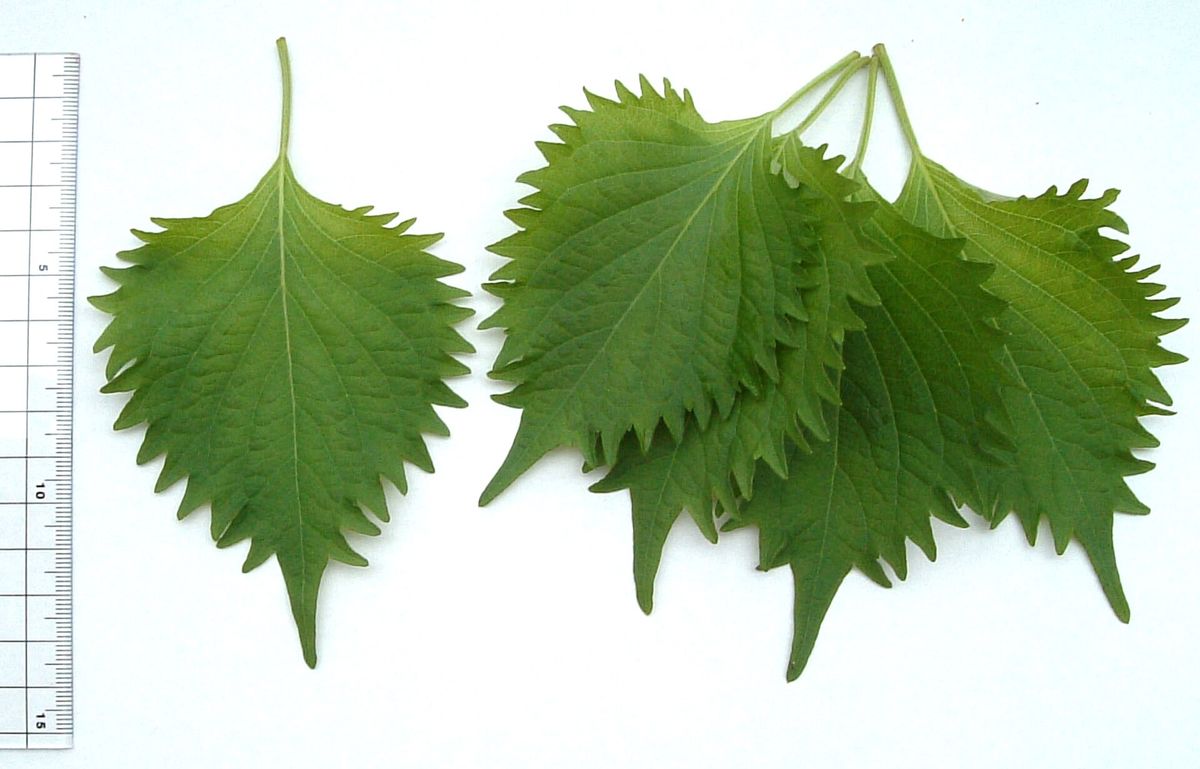
Green shiso (ao-jiso)
The standard culinary type used fresh in Japanese cooking.
Red/purple shiso (aka-jiso)
Used to color and flavor umeboshi and pickles; more strongly flavored.
Growing shiso (perilla) in containers
Grows well in an 8+ in pot with consistent moisture; a good choice for a partly shaded container since it tolerates less sun than most culinary herbs.
Nutrition
Volatile oils that hold up after drying: rosmarinic acid in rosemary, thymol in thyme, menthol in mint, eugenol in basil and oregano. That's why a pinch of dried herb often tastes stronger than a handful of fresh. The oils are concentrated once the water leaves.
Common questions
Why does my shiso keep coming back on its own?
Shiso self-sows freely once it flowers and sets seed; removing flower spikes before they mature limits volunteer seedlings the following year.
Can I dry shiso leaves like basil?
Not well. Shiso's flavor is carried by volatile, fragile compounds that fade quickly when dried; it is almost always used fresh or pickled rather than dried.
Where these numbers come from
- USDA Plant Hardiness Zone Map (2023 revision). Zone assignment and the 30-year normals behind every cold-hardiness figure.
- NOAA NCEI 1991-2020 Climate Normals. Frost dates, growing-season length, and the probability bands on both.
- Cornell, UMN, and UC Davis Cooperative Extension crop guides. Spacing, days to maturity, soil pH targets, and per-plant yield ranges.
- USDA FSIS / FDA Produce Safety guidance. Wash, cure, and cold-storage handling numbers.
Ranges are regional guidance, not a promise for your yard. Your own logged results always override the published range.