
How to grow stevia
Family Asteraceae. Hardy to USDA hardiness zone 8a+ (U.S. Department of Agriculture). Full sun to part shade. Ready in 80-90 days.
Sun
Full sun to part shade
Spacing
12-18 in
Days to harvest
80-90 days
Hardiness
Zone 8a+
What growers actually recorded
Loading zone 7b results…
When to plant stevia
- Start indoors: ~8 weeks before last frost.
- Transplant out: ~2 weeks after last frost.
Companion plants for stevia
Plant with: Pepper, Tomato.
Common pests & problems
Aphid, whitefly.
Feeding & fertilizer
N-P-K ratio: Balanced 5-5-5 with steady N
Organic options: Compost tea every 2 wks · Fish emulsion between cuttings · Aged manure in bed prep
When to feed: Light and steady. Lettuce wants constant slow N to stay tender and mild.
Watch for: Bitter greens = heat or under-water, not fertilizer.
N = nitrogen (leaves), P = phosphorus (roots and flowers), K = potassium (fruit and disease resistance). How to read a fertilizer label →
Grower's tip
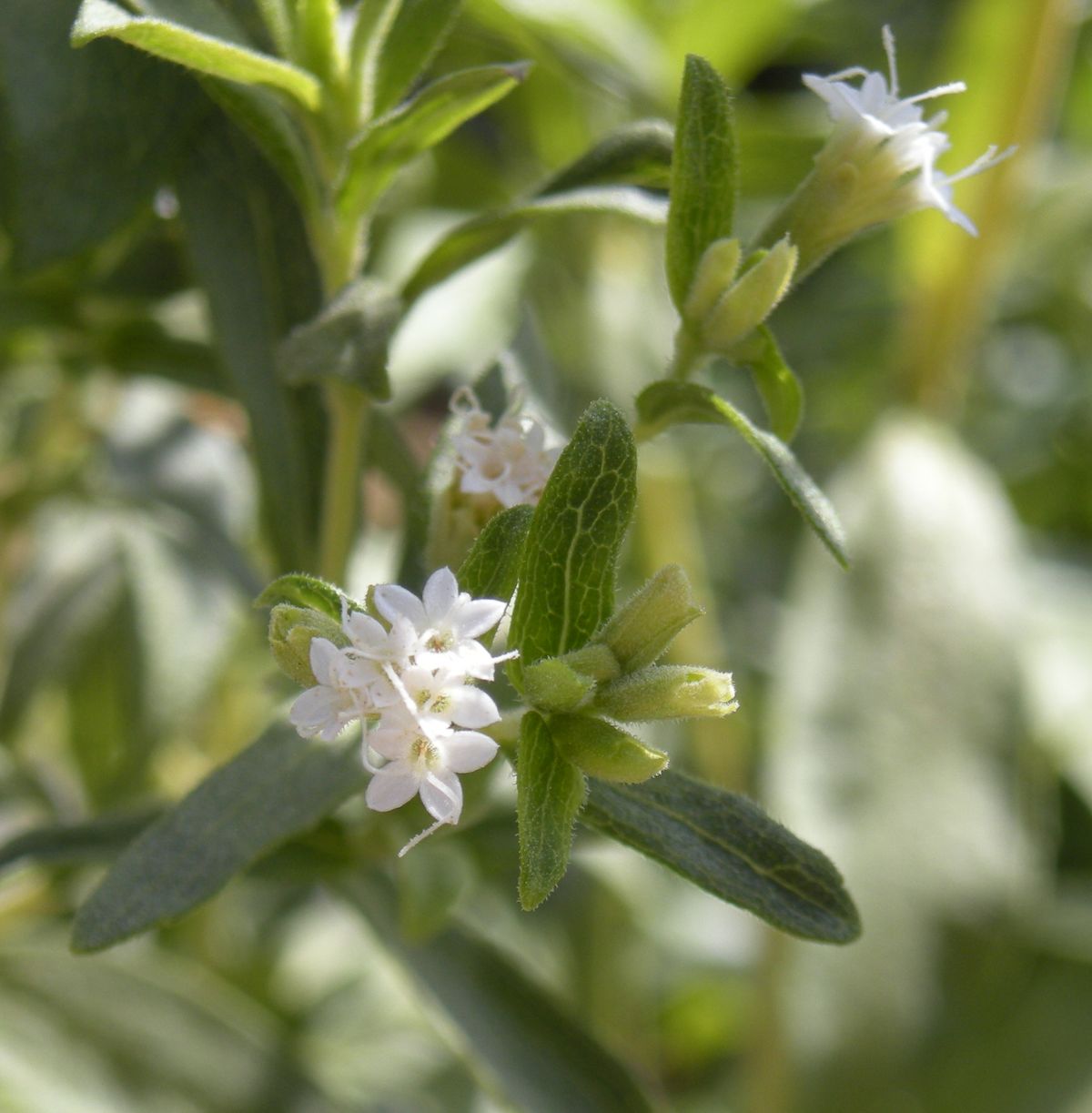
Pinch flower buds as they form; once it blooms, leaf sweetness drops off sharply. Overwinter indoors north of zone 8.
When to plant stevia in your zone
Free month-by-month sowing and transplanting lists, built from frost dates for your USDA (United States Department of Agriculture) hardiness zone.
Soil & water for stevia
Soil & pH
6.0-7.5
Well-drained, moderately fertile loam. A tender perennial subshrub, not cold-hardy outside the warmest US zones.
Light compost at planting; stevia does not need heavy feeding and produces sweeter leaves under moderate rather than lush growth.
Watering
1 in / week
Even moisture; stevia's shallow roots dry out quickly but the plant also resents standing water.
Water when the top inch of soil dries; wilting recovers quickly with water but repeated wilting reduces leaf quality.
Knowing when to harvest
- Harvest leaves any time after the plant is established, but sweetness peaks just before flowering, when glycoside concentration is highest.
- Cut whole stems back by a third to half rather than picking single leaves, which encourages bushier regrowth.
- In zones colder than roughly 8-9, dig and pot the plant before first frost to overwinter indoors, since it has no meaningful frost tolerance.
Storing & keeping
Dry cut stems bundled in a warm, dark, airy spot for 1-2 weeks, then strip leaves and store airtight, whole or crushed, in a cool dark place for up to a year. Fresh leaves keep only a few days refrigerated.
What to expect
Per plant: A few ounces of dried leaf per plant per season, harvested over multiple cuttings
Troubleshooting stevia
Leaves taste bitter rather than sweet
Likely cause: Harvested too late, after flowering, when bitter compounds increase relative to sweet glycosides
What to do: Harvest just before or at the very start of flowering, and pinch off flower buds through the season to prolong sweet-leaf production.
Plant dies back over winter outdoors
Likely cause: Stevia is hardy only to about zone 8-9 and has little frost tolerance
What to do: Pot up and move indoors to a sunny window before first frost, or take stem cuttings in late summer to root indoors as insurance.
Varieties worth growing
Common stevia (Stevia rebaudiana, species type)
Almost all seed-grown and nursery stevia is the species itself; named cultivars are uncommon in home garden trade.
Growing stevia in containers
Well suited to a 3-5 gallon pot; container growing is the practical default outside zone 8-9 since it allows the plant to be brought indoors for winter.
Nutrition
Vitamin K, folate, lutein. Most calories in the leaves come from water.
Common questions
Why does my homegrown stevia not taste as sweet as the store-bought extract?
Commercial stevia sweeteners are concentrated extracts of the glycoside compounds; fresh or dried whole leaf is sweet but far more dilute, and harvest timing (before flowering) makes a real difference in intensity.
Can stevia survive winter outdoors?
Only in the warmest parts of the country, roughly zone 8-9 and warmer with protection; elsewhere it must be treated as a tender perennial and overwintered indoors or replanted annually.
Where these numbers come from
- USDA Plant Hardiness Zone Map (2023 revision). Zone assignment and the 30-year normals behind every cold-hardiness figure.
- NOAA NCEI 1991-2020 Climate Normals. Frost dates, growing-season length, and the probability bands on both.
- Cornell, UMN, and UC Davis Cooperative Extension crop guides. Spacing, days to maturity, soil pH targets, and per-plant yield ranges.
- USDA FSIS / FDA Produce Safety guidance. Wash, cure, and cold-storage handling numbers.
Ranges are regional guidance, not a promise for your yard. Your own logged results always override the published range.