
How to grow swiss chard
Family Amaranthaceae. Hardy to USDA hardiness zone 3a+ (U.S. Department of Agriculture). Full sun to part shade. Ready in 50-60 days.
Sun
Full sun to part shade
Spacing
8-12 in
Days to harvest
50-60 days
Hardiness
Zone 3a+
What growers actually recorded
Loading zone 7b results…
When to plant swiss chard
- Start indoors: ~4 weeks before last frost.
- Transplant out: ~-2 weeks after last frost.
- Direct sow: ~-2 weeks after last frost.
Companion plants for swiss chard
Plant with: Bean, Onion, Lettuce, Radish.
Avoid near: Beet, Spinach.
Common pests & problems
Leaf miner, slug, aphid, cercospora leaf spot in humidity.
Feeding & fertilizer
N-P-K ratio: Balanced 5-5-5, boron matters for beets
Organic options: Compost + wood ash · Kelp meal for micronutrients · Fish emulsion every 3 wks
When to feed: Bed prep with compost + kelp, one side-dress mid-season.
Watch for: Black spot in beet roots = boron deficit; a pinch of borax per gallon foliar-sprayed fixes it.
N = nitrogen (leaves), P = phosphorus (roots and flowers), K = potassium (fruit and disease resistance). How to read a fertilizer label →
Grower's tip
Cut outer stalks 2 in above the crown and the plant keeps producing from spring into hard frost. One planting can feed a household all season.
When to plant swiss chard in your zone
Free month-by-month sowing and transplanting lists, built from frost dates for your USDA (United States Department of Agriculture) hardiness zone.
Soil & water for swiss chard
Soil & pH
6.5-7.5: beets/spinach hate acidic soil
Well-drained loam. Add lime if pH is below 6.5 or roots stall.
Compost + a tablespoon of borax dissolved in a gallon of water per 25 sq ft prevents beet black-spot (boron deficit).
Watering
1 in / week
Consistent moisture. Drought stress makes spinach bolt in a week.
Beets and chard tell the truth with their leaves: if lower leaves are soft and yellow while the top stays green, the soil is staying too wet, not too dry. If leaves are thin and cupped upward, water.
Knowing when to harvest
- Outer leaves 8-10 in long, stalks glossy and firm.
- Cut outer leaves at the base, leaving the center to keep producing for months.
- A single planting can be harvested continuously through an entire growing season and, in mild climates, into a second year.
Storing & keeping
Refrigerate unwashed in a perforated bag at 32-40°F for about a week. Blanch 2-3 minutes and freeze; holds up well for long-term storage, better than most tender greens.
What to expect
Per plant: 1-2 lb over repeated cutting across a season
Per sq ft: 0.5-1 lb per sq ft per cutting
Troubleshooting swiss chard
White, blistered, tunneling patches in leaves
Likely cause: Leaf miner larvae
What to do: Remove and destroy affected leaves promptly, use row cover to prevent adult flies from laying eggs.
Yellowing between leaf veins with dark spots
Likely cause: Boron deficiency, common in chard and its beet relatives
What to do: Dissolve a tablespoon of borax in a gallon of water and apply to 25 sq ft; avoid over-application.
Varieties worth growing
Bright Lights
Multicolor stems (red, gold, pink, white) that hold up in cooking and look striking in the garden.
Fordhook Giant
Vigorous, heat- and cold-tolerant, reliable heavy producer.
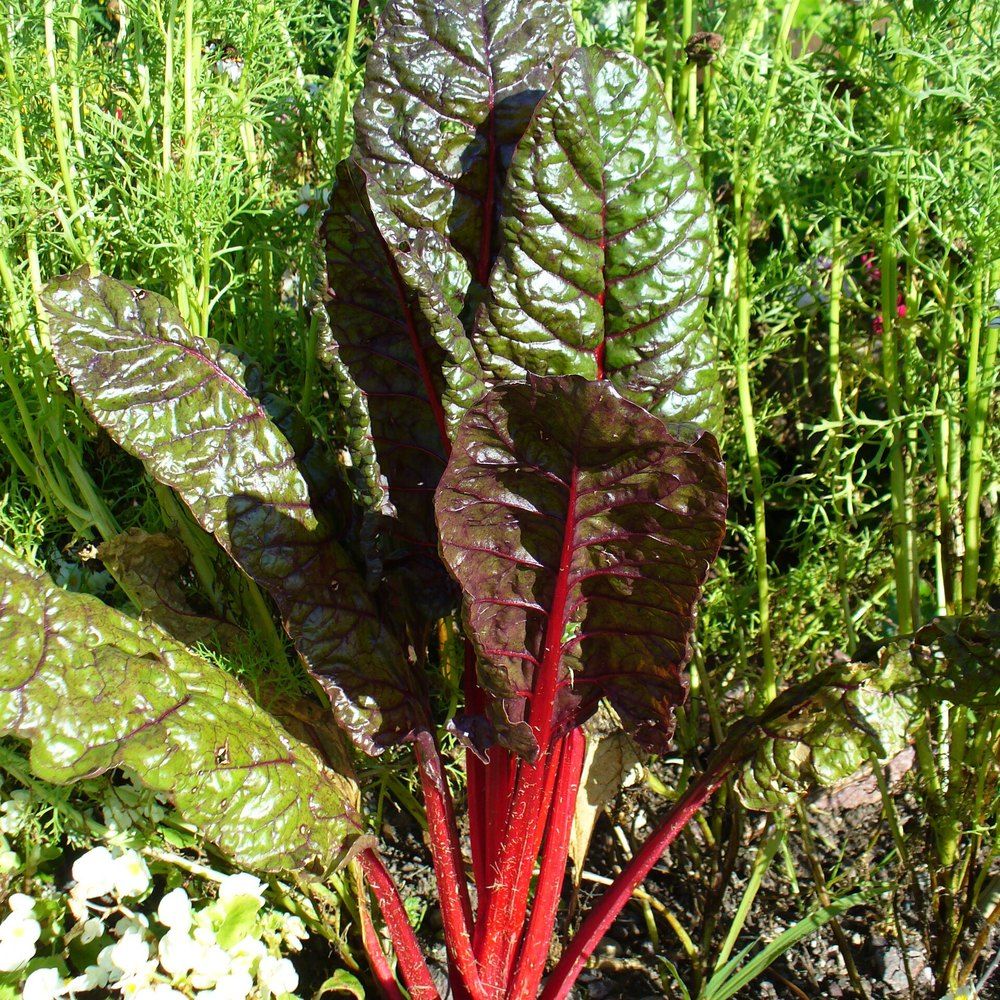
Rhubarb Chard
Deep red stems and dark green leaves, classic and dependable.
Growing swiss chard in containers
10-12 in deep pot, one to two plants; chard is one of the most container-forgiving leafy greens due to its long productive life and tolerance of some neglect.
Nutrition
Iron, magnesium, folate (spinach); betalains (beet).
Common questions
How long will one chard planting keep producing?
Often the entire growing season, and in zone 7 and warmer it can overwinter and continue into a second year before bolting.
Can I eat the stems, not just the leaves?
Yes, the crunchy stems are commonly cooked separately from the leaves, similar to celery, since they take slightly longer to soften.
Where these numbers come from
- USDA Plant Hardiness Zone Map (2023 revision). Zone assignment and the 30-year normals behind every cold-hardiness figure.
- NOAA NCEI 1991-2020 Climate Normals. Frost dates, growing-season length, and the probability bands on both.
- Cornell, UMN, and UC Davis Cooperative Extension crop guides. Spacing, days to maturity, soil pH targets, and per-plant yield ranges.
- USDA FSIS / FDA Produce Safety guidance. Wash, cure, and cold-storage handling numbers.
Ranges are regional guidance, not a promise for your yard. Your own logged results always override the published range.