
How to grow tomatillo
Family Solanaceae. Hardy to USDA hardiness zone 4a+ (U.S. Department of Agriculture). Full sun. Ready in 65-100 days.
Sun
Full sun
Spacing
24-36 in
Days to harvest
65-100 days
Hardiness
Zone 4a+
What growers actually recorded
Loading zone 7b results…
When to plant tomatillo
- Start indoors: ~6 weeks before last frost.
- Transplant out: ~2 weeks after last frost.
Companion plants for tomatillo
Plant with: Basil, Pepper, Onion.
Avoid near: Fennel.
Common pests & problems
Flea beetle, hornworm.
Feeding & fertilizer
N-P-K ratio: Low N (5-10-10) once fruiting starts
Organic options: Compost 2-3 in. at planting · Fish emulsion every 2 wks while young · Bone meal + kelp at flowering for calcium/potassium
When to feed: Compost at planting → light nitrogen through vegetative → switch to P/K when flowers appear.
Watch for: All leaves, no fruit = too much N. Blossom-end rot = calcium deficit + uneven watering.
N = nitrogen (leaves), P = phosphorus (roots and flowers), K = potassium (fruit and disease resistance). How to read a fertilizer label →
Grower's tip
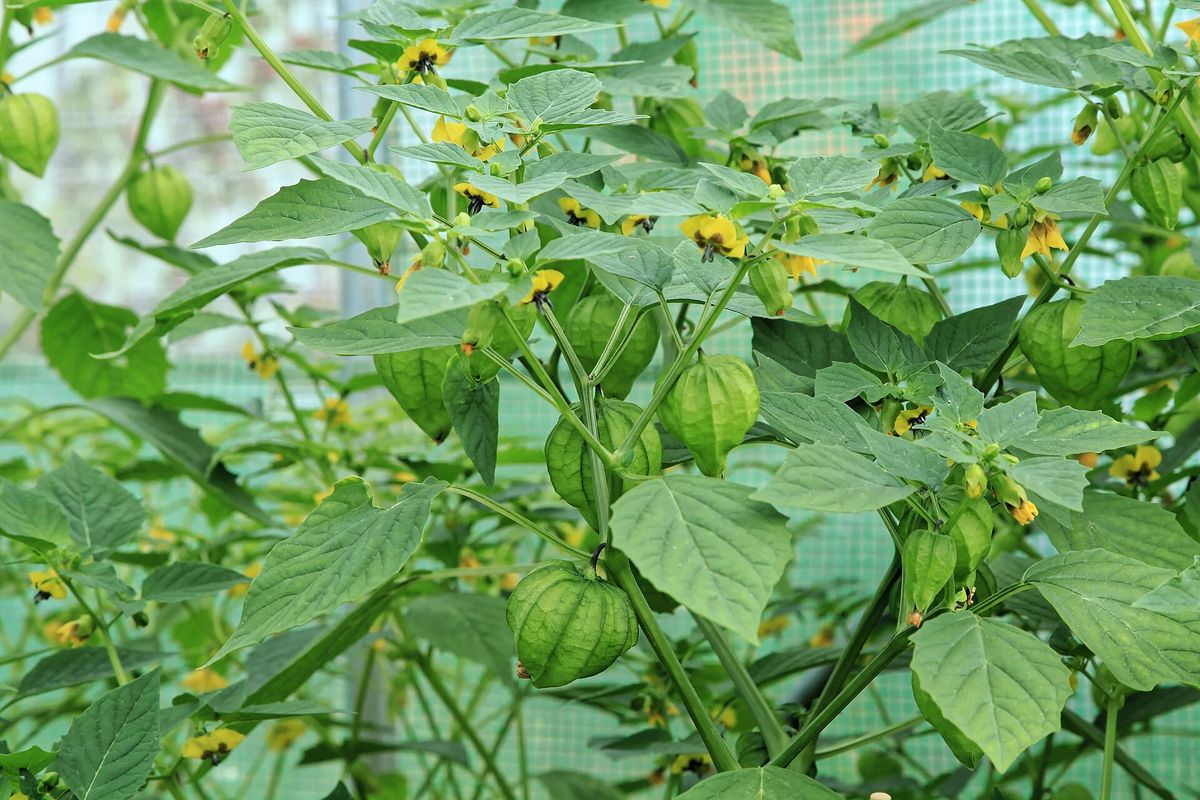
Plant at least two for pollination: a single tomatillo rarely sets fruit. Husk turns papery and splits when ripe.
When to plant tomatillo in your zone
Free month-by-month sowing and transplanting lists, built from frost dates for your USDA (United States Department of Agriculture) hardiness zone.
Soil & water for tomatillo
Soil & pH
6.2-6.8: slightly acidic
Loose, deep loam. Break up compaction 12 in down; tomatoes and peppers root deeply when given the room.
Work 2-3 in of compost + a handful of bone meal per plant into the hole. Warm soil to 60°F+ before transplanting; black plastic mulch 2 weeks ahead helps in the North.
Watering
1-1.5 in / week, more in fruit set
Deep soak at the base twice a week. Drip or soaker hose beats overhead watering: wet leaves invite early blight.
Stick your finger 4 inches in near the stem. If it's dry at the second knuckle, water. If it's still damp, wait. Flipping from bone-dry to soaked is what cracks fruit and brings on blossom-end rot.
Knowing when to harvest
- The papery husk fills out and often splits slightly as the fruit inside ripens.
- Fruit fills the husk snugly and feels firm, not shriveled inside.
- Color depends on variety (green stays green when ripe; purple types darken), so rely on husk fill and firmness over color alone.
Storing & keeping
Leave the husk on; refrigerate in a paper bag at 45-50°F for 2-3 weeks, notably longer-keeping than tomatoes. Roast and freeze in salsa verde for long-term storage.
What to expect
Per plant: 60-200 fruit per plant on a vigorous, sprawling plant
Troubleshooting tomatillo
Plants flower heavily but set no fruit
Likely cause: Tomatillo is self-incompatible and needs a second, genetically different plant nearby for pollination
What to do: Always plant at least two tomatillo plants; one alone will not fruit regardless of care.
Husk stays green and closed with no fruit growth
Likely cause: Fruit is still immature
What to do: Wait for the husk to fill out and begin splitting before checking for harvest.
Sprawling plant flops and fruit rots on the ground
Likely cause: Tomatillo has a weak, sprawling habit and needs support
What to do: Cage or stake heavily, similar to a large indeterminate tomato.
Varieties worth growing
Toma Verde
Early, reliable green tomatillo for northern gardens.
Purple de Milpa
Smaller, sweeter, purple-skinned fruit with a more complex flavor for salsa.
Growing tomatillo in containers
10-gallon minimum per plant, and plant two for pollination; a large pot with a sturdy cage works.
Nutrition
High in lycopene (tomato), capsaicin (hot pepper), vitamin C, and potassium.
Common questions
Why did my single tomatillo plant never produce fruit?
Tomatillo cannot self-pollinate; a second plant of a different seed lot or variety is required for fruit set.
Is it ripe if the husk hasn't turned brown?
Yes, ripeness is judged by the fruit filling and splitting the still-green (or purple) husk, not by husk color changing to brown, which signals overripeness or drying.
Where these numbers come from
- USDA Plant Hardiness Zone Map (2023 revision). Zone assignment and the 30-year normals behind every cold-hardiness figure.
- NOAA NCEI 1991-2020 Climate Normals. Frost dates, growing-season length, and the probability bands on both.
- Cornell, UMN, and UC Davis Cooperative Extension crop guides. Spacing, days to maturity, soil pH targets, and per-plant yield ranges.
- USDA FSIS / FDA Produce Safety guidance. Wash, cure, and cold-storage handling numbers.
Ranges are regional guidance, not a promise for your yard. Your own logged results always override the published range.