
How to grow watercress
Family Brassicaceae. Hardy to USDA hardiness zone 5a+ (U.S. Department of Agriculture). Full sun to part shade. Ready in 50-60 days.
Sun
Full sun to part shade
Spacing
4-6 in
Days to harvest
50-60 days
Hardiness
Zone 5a+
What growers actually recorded
Loading zone 7b results…
When to plant watercress
- Direct sow: ~-2 weeks after last frost.
Companion plants for watercress
Plant with: No specific companions recorded for this crop. Group it by water and sun needs instead.
Common pests & problems
Slugs; watch for contaminated water sources, since it's often grown in standing water.
Feeding & fertilizer
N-P-K ratio: High N (10-5-5): heavy feeders
Organic options: Aged manure or compost worked in deep · Blood meal or feather meal side-dress at 3 wks · Fish emulsion every 2 wks
When to feed: Feed heavily every 2-3 weeks. Brassicas want steady nitrogen for tight heads.
Watch for: Pale/yellow leaves = needs N. Loose heads = feed harder next round.
N = nitrogen (leaves), P = phosphorus (roots and flowers), K = potassium (fruit and disease resistance). How to read a fertilizer label →
Grower's tip
Needs constantly wet or slow-flowing water to grow safely; from stagnant water it can carry liver flukes, so use clean, food-safe water only.
When to plant watercress in your zone
Free month-by-month sowing and transplanting lists, built from frost dates for your USDA (United States Department of Agriculture) hardiness zone.
Soil & water for watercress
Soil & pH
6.5-7.5: near neutral (raises club-root resistance)
Fertile loam with strong drainage. Firm soil beats fluffy for heading brassicas.
Compost 2 in + 1 cup of alfalfa or feather meal per 10 sq ft. Lime if pH is under 6.5. It also blocks club-root.
Watering
1-1.5 in / week, consistent
Ground-level drip. Uneven water during heading = split heads or bolting.
Lift an edge of the row and check soil at 3 inches. If it clings in a damp ball, hold off. If it crumbles, water until the top 6 inches are evenly moist.
Knowing when to harvest
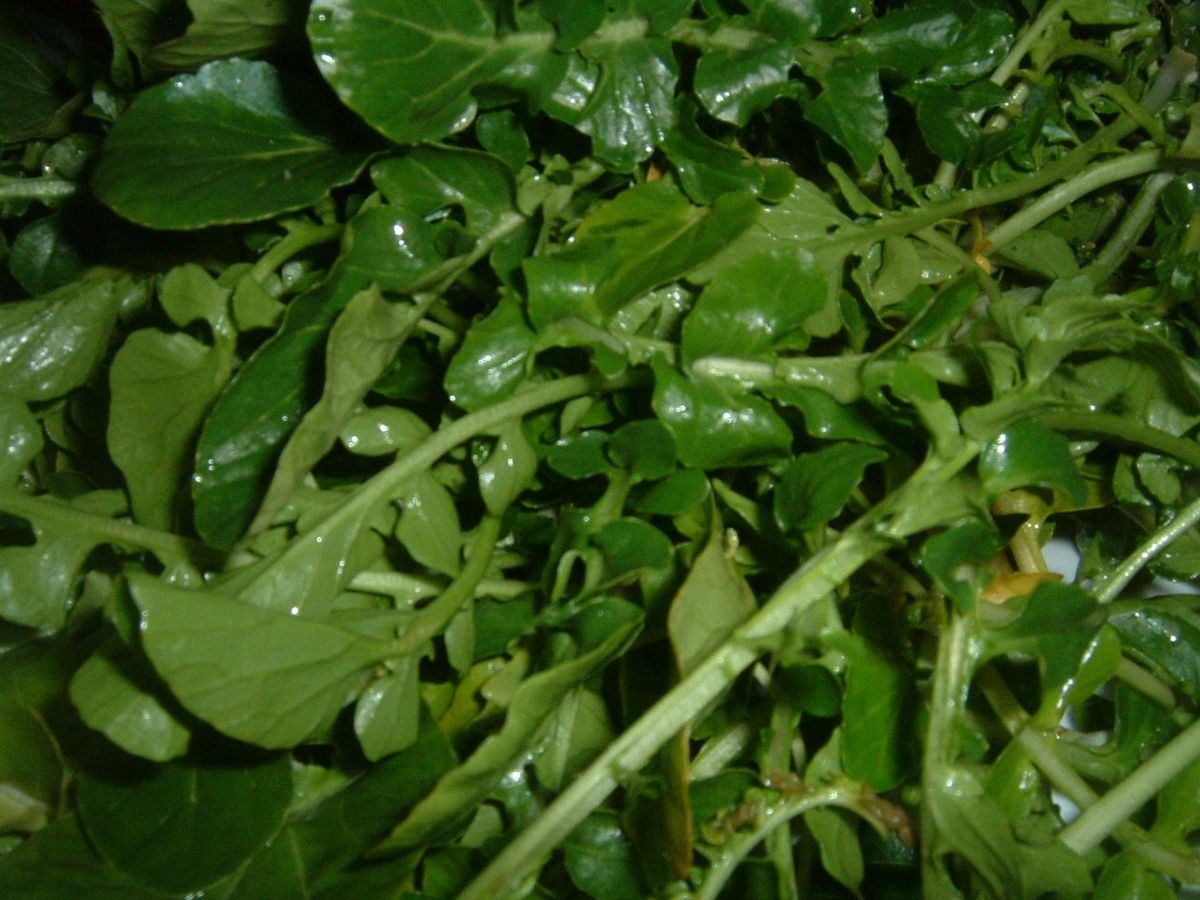
- Stems reach 4-6 in with glossy, rounded leaflets; snip the top 3-4 in for the mildest, most tender growth.
- Harvest before flowering; older stems turn hollow and sharply peppery.
- Regrowth is fast in a well-managed system, often ready to cut again within 2 weeks.
Storing & keeping
Refrigerate stems upright in a jar of water like cut flowers, or wrapped loosely in a damp towel in a bag, 3-5 days at most; it wilts faster than almost any other salad green. Not suited to freezing or long storage.
What to expect
Per plant: Ongoing small cuttings rather than a single yield figure
Troubleshooting watercress
Slimy stems and rot at the base
Likely cause: Stagnant, poorly oxygenated water
What to do: Watercress needs running water or water changed daily to weekly; standing water invites rot and bacterial buildup.
Concern about wild-harvested watercress
Likely cause: Watercress from streams shared with livestock or wildlife can carry liver fluke (Fasciola hepatica) and other contamination
What to do: Never eat wild-harvested watercress raw from an uncontrolled water source. Grow it in a clean, controlled system such as a container with frequently changed water, or buy from a vetted commercial grower, and cook wild-gathered greens thoroughly if their water source cannot be verified.
Varieties worth growing
Common Watercress (Nasturtium officinale)
The standard culinary type sold commercially and grown in home systems.
Land Cress (Barbarea verna)
A true garden-soil substitute with a similar peppery flavor for growers without access to a running-water setup.
Growing watercress in containers
Grows best in a shallow tray or container kept in constantly circulating or frequently replaced clean water; standard potting soil without a managed water source is a poor setup and risks rot and off-flavors.
Nutrition
Sulforaphane, glucosinolates, vitamin K, calcium. Brassicas are the vegetable powerhouse.
Common questions
Is it safe to harvest watercress from a wild stream?
Not without real caution. Wild watercress growing in water shared with livestock or wildlife runoff can carry liver fluke larvae and other pathogens; commercially grown or home-container watercress from a verified clean water source is the safer choice.
Can I grow watercress in regular garden soil?
It survives briefly but performs poorly and turns bitter without a constant water source; true watercress needs saturated, moving, or frequently refreshed water to thrive.
Where these numbers come from
- USDA Plant Hardiness Zone Map (2023 revision). Zone assignment and the 30-year normals behind every cold-hardiness figure.
- NOAA NCEI 1991-2020 Climate Normals. Frost dates, growing-season length, and the probability bands on both.
- Cornell, UMN, and UC Davis Cooperative Extension crop guides. Spacing, days to maturity, soil pH targets, and per-plant yield ranges.
- USDA FSIS / FDA Produce Safety guidance. Wash, cure, and cold-storage handling numbers.
Ranges are regional guidance, not a promise for your yard. Your own logged results always override the published range.