
How to grow zucchini
Family Cucurbitaceae. Hardy to USDA hardiness zone 4a+ (U.S. Department of Agriculture). Full sun. Ready in 45-55 days.
Sun
Full sun
Spacing
24-36 in
Days to harvest
45-55 days
Hardiness
Zone 4a+
What growers actually recorded
Loading zone 7b results…
When to plant zucchini
- Start indoors: ~3 weeks before last frost.
- Transplant out: ~2 weeks after last frost.
- Direct sow: ~2 weeks after last frost.
Companion plants for zucchini
Plant with: Nasturtium, Corn, Bean.
Avoid near: Potato.
Common pests & problems
Squash vine borer. Wrap stem base in foil early.
Feeding & fertilizer
N-P-K ratio: Balanced 5-5-5, ease off N at flowering
Organic options: Compost + aged manure in the hill · Fish emulsion until first blossom · Kelp meal + wood ash at flowering
When to feed: Big feed at transplant, side-dress once vines run, potassium boost at flowering.
Watch for: Female flowers dropping = pollination issue, not fertilizer.
N = nitrogen (leaves), P = phosphorus (roots and flowers), K = potassium (fruit and disease resistance). How to read a fertilizer label →
Grower's tip
One plant feeds a family. Pick at 6-8 in for the sweetest fruit.
When to plant zucchini in your zone
Free month-by-month sowing and transplanting lists, built from frost dates for your USDA (United States Department of Agriculture) hardiness zone.
Soil & water for zucchini
Soil & pH
6.0-6.8
Warm, well-drained soil enriched with compost. Cool wet soil = damping-off in seedlings.
Build a low mound (hill) 12-18 in wide, mix in a shovel of compost per hill. Wait until soil hits 65°F to plant.
Watering
1.5-2 in / week: cucurbits are 90% water
Drip at the base. Never wet the leaves: powdery mildew loves damp foliage.
Morning leaf droop is normal; afternoon droop that hasn't recovered by sunset means water now. Dull, slightly blue-green leaves are the first sign before wilt even shows.
Knowing when to harvest
- 6-8 in for tenderest flavor and best skin.
- Male blossoms open first. Pick and stuff them; leave females for fruit.
- Once you find a bat-sized zucchini, pick it (competes with new fruit set).
Storing & keeping
Crisper, 5-7 days. Shred and freeze for baking; slice and dehydrate for winter.
What to expect
Per plant: 20-40 fruits over the season
One plant feeds a family of four.
Troubleshooting zucchini
Rotting baby fruit
Likely cause: Poor pollination
What to do: Hand-pollinate at dawn; plant flowers nearby to draw bees.
Vine wilts suddenly
Likely cause: Squash vine borer
What to do: Cut stem lengthwise, remove larva, bury cut section for re-rooting.
Varieties worth the space
Not every name in a seed catalog. These are the ones growers order again, with what each one is actually good at and what it asks of you.
Black Beauty
Heirloom · 50 days
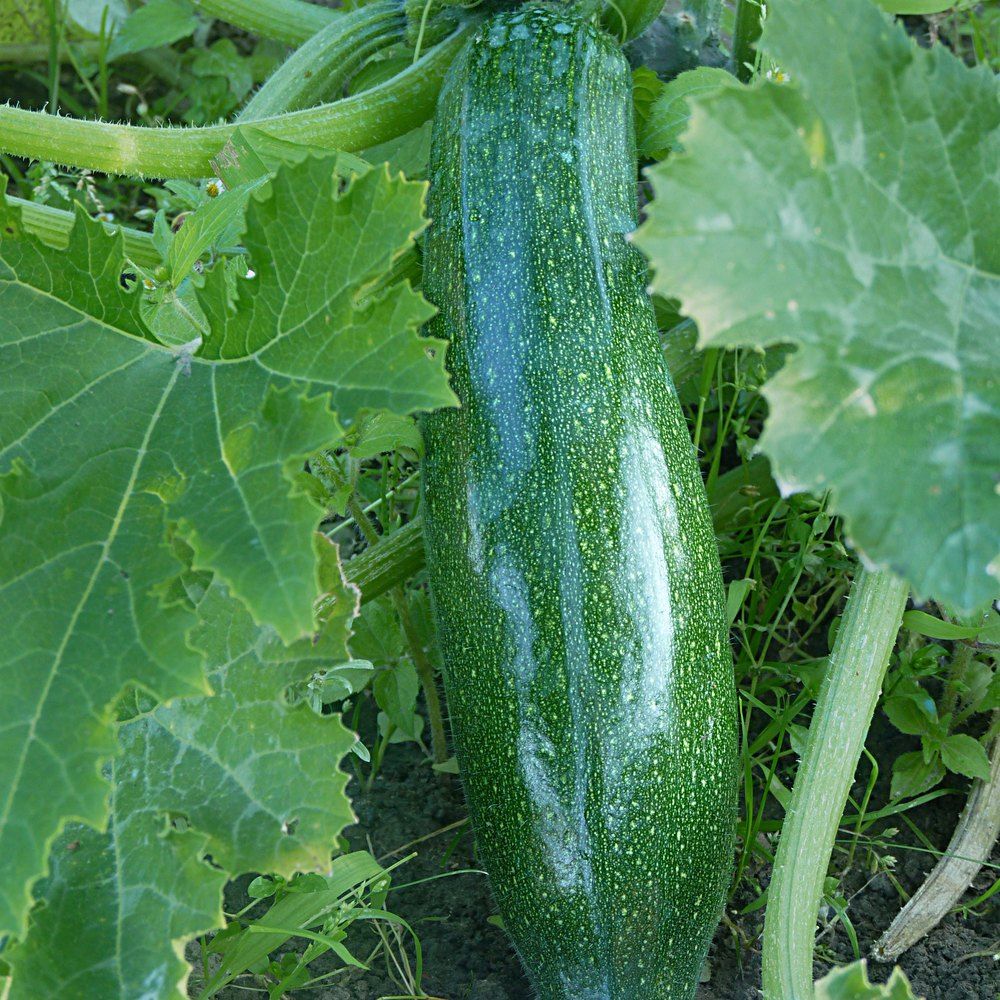
The classic dark green zucchini. One plant feeds a household; two feeds the neighborhood.
Costata Romanesco
Heirloom · 55 days
Ribbed Italian type with dense, nutty flesh that doesn't go watery when cooked.
Dunja
Hybrid · 47 days
Open plant habit makes picking easy, with powdery mildew resistance built in.
Golden Glory
Hybrid · 50 days
Bright yellow fruit you can actually see in the leaves, so fewer get missed into baseball bats.
Raven
Compact plant for containers.
Yellow Crookneck
Sweet summer squash variety, buttery flavor.
Growing zucchini in containers
10-gallon (grow-bag) minimum; bush varieties only.
Nutrition
Beta-carotene (winter squash), silica, vitamin K, hydration mineral profile.
Common questions
Can I eat the blossoms?
Yes. Stuff and pan-fry male blossoms. Female blossoms have the tiny fruit behind them; leave those.
Where these numbers come from
- USDA Plant Hardiness Zone Map (2023 revision). Zone assignment and the 30-year normals behind every cold-hardiness figure.
- NOAA NCEI 1991-2020 Climate Normals. Frost dates, growing-season length, and the probability bands on both.
- Cornell, UMN, and UC Davis Cooperative Extension crop guides. Spacing, days to maturity, soil pH targets, and per-plant yield ranges.
- USDA FSIS / FDA Produce Safety guidance. Wash, cure, and cold-storage handling numbers.
Ranges are regional guidance, not a promise for your yard. Your own logged results always override the published range.