Alternaria leaf spot identification & organic treatment
Alternaria brassicicola / A. spp.
How to identify alternaria leaf spot
A close cousin of early blight that specializes in brassicas and other crops, producing dark concentric-ringed spots that can turn a whole head black if left unmanaged.
Symptoms
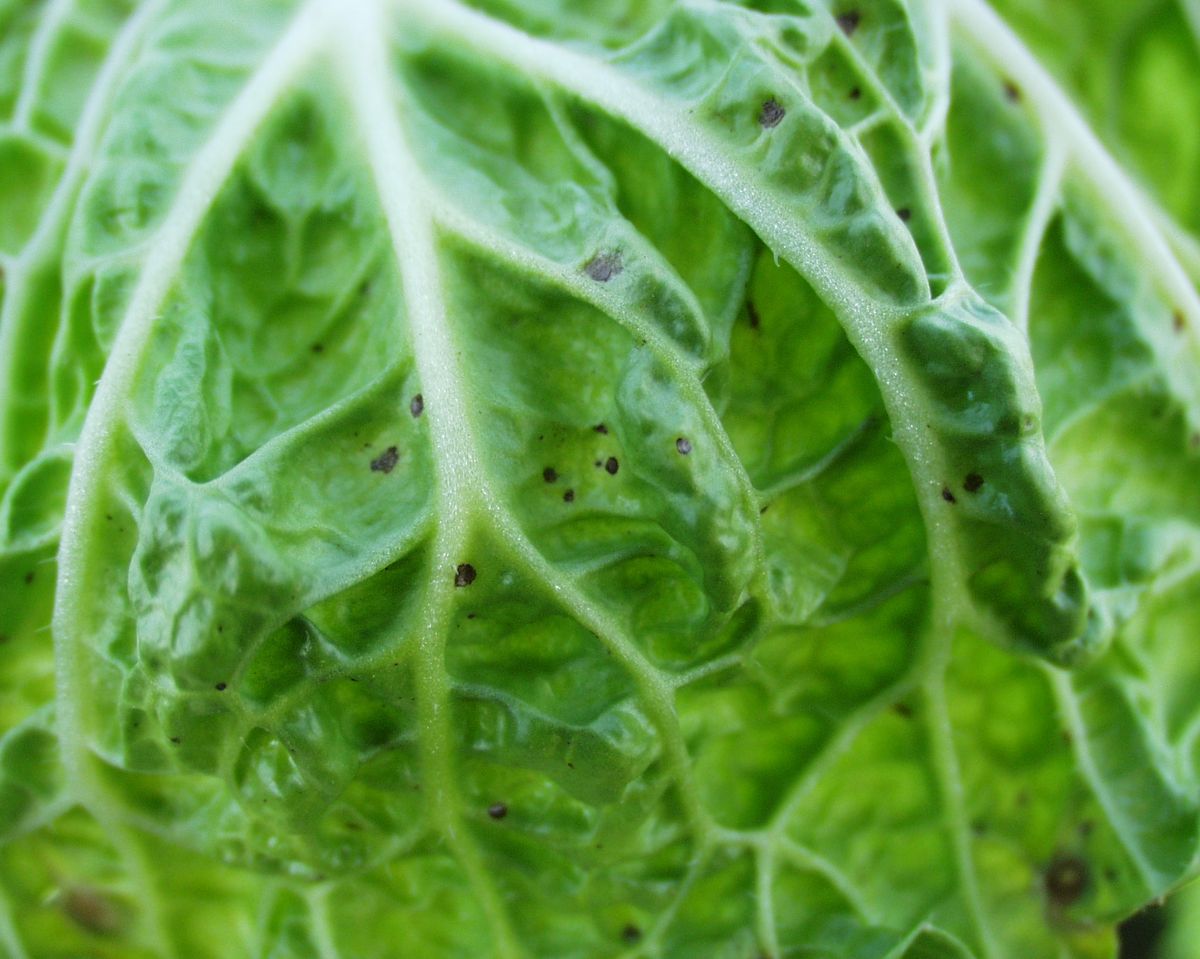
- Small dark brown-to-black spots with concentric rings, often with a yellow halo
- Spots enlarge and merge into large necrotic blotches
- On heading crops, can move into the head/florets and rot them
- Older, lower leaves are hit hardest first
Host crops
Cabbage, Broccoli, Cauliflower, Kale, Collards, Brussels Sprouts, Turnip, Carrot.
How it spreads
Seedborne and survives in crop debris; spread by wind, splashing water, and insects moving between plants.
Favorable conditions
Warm, humid weather with heavy dew; worsens under dense canopy and overhead irrigation.
Progression
- Seedling/early spotting (Cool damp spring) — Tiny dark flecks on cotyledons or lower leaves.
- Spot expansion (Warm, humid stretch) — Rings expand and merge across the leaf.
- Head/floret rot (Late season on brassicas) — Infection reaches broccoli/cauliflower heads, causing black spotting and rot.
Organic treatment for alternaria leaf spot
- 1. Remove infected leaves · low effort
Strip and discard spotted lower leaves as soon as seen.
When: Weekly
- 2. Copper fungicide · medium effort
Apply an OMRI-listed copper spray every 7-10 days once spots appear.
When: Onset through harvest
- 3. Improve airflow and avoid wetting leaves · low effort
Space transplants generously and water at the soil line.
When: At planting and ongoing
Prevention
- Use hot-water-treated or certified disease-free seed.
- Rotate brassicas out of a bed for 2-3 years.
- Clear brassica debris promptly after harvest.
Easy to confuse with
Black rot of crucifers (V-shaped yellow wedges from leaf edge, not round spots), Cercospora leaf spot.