Black rot of brassicas identification & organic treatment
Xanthomonas campestris pv. campestris
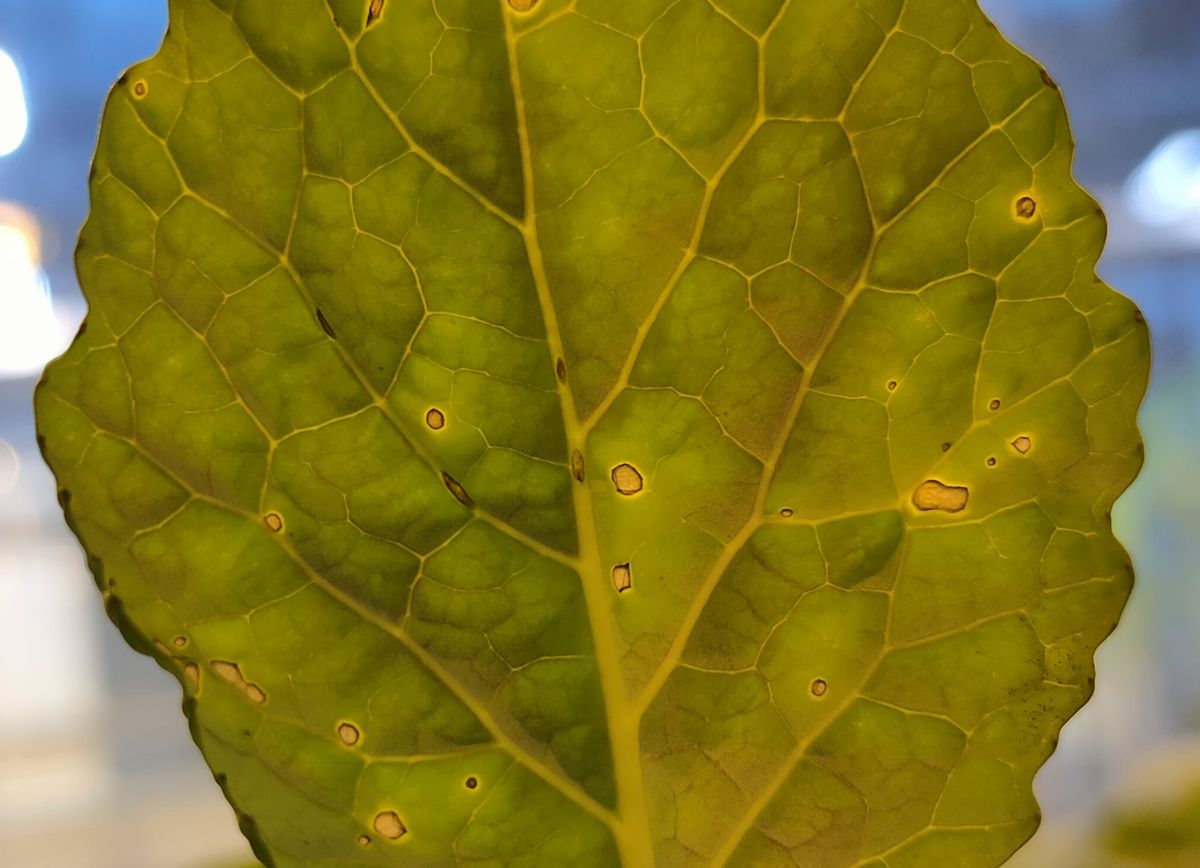
How to identify black rot of brassicas
A vascular bacterium of cabbage-family crops that enters through leaf edges and water pores, causing distinctive V-shaped yellow wedges that point toward the leaf's blackened veins.
Symptoms
- V-shaped yellow-to-brown wedges at the leaf margin, pointing inward toward the midrib
- Veins inside the V turn black; cutting the stem shows a black ring in the vascular tissue
- Leaves yellow, wilt, and drop as the infection spreads
- Heads may be stunted, one-sided, or fail to form
Host crops
Cabbage, Broccoli, Cauliflower, Kale, Collards, Brussels Sprouts, Turnip.
How it spreads
Seedborne, spreads via splashing water, insects, and field tools/hands; enters plants through natural leaf-edge water pores or wounds.
Favorable conditions
Warm, humid, and rainy weather (75-86°F); worse with overhead irrigation and dense plantings.
Progression
- Marginal infection (Warm, wet weeks) — V-shaped wedges appear at leaf edges.
- Vascular spread (Following weeks) — Black veining moves toward the stem; systemic spread begins.
- Head/plant decline (Late season) — Stunted or one-sided heads, or plant collapse in severe cases.
Organic treatment for black rot of brassicas
- 1. Remove infected plants and debris · medium effort
Pull and destroy plants with vascular blackening; don't compost brassica debris from an infected planting.
When: At diagnosis
- 2. Copper bactericide · medium effort
Apply an OMRI-listed copper spray preventively during warm, wet stretches, especially on young transplants.
When: Preventive, early season
Prevention
- Use hot-water-treated or certified disease-free seed; this is the primary entry point.
- Rotate brassicas out of a bed for 2-3 years.
- Avoid overhead watering and working wet plants.
- Control cabbage-family weeds (wild mustard, shepherd's purse) that can harbor the bacterium.
Easy to confuse with
Alternaria leaf spot (round rings, not V-shaped wedges), Fusarium yellows (no V-shaped marginal wedge).