
Angular leaf spot identification & organic treatment
Pseudomonas syringae pv. lachrymans
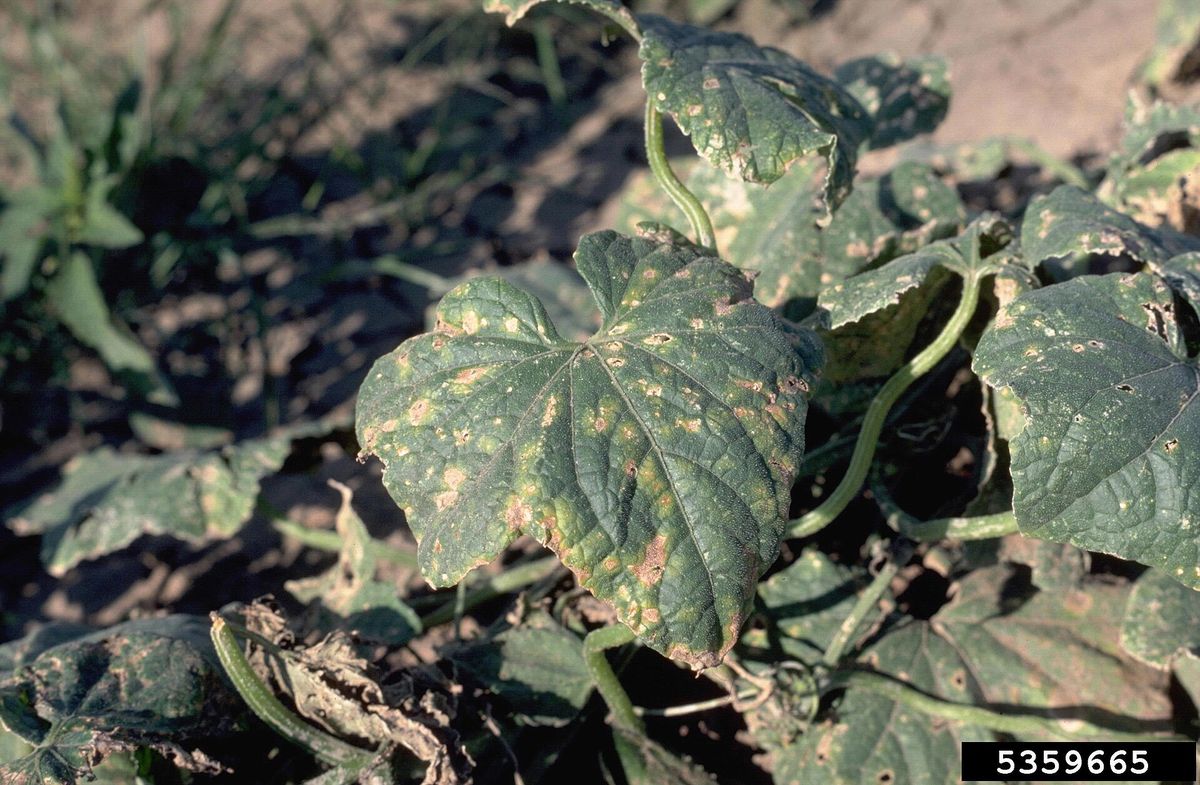
How to identify angular leaf spot
A bacterium that produces angular, vein-bound spots on cucumber and melon leaves, often leaking a sticky ooze that dries into a white crust.
Symptoms
- Small, angular, water-soaked spots bounded by leaf veins, giving a mosaic-like patchwork look
- Spots dry out, turn tan, and can tear out leaving ragged holes
- Sticky bacterial ooze on the underside of spots dries to a white crust
- Water-soaked spots on fruit that can lead to internal fruit rot
Host crops
Cucumber, Cantaloupe / Melon, Zucchini, Winter squash.
How it spreads
Seedborne, spreads via splashing rain/irrigation and on hands and tools when foliage is wet.
Favorable conditions
Warm, humid, wet weather; free water on leaves is required for infection.
Progression
- Leaf spotting (Warm, wet weeks) — Angular water-soaked spots appear, vein-bound.
- Tearing and holes (As spots dry) — Dead tissue falls out, leaving ragged leaf holes.
- Fruit infection (Wet conditions persist) — Water-soaked fruit spots can progress to internal rot.
Organic treatment for angular leaf spot
- 1. Copper bactericide · medium effort
Apply an OMRI-listed copper spray every 7-10 days starting at first sign, especially before forecast rain.
When: Onset through fruiting
- 2. Avoid overhead irrigation and wet-plant handling · low effort
Switch to drip irrigation and stay out of the patch when leaves are wet.
When: All season
Prevention
- Use certified disease-free seed.
- Rotate cucurbits out of a bed for 2 years.
- Improve airflow through spacing and trellising.
Easy to confuse with
Downy mildew (fuzzy gray-purple underside growth, not bacterial ooze), Anthracnose (fungal, no angular vein-bound pattern).