
Downy mildew (cucurbit) identification & organic treatment
Pseudoperonospora cubensis
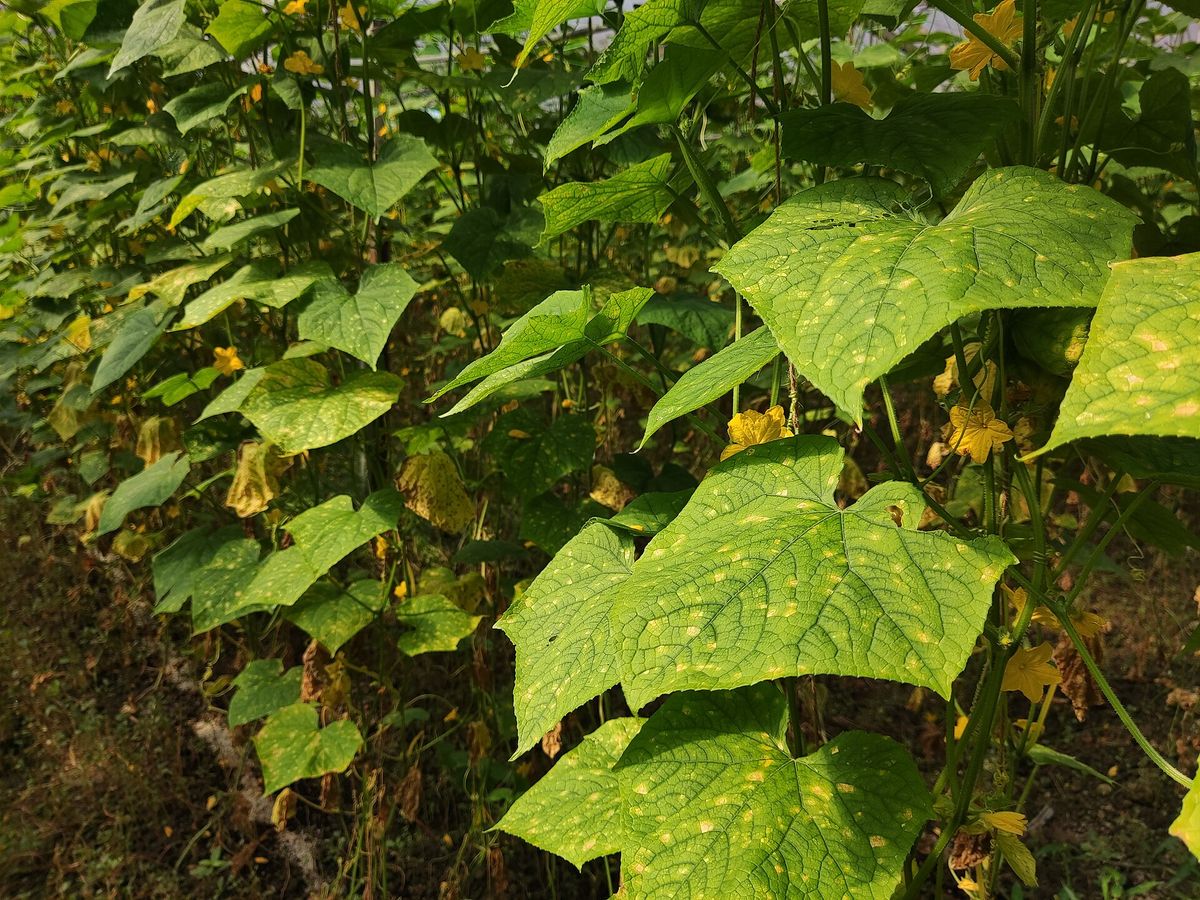
How to identify downy mildew (cucurbit)
A wind-dispersed water mold that produces angular, vein-bound yellow spots on the top of cucumber and melon leaves with a fuzzy gray-purple mold visible underneath.
Symptoms
- Angular yellow spots on upper leaf surface, bounded by leaf veins (looks like a mosaic)
- Fuzzy gray-to-purple mold visible on the corresponding leaf underside, especially in morning humidity
- Spots turn brown and papery as they die; whole leaves can die back quickly
- Rarely affects fruit directly, but early leaf loss stunts fruit size and sugar content
Host crops
Cucumber, Cantaloupe / Melon, Watermelon, Zucchini, Winter squash.
How it spreads
Spores travel hundreds of miles on wind currents from warmer regions each year (does not usually overwinter in cold climates); once established, spreads locally via wind and splashing water.
Favorable conditions
Cool nights with heavy dew or fog and mild days (60-75°F); high humidity is essential for infection.
Progression
- Regional spore arrival (Tracked via regional forecasting networks) — No local symptoms yet.
- Angular spotting (Days after high-humidity nights) — Yellow, vein-bound spots appear on top of leaves.
- Sporulation & spread (Ongoing humid mornings) — Underside mold produces spores for local spread.
- Leaf collapse (1-2 weeks) — Leaves die back; yield and fruit quality drop.
Organic treatment for downy mildew (cucurbit)
- 1. Copper fungicide · medium effort
Apply an OMRI-listed copper spray on a 5-7 day schedule once downy mildew is reported regionally, coating leaf undersides thoroughly.
When: Preventive, once regional risk is reported
- 2. Remove severely infected leaves · low effort
Strip badly spotted leaves to slow local spore production.
When: As seen
- 3. Water at the soil line, early in the day · low effort
Avoid overhead watering, and if unavoidable, do it early so leaves dry by nightfall.
When: All season
Prevention
- Grow downy-mildew-resistant cucumber/melon varieties.
- Watch regional forecasting tools (e.g., cucurbit downy mildew ipmPIPE) for early warning.
- Space vines and prune for airflow.
Easy to confuse with
Powdery mildew (white powder on top of leaf, not angular yellow spots), Nutrient-deficiency mosaic patterns.