
Powdery mildew identification & organic treatment
Podosphaera/Erysiphe/Golovinomyces spp. (host-specific species)
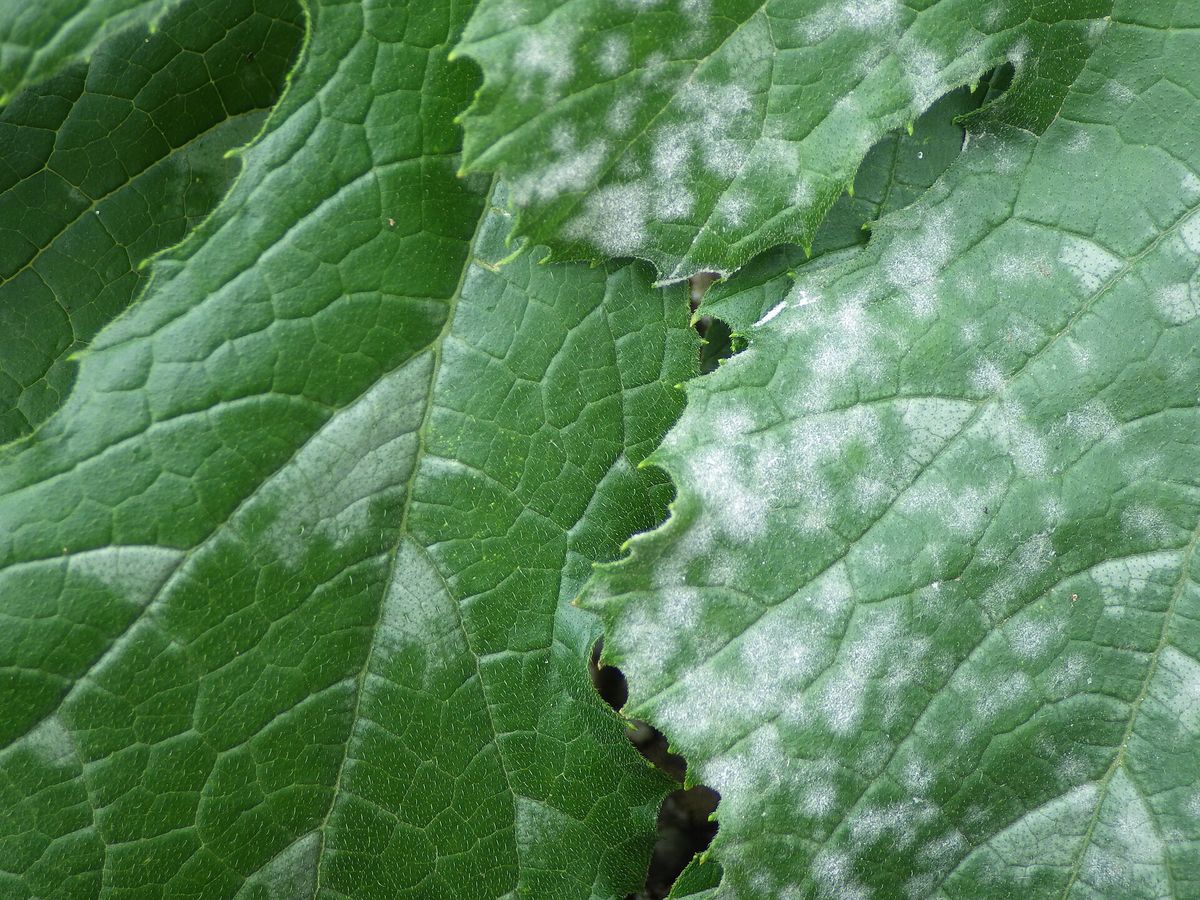
How to identify powdery mildew
Unmistakable white-gray powdery coating on leaf surfaces, caused by several host-specific fungal species. Unlike most fungal diseases it thrives in dry air and doesn't need free water on the leaf to infect.
Symptoms
- White to gray powdery patches on upper (and eventually lower) leaf surfaces
- Starts on older leaves near the crown, spreads outward
- Leaves yellow, curl, and turn brown/crisp as the coating thickens
- Fruit ripens early or unevenly and stays smaller when leaf area is lost
Host crops
Zucchini, Winter squash, Pumpkin, Cucumber, Cantaloupe / Melon, Bush bean, Grape, Pea.
How it spreads
Wind-blown spores; unlike most fungi it does not need standing water to germinate, only high humidity around the leaf surface.
Favorable conditions
Moderate temperatures (68-80°F), high humidity but dry leaf surfaces, dense/shaded plantings, and low sunlight.
Progression
- First patches (Mid-season onward) — Small white spots on older leaves, easy to mistake for dust.
- Coverage spreads (1-2 weeks) — Leaves are majority-covered; photosynthesis drops sharply.
- Decline (Late season) — Vines collapse early; fruit quality and yield fall.
Organic treatment for powdery mildew
- 1. Potassium bicarbonate spray · medium effort
Mix an OMRI-listed potassium bicarbonate fungicide per label and spray weekly starting at the first white speck; it alters leaf pH so spores can't establish.
When: At first sign, weekly
- 2. Diluted milk spray · low effort
Spray a 40% milk / 60% water mix on leaves weekly in full sun; whey proteins have a mild antifungal, antiseptic effect.
When: Preventively or at first sign
- 3. Sulfur dust or spray · medium effort
Apply OMRI-listed sulfur in cool morning hours; never combine with or apply within 2-3 weeks of an oil spray, and skip it above 90°F to avoid leaf burn.
When: Early/heavier infections
- 4. Increase airflow and sun · low effort
Thin crowded vines/leaves and space new plantings further apart.
When: At planting and mid-season pruning
Prevention
- Plant resistant varieties (many squash/cucumber/melon cultivars are bred 'PM tolerant').
- Give full sun and generous spacing.
- Avoid high-nitrogen pushes that create dense, shaded canopy.
- Water at the soil line in the morning.
Easy to confuse with
Downy mildew (angular yellow spots, fuzzy gray underside, not powdery white top), Dust or spray residue.