
Bacterial soft rot identification & organic treatment
Pectobacterium spp. (formerly Erwinia carotovora)
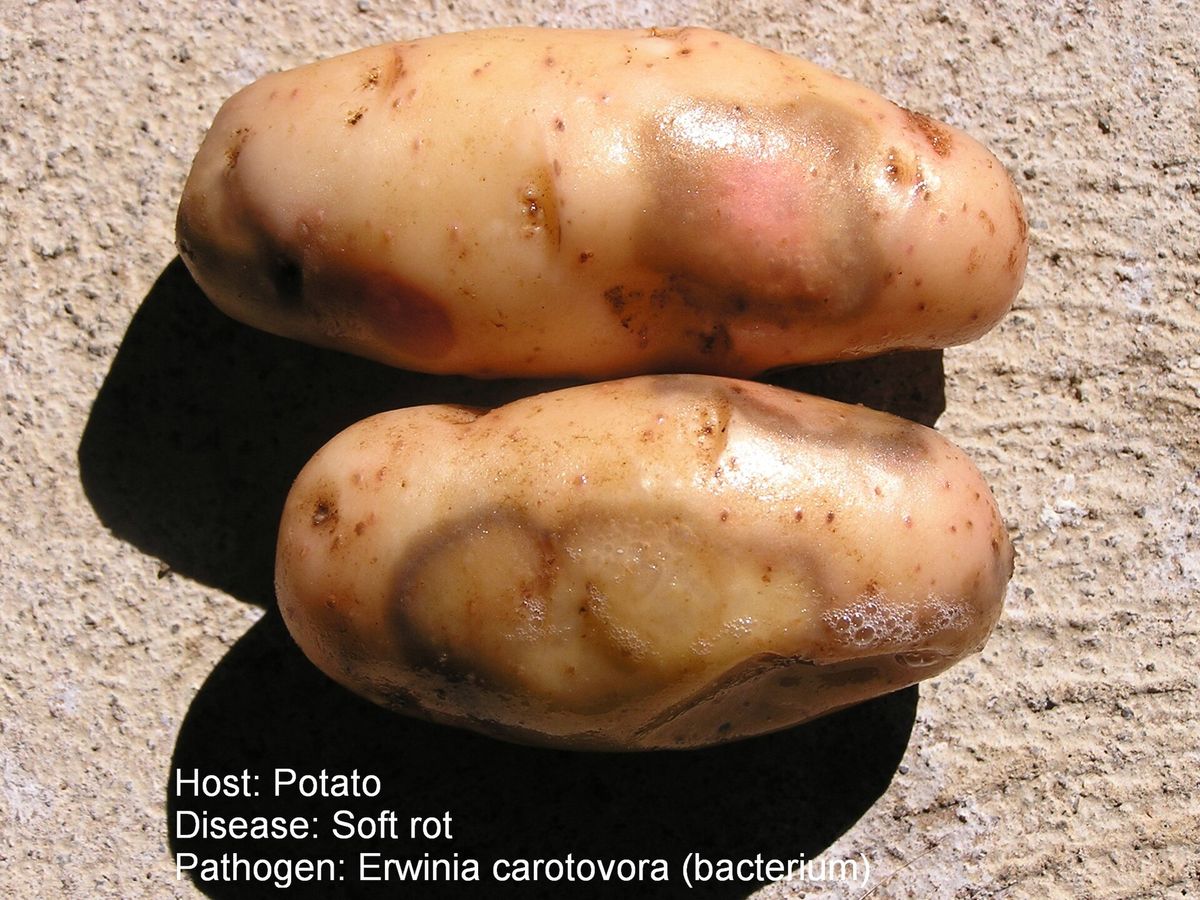
How to identify bacterial soft rot
An opportunistic bacterium that enters through wounds, bruises, or insect damage and turns fleshy roots, bulbs, and stems into a soft, mushy, foul-smelling mass, often in storage.
Symptoms
- Water-soaked, tan-to-brown soft spots that expand quickly into mushy, collapsed tissue
- Strong, foul, sulfurous odor as the tissue breaks down
- Slimy ooze from the rotted area
- Often starts at a wound, bruise, or insect entry point rather than uniformly across the plant
Host crops
Potato, Carrot, Onion, Cabbage, Zucchini, Winter squash.
How it spreads
Lives in soil and water; enters through wounds from harvest handling, insects, frost cracking, or other diseases; spreads rapidly between touching produce in storage, especially in warm, humid, poorly ventilated conditions.
Favorable conditions
Warm temperatures and high moisture, both in the field after heavy rain and in storage with poor ventilation.
Progression
- Wound entry (At harvest or from field damage) — Bacteria enter through a bruise, cut, or insect wound.
- Rapid soft rot (Days, especially warm/humid storage) — Tissue collapses into mush with a foul odor.
- Storage spread (Ongoing in enclosed storage) — Rot spreads to touching produce, ruining a whole bin or crate.
Organic treatment for bacterial soft rot
- 1. Cull and remove affected produce immediately · low effort
Discard any soft, slimy roots/bulbs from storage right away; do not leave them touching healthy produce.
When: At first sign, check storage weekly
- 2. Improve curing and storage ventilation · medium effort
Cure onions, potatoes, and winter squash properly (warm, dry, airy) before long-term storage, and keep storage cool, dry, and well-ventilated.
When: At and after harvest
Prevention
- Handle produce gently at harvest to avoid bruising and cuts.
- Let cuts and bruises dry/heal (suberize) before storage where the crop allows (e.g., potatoes, squash).
- Control insects that create entry wounds (onion maggot, wireworm).
- Store at recommended temperature and humidity for each crop, with airflow.
Easy to confuse with
Gray mold/Botrytis (fuzzy growth, not slimy with foul odor), Sclerotinia white mold (white cottony growth, not slimy ooze).