
Bacterial wilt of cucurbits identification & organic treatment
Erwinia tracheiphila
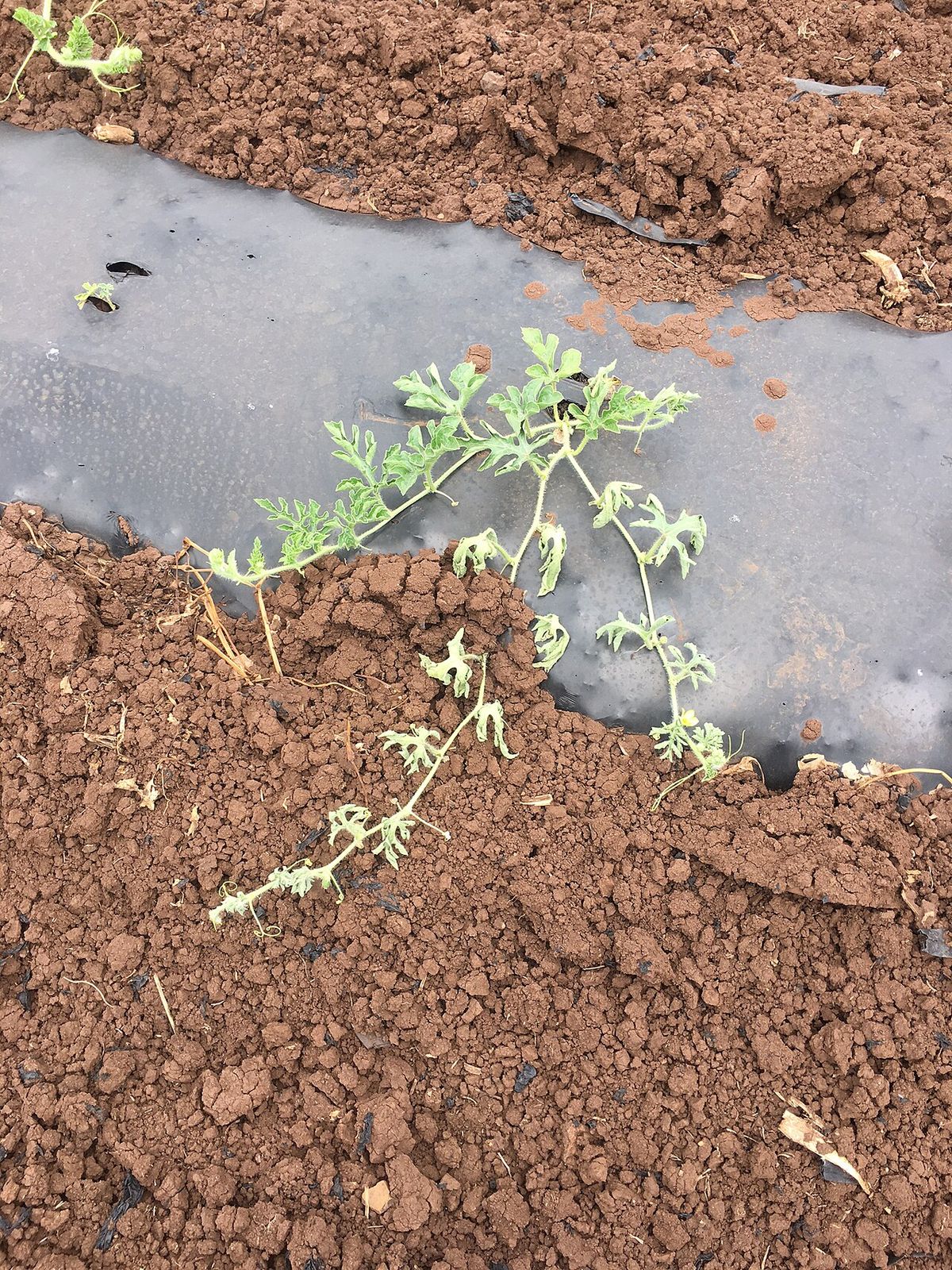
How to identify bacterial wilt of cucurbits
A bacterium spread almost exclusively by cucumber beetles, which introduce it while feeding. It clogs the plant's water-conducting vessels, causing a sudden, irreversible wilt.
Symptoms
- Individual leaves or runners wilt during the day and may recover slightly at night early on
- Wilting spreads to the whole plant within days and does not recover
- Cutting a wilted stem and pressing the cut ends together, then slowly pulling apart, reveals sticky white bacterial ooze strings
- Cucumber beetles are usually visible feeding nearby
Host crops
Cucumber, Cantaloupe / Melon, Zucchini, Winter squash, Pumpkin.
How it spreads
Spread almost entirely by striped and spotted cucumber beetles carrying the bacteria in their gut from plant to plant as they feed; not seedborne and doesn't survive long in soil alone.
Favorable conditions
Any warm growing-season weather; risk tracks cucumber beetle populations, not humidity or rainfall.
Progression
- Beetle feeding/infection (Beetles active, spring onward) — Bacteria enter through feeding wounds.
- Vascular colonization (Days to weeks) — Bacteria multiply and clog water transport.
- Wilt and collapse (Once colonization is heavy) — Runner, then whole-plant, wilt that does not recover.
Organic treatment for bacterial wilt of cucurbits
- 1. Control cucumber beetles aggressively · medium effort
Use floating row cover until bloom (remove for pollination), hand-pick beetles, and apply an OMRI-listed spinosad or pyrethrin spray at first beetle sighting.
When: From seedling emergence through vine establishment
- 2. Remove wilted plants promptly · low effort
Pull and destroy plants once whole-vine wilt sets in; they won't recover and serve as a bacteria source for beetles to spread further.
When: As wilt is confirmed
Prevention
- Grow resistant/tolerant varieties where available (butternut squash is naturally less attractive to cucumber beetles).
- Use row covers early and monitor beetle counts with yellow sticky traps.
- Delay planting slightly to miss the first beetle emergence peak where practical.
Easy to confuse with
Phytophthora blight (fruit rot present, not vector-linked), Squash vine borer damage (frass at stem base, not bacterial ooze).