
Phytophthora blight identification & organic treatment
Phytophthora capsici
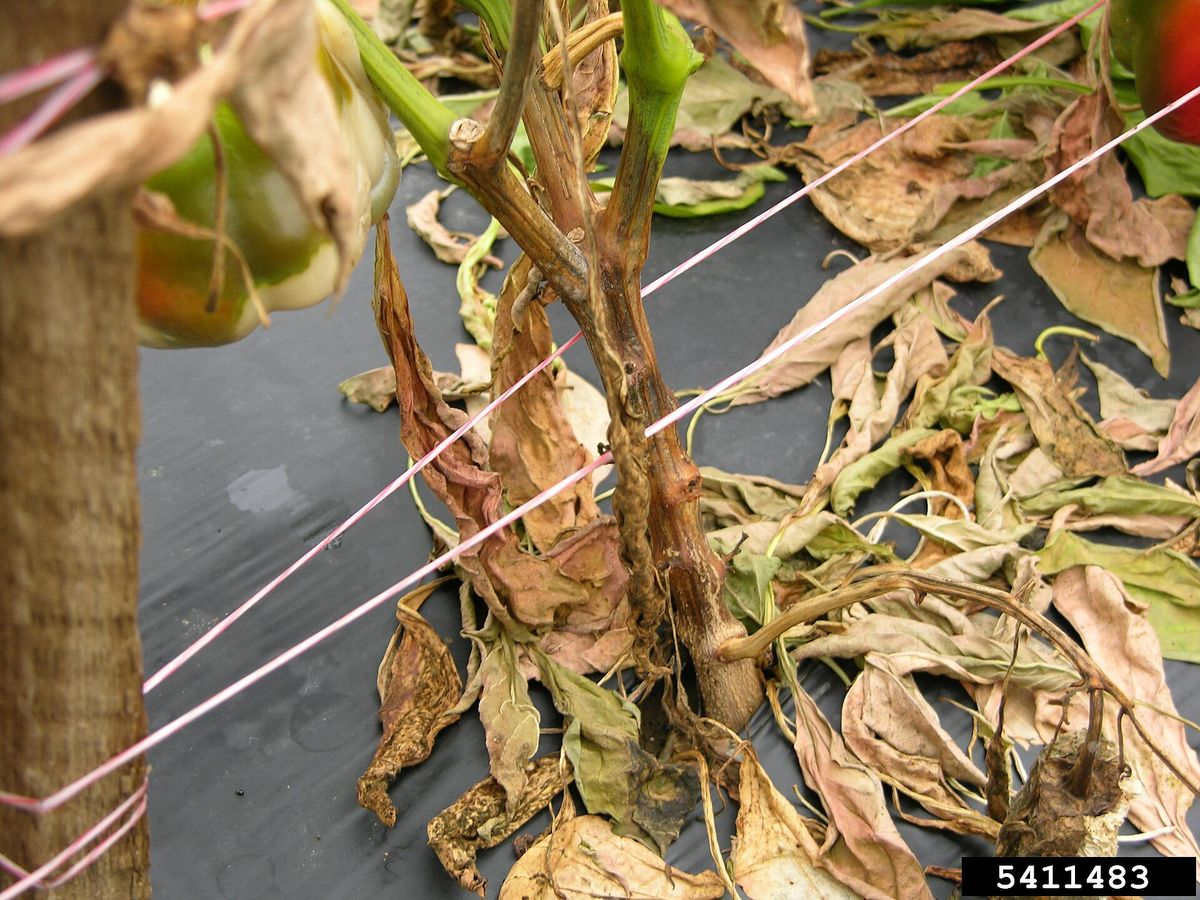
How to identify phytophthora blight
A soil- and water-borne mold that causes sudden crown collapse and a fast-spreading fruit rot, especially devastating in low or poorly drained spots after heavy rain.
Symptoms
- Sudden wilting and collapse of the whole plant, often after a heavy rain
- Dark, water-soaked lesion girdling the stem at the soil line
- White fungus-like growth on fruit lying on or near wet soil
- Rapidly spreading soft rot on fruit, which can turn entirely white and moldy within days
Host crops
Pepper, Zucchini, Winter squash, Pumpkin, Cucumber, Watermelon.
How it spreads
Spores swim through standing water in the soil and splash onto plants during heavy rain or flood irrigation; also spreads on contaminated soil, tools, and floodwater runoff between fields.
Favorable conditions
Warm, waterlogged soil (75-85°F) following heavy rain or overirrigation; low, poorly drained spots are hit hardest.
Progression
- Root/crown infection (Flooded or saturated soil) — Zoospores swim to root zone.
- Crown collapse (Days after saturation) — Stem lesion girdles the plant; sudden wilt.
- Fruit rot (Fruit contact with wet soil) — White moldy rot spreads rapidly, especially post-harvest.
Organic treatment for phytophthora blight
- 1. Improve drainage immediately · medium effort
Dig drainage channels away from affected beds and avoid replanting the same low spot.
When: As soon as flooding/waterlogging is noticed
- 2. Remove and destroy infected plants and fruit · medium effort
Pull collapsed plants and any moldy fruit; discard away from the compost pile.
When: Immediately
- 3. Raise beds and mulch to keep fruit off wet soil · medium effort
Grow susceptible fruiting crops on raised, well-drained beds or trellis vining crops to lift fruit off the ground.
When: At planting
Prevention
- Avoid low, poorly drained ground for susceptible crops.
- Rotate away from susceptible crops for 3-4 years; the pathogen persists in soil.
- Use drip irrigation instead of flood or overhead watering.
- Choose resistant pepper/squash varieties where available.
Easy to confuse with
Bacterial wilt (no white fruit mold, vector-transmitted), Southern blight (tan sclerotia rather than water-soaked collapse after rain).