Bitter rot identification & organic treatment
Colletotrichum spp.
How to identify bitter rot
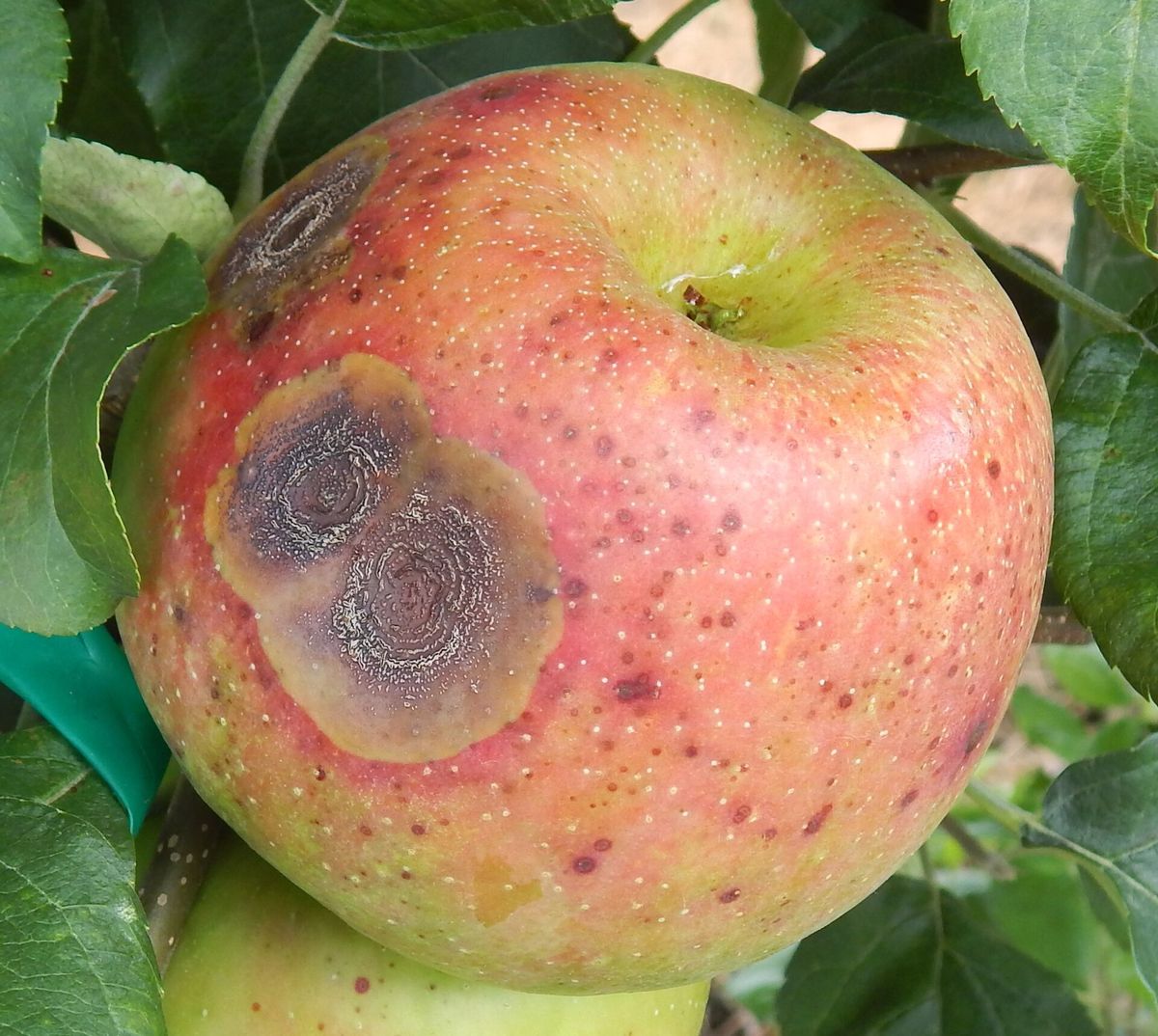
A warm-weather anthracnose relative that causes sunken, circular brown rot spots on apple fruit, usually arranged in concentric rings of tan-orange spore pustules.
Symptoms
- Small light-brown circular spots on fruit that enlarge and sink into a cone-shaped rot
- Concentric rings of salmon-to-orange spore pustules form inside the sunken lesion
- Fruit flesh beneath the lesion turns brown, watery, and bitter-tasting
- Cankers can also form on twigs, serving as a spore source
Host crops
Apple, Grape.
How it spreads
Overwinters in cankers and mummified fruit; spores spread by splashing rain to fruit, entering through lenticels, wounds, or insect damage.
Favorable conditions
Hot, humid weather (75-90°F) with frequent rain; worse in years with a wet, warm summer following harvest.
Progression
- Latent infection (Early summer) — Spores land on fruit but stay dormant.
- Lesion expansion (As fruit ripens, hot/wet) — Sunken, cone-shaped brown rot develops rapidly.
- Sporulation (Within days) — Orange spore rings form; rot spreads to touching fruit and in storage.
Organic treatment for bitter rot
- 1. Remove mummified and rotten fruit · medium effort
Strip all rotten or mummified fruit from the tree and ground promptly and destroy it.
When: Throughout summer, and at harvest
- 2. Prune out cankers · medium effort
Cut out dead or cankered wood during dormant pruning, since it harbors overwintering spores.
When: Winter
- 3. Copper fungicide · medium effort
Apply an OMRI-listed copper spray starting mid-summer during warm, wet stretches.
When: Mid-late summer
Prevention
- Choose resistant varieties where available.
- Improve airflow through pruning and thinning.
- Harvest promptly and cull damaged fruit before storage.
Easy to confuse with
Brown rot (softer, powdery tan-gray spore mass, not concentric orange rings), Apple scab (corky, not sunken cone-shaped rot).