
Brown rot identification & organic treatment
Monilinia fructicola
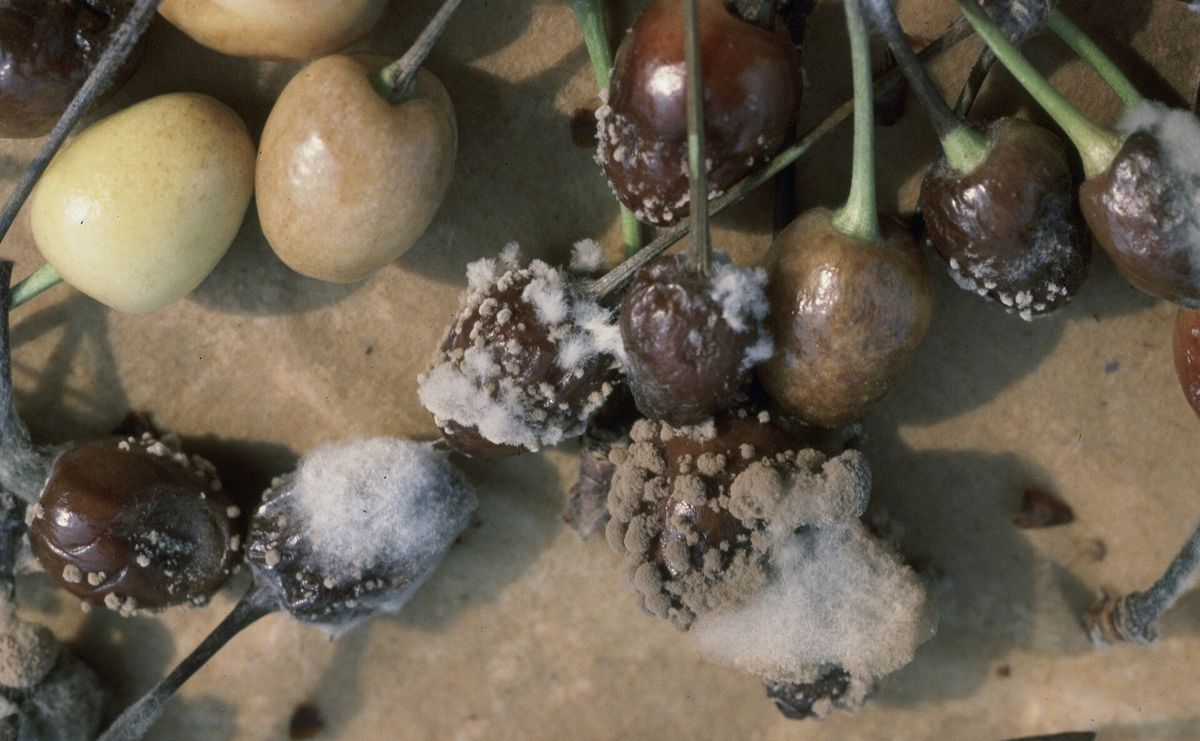
How to identify brown rot
A fast-moving fungus that blights blossoms in spring and then rots ripening stone fruit into a soft brown mass covered in gray-tan powdery spore tufts, often spreading fruit to fruit where they touch.
Symptoms
- Blossoms wilt, brown, and die in spring (blossom blight), sometimes with gum oozing from the flower base
- Twig cankers can form where blighted blossoms meet the stem
- Ripening fruit develops soft brown spots that expand rapidly, covered in tan-gray powdery spore tufts
- Infected fruit often mummifies, shriveling into a hard, dark 'mummy' that clings to the branch
Host crops
Peach, Plum, Cherry.
How it spreads
Overwinters in mummified fruit and twig cankers; spores spread by wind and rain to blossoms in spring, then to ripening fruit in summer, especially fruit that touch or have insect/hail wounds.
Favorable conditions
Warm, humid, or rainy weather during bloom and again as fruit ripens; wounds (insect stings, hail, cracking) are the most common entry points on fruit.
Progression
- Blossom blight (Bloom, wet/humid weather) — Flowers brown and die; may girdle small twigs.
- Latent fruit infection (Early fruit development) — Fungus can enter early but stays dormant until ripening.
- Fruit rot (Ripening, warm/humid) — Soft brown spots expand fast, sporulate, and spread to touching fruit.
- Mummification (Post-infection) — Fruit shrivels into a hard mummy that overwinters the fungus.
Organic treatment for brown rot
- 1. Remove mummified fruit and blighted twigs · medium effort
Prune out and destroy all mummies and cankered twigs during dormant pruning; this removes the primary overwintering source.
When: Winter, before bud break
- 2. Thin fruit for spacing · medium effort
Thin developing fruit so none are touching at maturity; contact points are the main way rot spreads fruit to fruit.
When: Early summer
- 3. Copper or sulfur spray at bloom · medium effort
Apply an OMRI-listed copper (delayed dormant/pink bud) or sulfur spray through bloom to protect blossoms.
When: Bloom period
- 4. Harvest promptly and handle gently · low effort
Pick fruit as soon as ripe and avoid bruising; refrigerate quickly to slow any latent infection.
When: At harvest
Prevention
- Prune for an open canopy so fruit and leaves dry quickly.
- Control fruit-boring insects (like plum curculio) that create wound entry points.
- Remove all mummies from the tree and ground each winter.
- Avoid overhead irrigation during bloom and ripening.
Easy to confuse with
Bacterial canker on stone fruit (gumming from bark cankers, not fruit rot), Bird/insect feeding damage on fruit (no powdery spore tufts).