
Black rot (grape) identification & organic treatment
Guignardia bidwellii
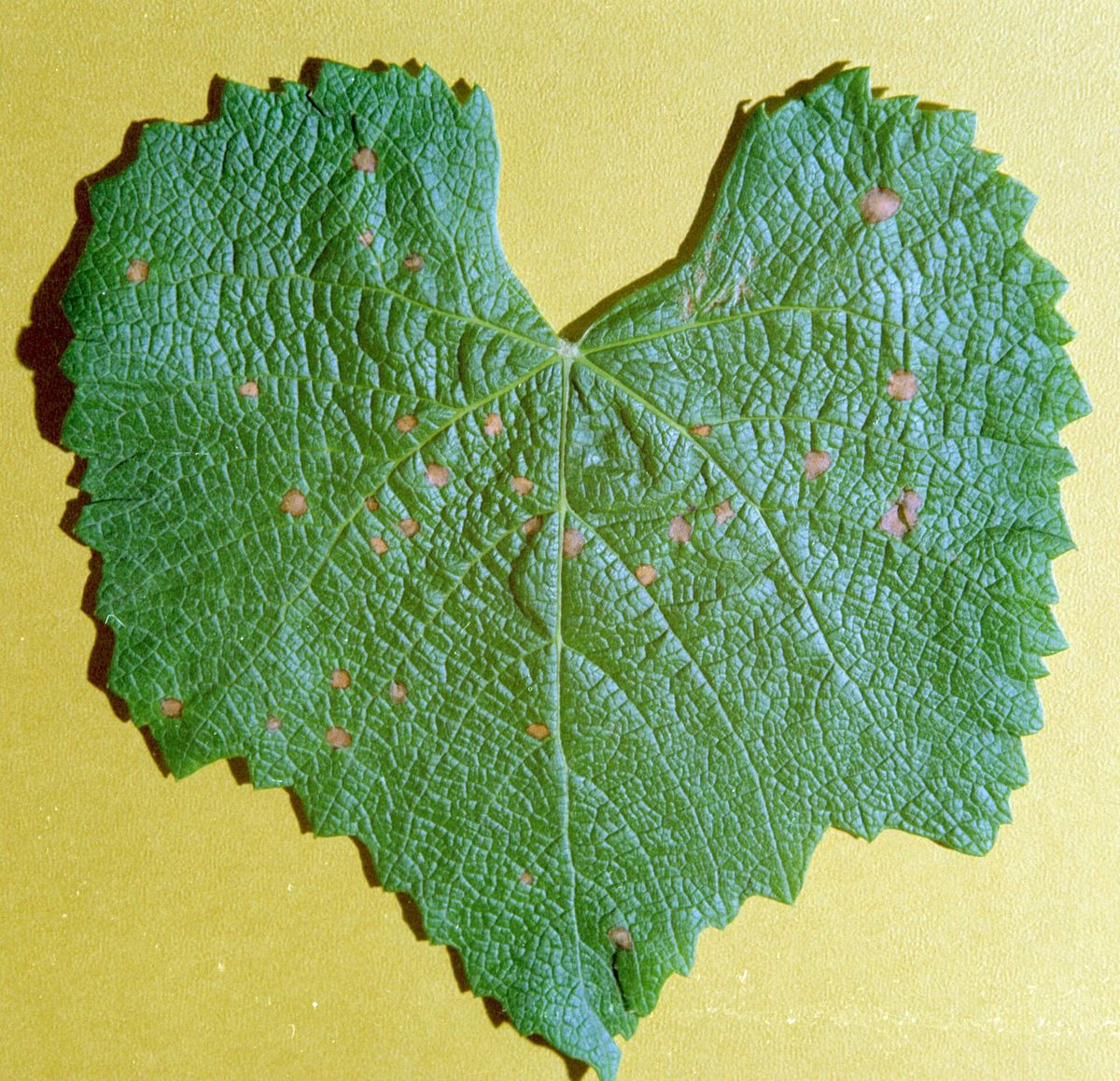
How to identify black rot (grape)
A fungal disease specific to grapes that produces reddish-brown leaf spots and then completely mummifies developing berries into hard, black, wrinkled raisins.
Symptoms
- Small tan-to-reddish-brown circular spots on leaves, often with tiny black specks in the center
- Berries develop a small whitish spot that rapidly enlarges and turns the whole berry brown, then black
- Infected berries shrivel into hard black 'mummies' that cling to the cluster
- Cane and tendril lesions can also occur, elongated and dark
Host crops
Grape.
How it spreads
Overwinters in mummified berries and cane lesions; spores splash onto new growth during spring/early summer rain.
Favorable conditions
Warm, wet weather (75-85°F) with extended leaf/berry wetness, especially from bloom through berry set.
Progression
- Leaf spotting (Spring, wet weather) — Small circular spots with black fruiting bodies appear.
- Berry infection (Just after bloom through pea-size berries) — Most vulnerable window; a whitish spot spreads fast.
- Mummification (Days after infection) — Berries shrivel black and hard, remaining a spore source.
Organic treatment for black rot (grape)
- 1. Remove mummified berries and infected canes · medium effort
Strip all mummies from the vine and ground during dormant pruning and destroy them.
When: Winter
- 2. Copper or sulfur fungicide · medium effort
Apply an OMRI-listed copper or sulfur spray from bud break through berry set, especially before rain.
When: Bud break through pea-size berries
- 3. Improve canopy airflow · medium effort
Prune and train vines for an open canopy that dries quickly.
When: Growing season
Prevention
- Remove all mummies each winter without fail; they're the main overwintering source.
- Choose resistant grape varieties where regionally available.
- Keep vines well-spaced and trellised for airflow.
Easy to confuse with
Anthracnose of grape (sunken 'bird's-eye' spots, different pattern), Downy mildew on grape (fuzzy white underside growth).