Calcium deficiency identification & organic treatment
N/A — abiotic (nutrient deficiency/transport disorder)
How to identify calcium deficiency
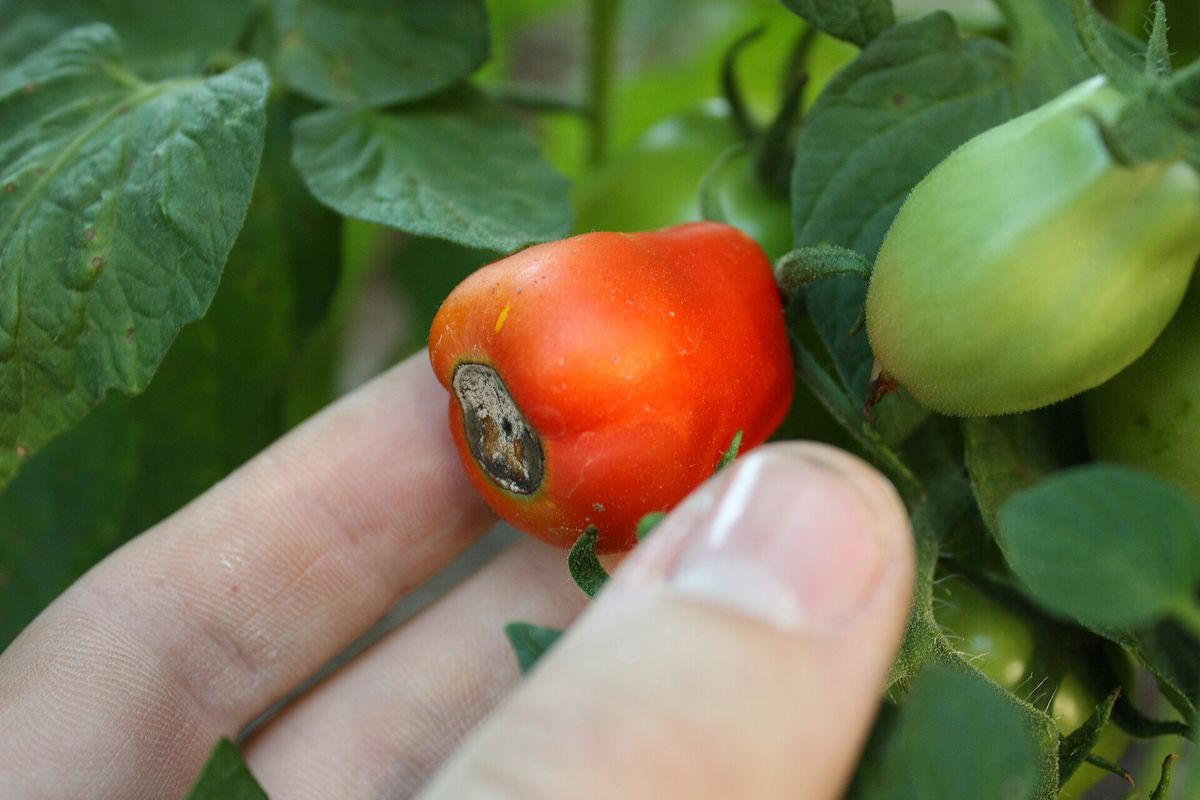
Calcium barely moves within the plant once deposited, so deficiency symptoms show up specifically in the newest growth and fastest-growing tissue, most famously as blossom end rot on fruit.
Symptoms
- Distorted, curled, or stunted new leaves and growing points
- Blossom end rot on fruiting crops (see separate entry) as the most common visible sign
- Tipburn on heading crops like lettuce and cabbage
- Weak stems and roots in severe, prolonged deficiency
Host crops
Tomato, Pepper, Cabbage, Lettuce.
How it spreads
Not contagious; a soil availability or transport issue, not a pathogen.
Favorable conditions
Low soil calcium, very acidic soil, or (most commonly) inconsistent soil moisture that disrupts calcium's ability to move with water into new tissue even when soil calcium is adequate.
Progression
- Transport disruption (Inconsistent watering or low soil calcium) — Calcium fails to reach fast-growing new tissue.
- New-growth symptoms (Days to a week later) — Distorted new leaves, blossom end rot, or tipburn appear.
Organic treatment for calcium deficiency
- 1. Stabilize soil moisture first · low effort
Even, consistent watering with mulch resolves most calcium-transport deficiencies without adding any calcium product.
When: Ongoing
- 2. Add gypsum or lime if soil test confirms true low calcium · medium effort
Apply an OMRI-listed gypsum (won't change pH) or agricultural lime (raises pH) per soil test recommendation.
When: Based on soil test results
Prevention
- Test soil calcium levels and pH before assuming a deficiency needs a calcium amendment.
- Mulch to buffer soil moisture swings.
- Avoid over-application of high-potassium or high-ammonium fertilizers, which can interfere with calcium uptake.
Easy to confuse with
Boron deficiency (also distorts growing points, confirm with soil/tissue test), Herbicide injury on new growth.