
Late blight identification & organic treatment
Phytophthora infestans
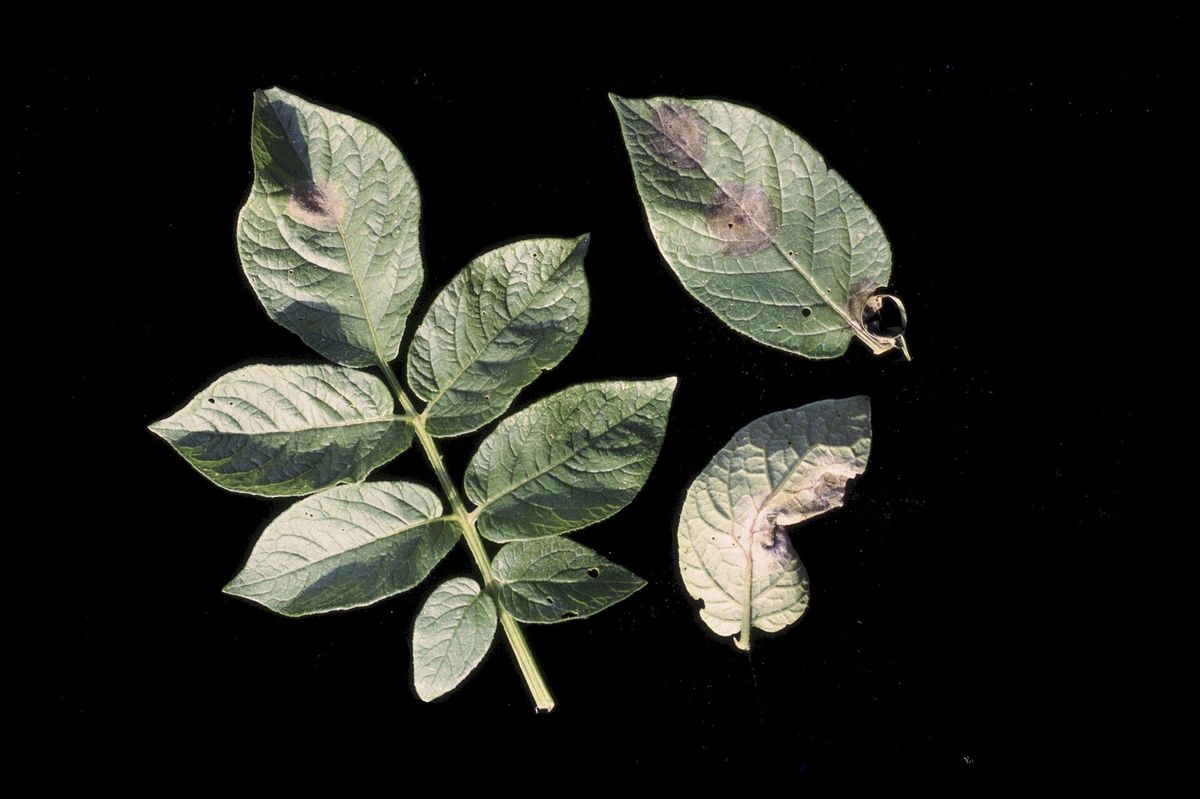
How to identify late blight
The water-mold pathogen behind the Irish potato famine. Moves explosively in cool, wet weather, turning whole tomato and potato plantings to black mush within days.
Symptoms
- Large, irregular water-soaked blotches on leaves that quickly turn dark brown-black
- White, fuzzy fungus-like growth on the underside of lesions in humid mornings
- Dark, greasy-looking lesions on stems
- Firm, brown, greasy-looking blotches on green or ripe fruit/tubers that rot fast in storage
Host crops
Tomato, Potato.
How it spreads
Spreads explosively on wind and rain over long distances; also arrives on infected transplants or seed potatoes; survives winter mainly in infected potato tubers (cull piles, volunteers) rather than in soil.
Favorable conditions
Cool, wet weather (60-70°F) with high humidity or fog; an outbreak can defoliate a planting within a week under the right conditions.
Progression
- Introduction (Cool, wet spell) — Spores arrive on wind or infected plant material.
- Rapid lesion growth (24-72 hours) — Water-soaked spots expand into large black blotches.
- Sporulation (Humid mornings) — White fuzzy growth appears on lesion undersides, releasing more spores.
- Plant/field collapse (Within a week of onset) — Entire plants and neighboring plantings can be lost.
Organic treatment for late blight
- 1. Remove and destroy infected plants immediately · high effort
Pull and bag whole infected plants (do not compost); this disease can spread to neighbors' gardens on the wind, so act fast.
When: At first confirmed sighting
- 2. Copper fungicide, applied preventively · medium effort
Apply an OMRI-listed copper spray every 5-7 days once late blight is reported in the region; copper only protects tissue it's applied to before infection.
When: Starting when regional reports appear, through the risk season
- 3. Improve airflow and avoid overhead watering · low effort
Stake, space, and water at the soil line to reduce the leaf-wetness window the pathogen needs.
When: All season
Prevention
- Buy certified disease-free seed potatoes; never plant potatoes from cull piles or the grocery store.
- Destroy volunteer potato plants and cull piles, the main overwintering source.
- Track regional late blight alerts (e.g., USABlight) and act preventively before it's confirmed locally.
- Choose late-blight-tolerant varieties where available.
Easy to confuse with
Early blight (target-ring spots, slower spread, no white fuzzy growth), Frost damage (no fuzzy sporulation, uniform across the planting).