
Early blight identification & organic treatment
Alternaria solani
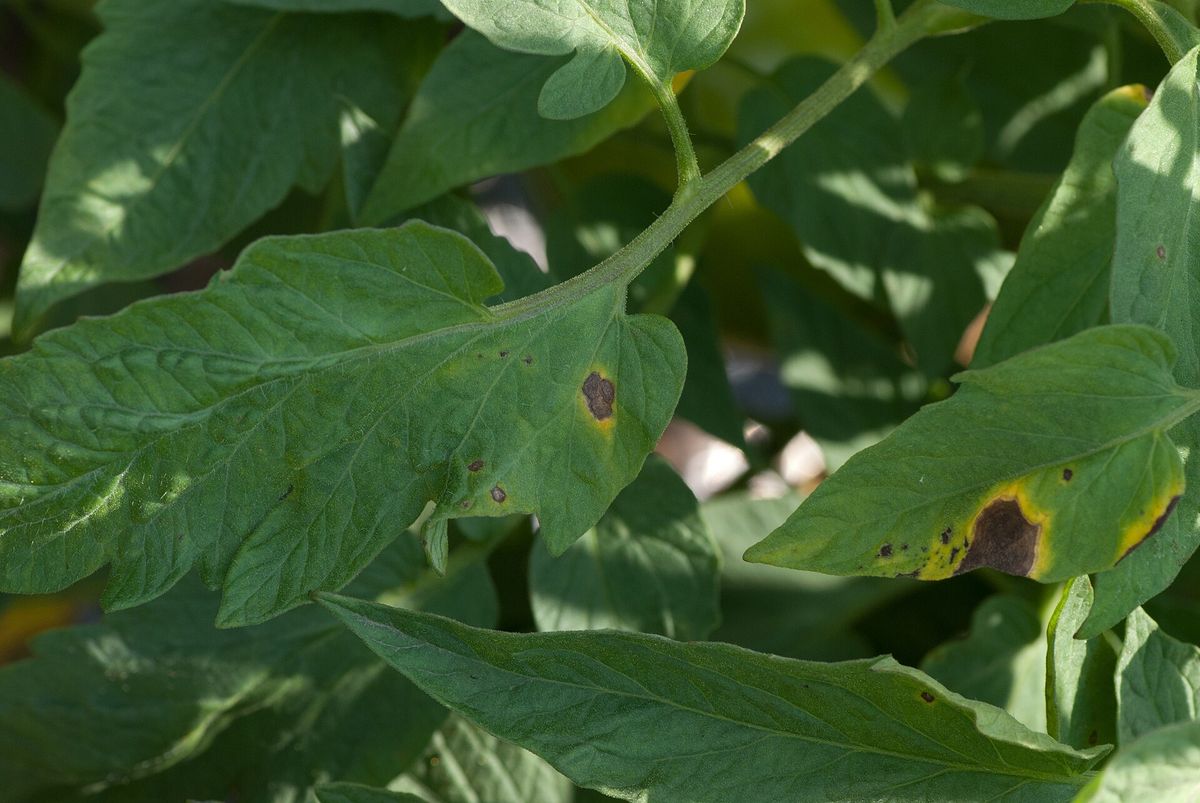
How to identify early blight
A soil-dwelling fungus that starts on the oldest, lowest leaves and works upward. Classic sign is a brown spot with concentric rings, like a target, ringed by yellow tissue.
Symptoms
- Brown-to-black spots with concentric target rings on lower/older leaves first
- Yellow halo around each spot
- Leaves yellow, wither, and drop from the bottom of the plant up
- Dark, sunken lesions with rings can also form on stems and fruit near the calyx
Host crops
Tomato, Potato, Eggplant.
How it spreads
Overwinters in soil and plant debris; splashes onto lower leaves in rain or overhead watering, then spreads plant-to-plant on wind-driven splash and on tools/hands.
Favorable conditions
Warm (75-85°F) with alternating wet and dry periods; heavy dew or overhead irrigation accelerates it; stressed or nutrient-deficient plants are hit hardest.
Progression
- Infection (Early season, soil splash onto lowest leaves) — Tiny brown flecks appear, easy to miss.
- Established lesions (2-3 weeks in) — Target-ring spots enlarge; lower canopy yellows.
- Canopy loss (Mid-late season) — Defoliation moves upward; fruit sunscalds from lost leaf cover.
- Fruit/stem lesions (Late season, humid stretches) — Sunken dark lesions near the stem end reduce marketable yield.
Organic treatment for early blight
- 1. Strip infected lower leaves · low effort
Remove and bag (don't compost) leaves showing target spots as soon as seen; disinfect shears between plants with a 10% bleach or alcohol wipe.
When: At first sign, weekly thereafter
- 2. Copper fungicide (OMRI-listed) · medium effort
Spray a fixed-copper or copper octanoate product every 7-10 days once symptoms start, coating both leaf surfaces; copper is protective, not curative.
When: Onset through harvest, per label
- 3. Mulch heavily · low effort
Lay 2-3 in of straw mulch at transplant to stop soil from splashing onto lower leaves in the first place.
When: At transplant
- 4. Improve airflow · low effort
Stake or cage plants and prune suckers so leaves dry quickly after rain or dew.
When: All season
Prevention
- Rotate tomatoes/potatoes/eggplant out of a bed for 2-3 years.
- Choose resistant varieties where available (labeled 'EB' tolerance).
- Water at the soil line, not overhead; water in the morning so foliage dries fast.
- Clean up and destroy all nightshade debris at season's end.
Easy to confuse with
Septoria leaf spot, Late blight, Nitrogen deficiency (general lower-leaf yellowing).