
Septoria leaf spot identification & organic treatment
Septoria lycopersici
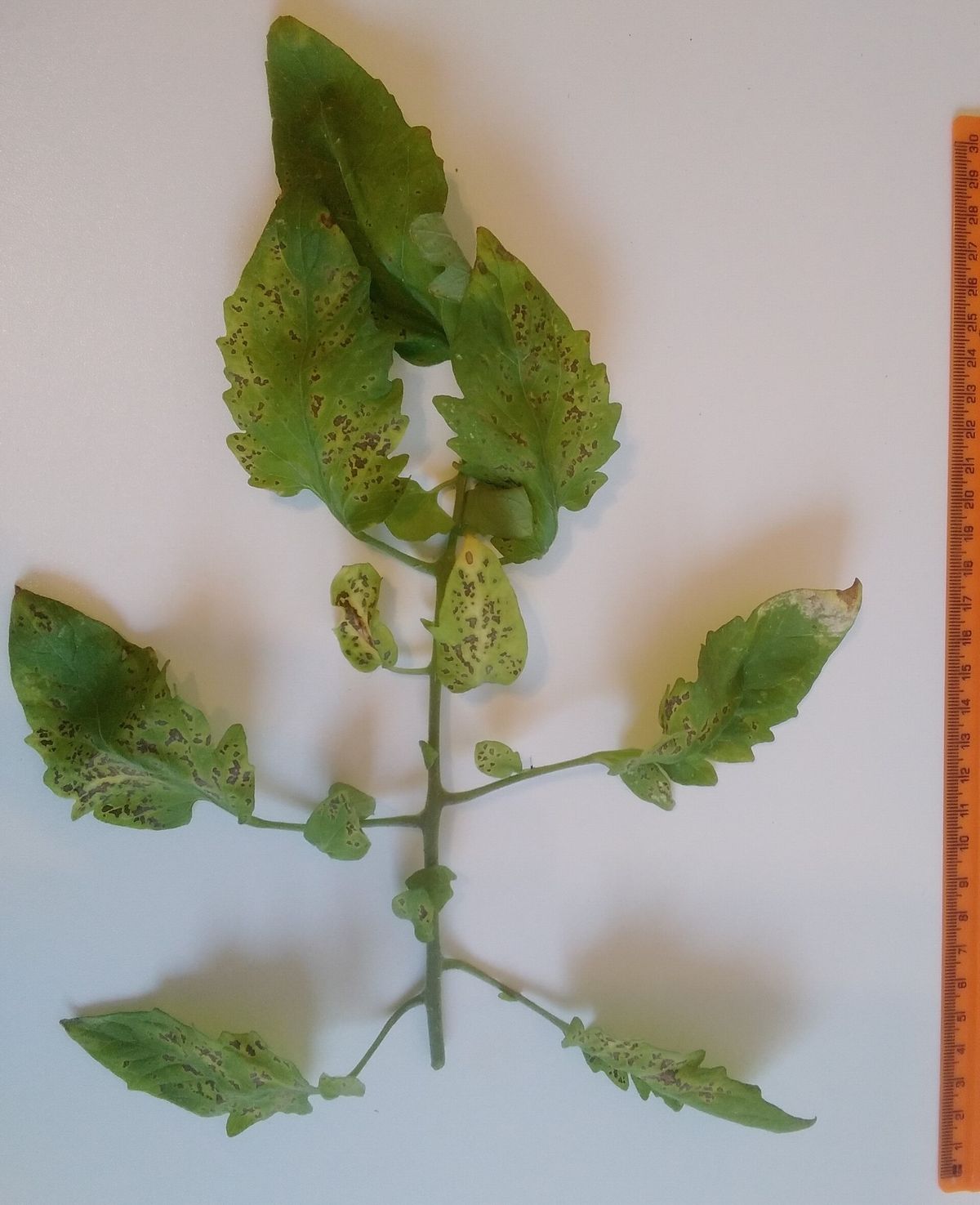
How to identify septoria leaf spot
A relentless tomato-specific fungus that produces dozens of small, circular spots with tan centers and dark borders, each dotted with tiny black specks (the fungus's fruiting bodies).
Symptoms
- Many small (1/16-1/4 in) circular spots with gray-tan centers and dark margins on lower leaves
- Tiny black pepper-like specks visible in the center of each spot with a hand lens
- Heavily spotted leaves turn yellow, then brown, and drop
- Rarely affects fruit directly, but total defoliation exposes fruit to sunscald
Host crops
Tomato.
How it spreads
Survives in old tomato debris and on volunteer tomato plants/weeds; spreads by splashing rain or irrigation water, and on hands, tools, and stakes reused from a prior season.
Favorable conditions
Warm, humid, and rainy stretches (68-77°F with prolonged leaf wetness); worse in dense, poorly ventilated plantings.
Progression
- Lower-leaf onset (After fruit set, humid weeks) — Small spots appear on oldest leaves first.
- Rapid multiplication (1-2 weeks) — Hundreds of spots merge; leaf yellows and drops.
- Progressive defoliation (Through the season if unmanaged) — Disease climbs the plant leaf-tier by leaf-tier.
Organic treatment for septoria leaf spot
- 1. Remove spotted leaves immediately · low effort
Pinch off and discard (not compost) any leaf with visible spots as soon as noticed.
When: First sign, ongoing
- 2. Copper fungicide · medium effort
Apply an OMRI-listed copper spray every 7-10 days starting at first symptom; reapply after heavy rain.
When: Onset through harvest
- 3. Mulch and stake · low effort
Mulch to block soil splash and stake/prune for airflow so leaves dry between waterings.
When: At transplant and ongoing
Prevention
- 3-year rotation away from tomato/potato ground.
- Never reuse un-sanitized stakes or cages from an infected planting.
- Space plants for airflow; avoid overhead watering.
- Destroy tomato debris at season end; do not till it under.
Easy to confuse with
Early blight (target rings, larger spots), Bacterial spot (no black fruiting specks).