
Potassium deficiency identification & organic treatment
N/A — abiotic (nutrient deficiency)
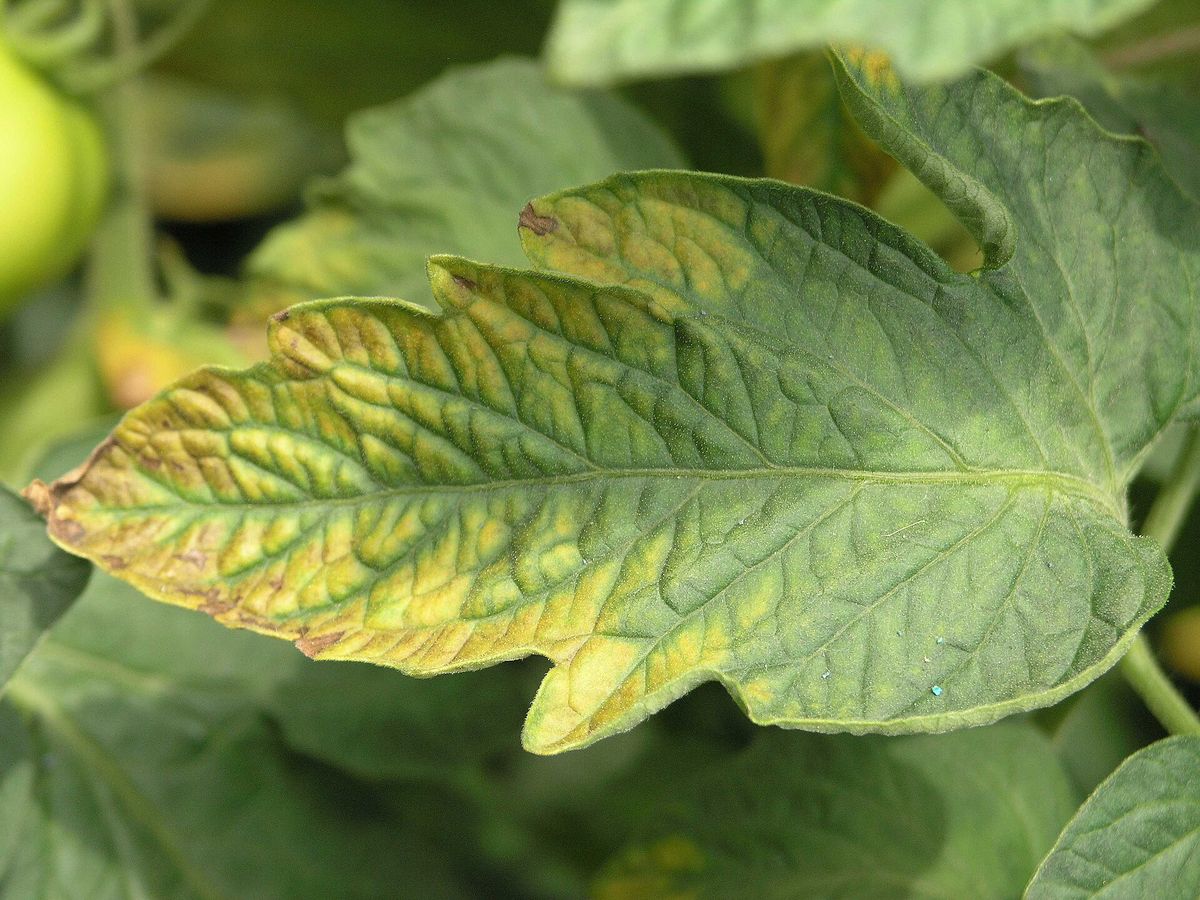
How to identify potassium deficiency
Potassium moves within the plant like nitrogen, so a shortage shows up as scorched, yellowing leaf margins on the oldest leaves first, while the leaf interior often stays green longer.
Symptoms
- Yellow-to-brown scorching along the margins of older leaves, moving inward
- Leaf edges can curl or become brittle
- Weak stems and increased susceptibility to disease and drought stress
- Fruit can ripen unevenly or stay smaller than expected
Host crops
Tomato, Potato, Pepper, Watermelon.
How it spreads
Not contagious; a soil fertility issue, not a pathogen.
Favorable conditions
Sandy soils that don't hold potassium well, heavy rainfall leaching it from the root zone, or high-yield crops that draw down potassium faster than it's replenished.
Progression
- Potassium depletion (Over the season without replenishment) — Soil potassium runs low relative to demand.
- Marginal leaf scorch (As deficiency develops) — Older leaf edges yellow and brown.
- Weakened, disease-prone plants (If uncorrected) — Stems weaken; fruit quality and disease resistance decline.
Organic treatment for potassium deficiency
- 1. Apply kelp meal or sulfate of potash · low effort
Work an OMRI-listed kelp meal or potassium sulfate product into the soil around the root zone per label rate.
When: At first sign of marginal scorching
- 2. Add wood ash sparingly · low effort
A light dusting of hardwood ash supplies potassium, but overuse raises soil pH significantly, so use it only occasionally and test soil pH periodically.
When: As a light supplement, not repeatedly
Prevention
- Amend sandy soil with compost to improve nutrient retention.
- Test soil periodically to track potassium levels, especially in high-yield beds.
- Avoid excessive irrigation that leaches nutrients past the root zone.
Easy to confuse with
Drought stress (marginal browning but not tied to a soil nutrient test), Salt burn (also marginal scorch, but tied to over-fertilizing/salty water).