
Potato virus Y identification & organic treatment
Potato virus Y (PVY)
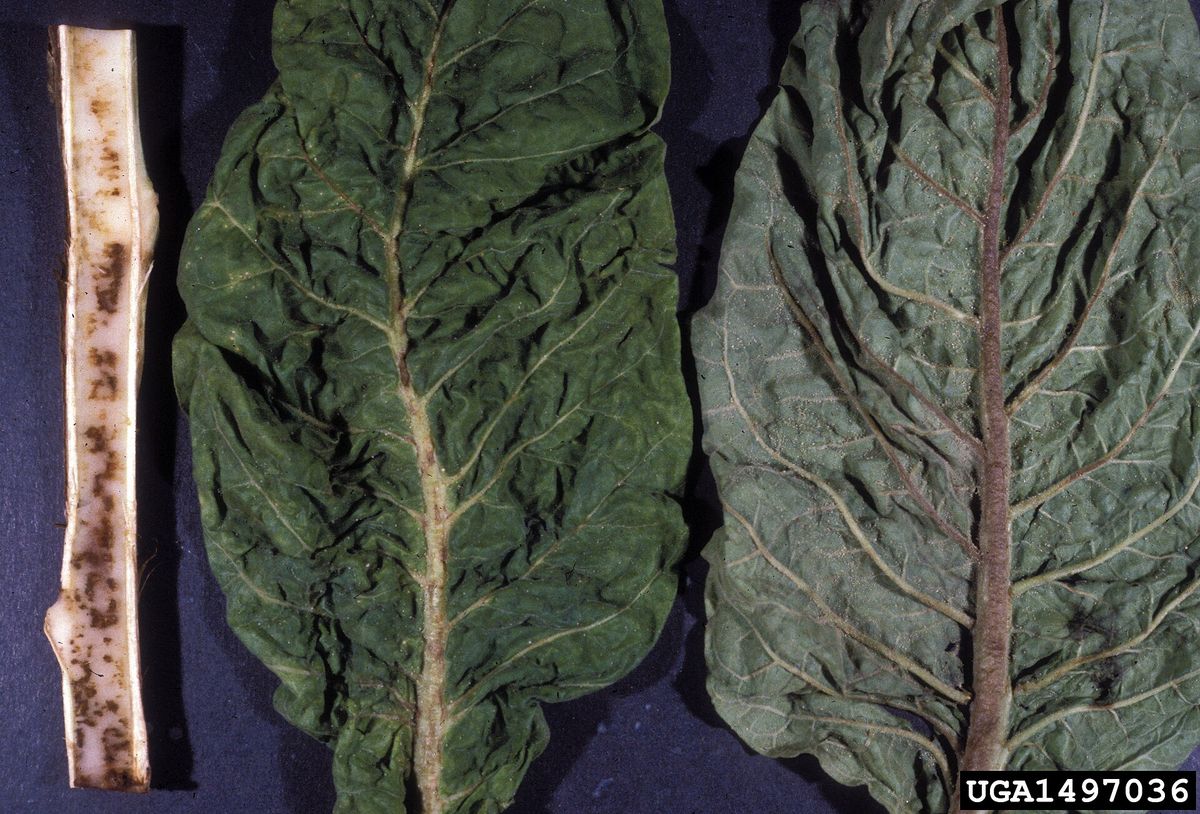
How to identify potato virus y
An aphid-transmitted virus of potato (and related nightshades) that causes leaf mottling, mosaic patterns, and in some strains a distinctive necrotic ringspot on tubers.
Symptoms
- Mottled mosaic pattern on leaves, sometimes with dark necrotic spotting along veins
- Leaf drop starting from the bottom of the plant in severe strains ('potato leaf drop streak')
- Reduced tuber size and yield
- Some strains cause raised or sunken necrotic ring patterns on the tuber surface
Host crops
Potato, Pepper, Tomato.
How it spreads
Spread by aphids in a matter of seconds of feeding (non-persistent transmission), and carried seed-to-seed in infected seed potatoes.
Favorable conditions
Any time aphids are active and moving between infected and healthy plants; seed-borne infection guarantees symptoms regardless of weather.
Progression
- Aphid or seed-borne introduction (Planting infected seed or aphid feeding) — Virus present, sometimes without immediate visible symptoms.
- Mosaic and vein necrosis (Weeks into the season) — Mottling and necrotic streaking develop on leaves.
- Tuber effects (At harvest/storage) — Reduced yield and, in some strains, ringspot necrosis on tubers.
Organic treatment for potato virus y
- 1. Remove infected plants · medium effort
Pull and destroy plants with confirmed symptoms to reduce the aphid-accessible source; there is no cure.
When: At diagnosis
- 2. Manage aphids with reflective mulch and soap · medium effort
Use reflective mulch to reduce aphid landing and insecticidal soap on visible colonies; because transmission is nearly instant, this reduces but doesn't eliminate spread.
When: All season
Prevention
- Plant certified virus-free seed potatoes every season.
- Control aphids and remove volunteer potatoes and nightshade weeds.
- Choose PVY-resistant varieties where available.
Easy to confuse with
Potato leafroll virus (upward leaf rolling, not mosaic mottling), Herbicide drift.