
Tomato spotted wilt virus identification & organic treatment
Tomato spotted wilt virus (TSWV)
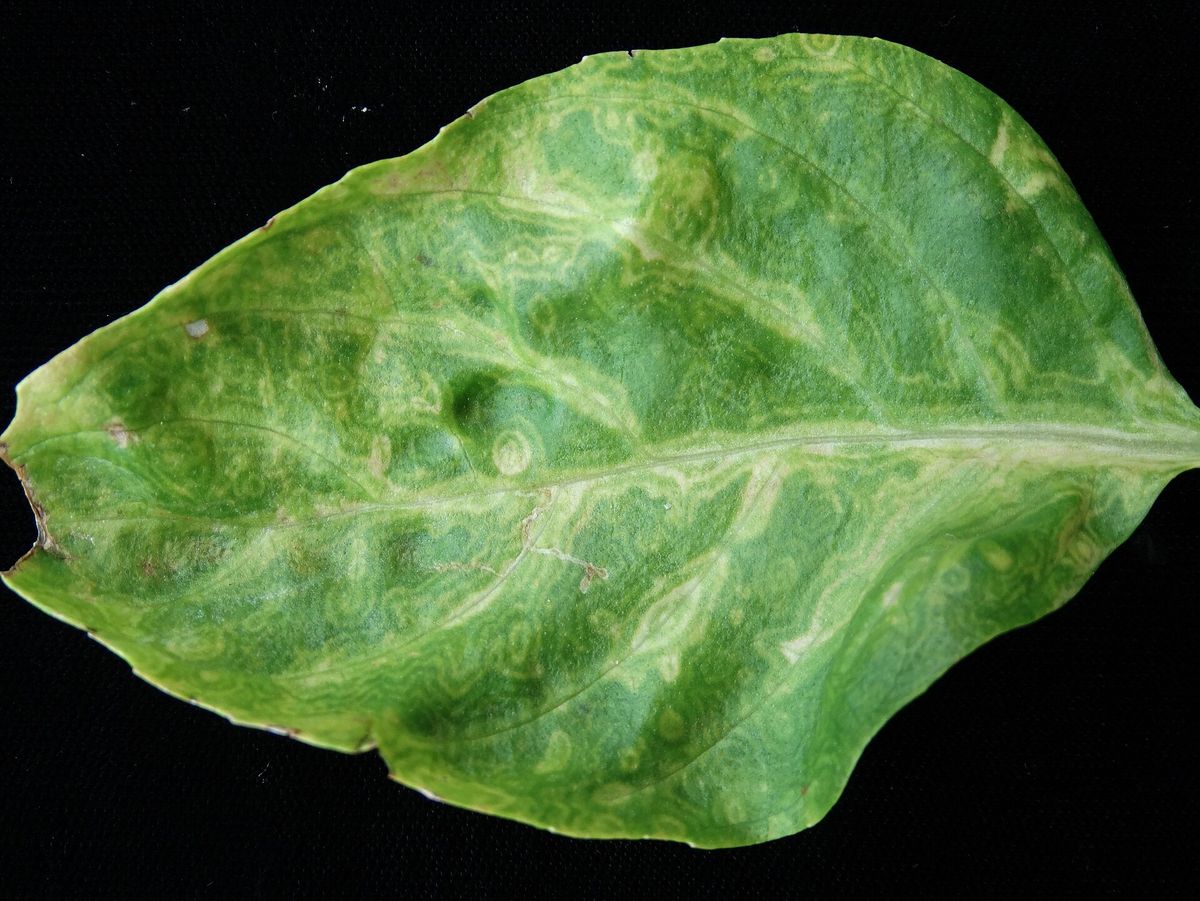
How to identify tomato spotted wilt virus
A thrips-vectored virus with a very wide host range, causing bronzing, ring spots, and stunted, one-sided growth. Once thrips introduce it, there's no cure.
Symptoms
- Bronze-purple discoloration on young leaves, often with small dark spots
- Concentric ring patterns on leaves and fruit
- Stunted, one-sided, or lopsided plant growth
- Fruit shows blotchy yellow-and-red ring patterns as it ripens
Host crops
Tomato, Pepper, Lettuce.
How it spreads
Spread exclusively by thrips, which acquire the virus as immature nymphs feeding on infected plants and transmit it for life; not spread by seed, touch, or tools.
Favorable conditions
Any time thrips populations are active and moving between an infected source plant (including many common weeds and ornamentals) and the garden.
Progression
- Thrips transmission (Thrips feeding event) — Virus is introduced with no immediate visible symptoms.
- Bronzing and ring spots (1-2 weeks) — New growth shows bronze discoloration and ring patterns.
- Stunting and fruit symptoms (Ongoing) — Growth becomes lopsided; fruit shows ring-spot mottling.
Organic treatment for tomato spotted wilt virus
- 1. Remove infected plants · medium effort
There is no cure; pull and destroy plants with confirmed symptoms to reduce the source thrips feed from.
When: At diagnosis
- 2. Control thrips with sticky traps and row cover · medium effort
Use blue sticky traps to monitor, and floating row cover on young transplants to physically block thrips; an OMRI-listed spinosad spray can reduce thrips numbers.
When: From transplant through early season
Prevention
- Remove nearby weeds that host both thrips and the virus.
- Choose TSWV-resistant tomato and pepper varieties where available.
- Use reflective mulch, which can reduce thrips landing rates.
Easy to confuse with
Herbicide injury (no ring-spot pattern), Curly top virus (leafhopper-vectored, more severe curling).