
Bacterial speck identification & organic treatment
Pseudomonas syringae pv. tomato
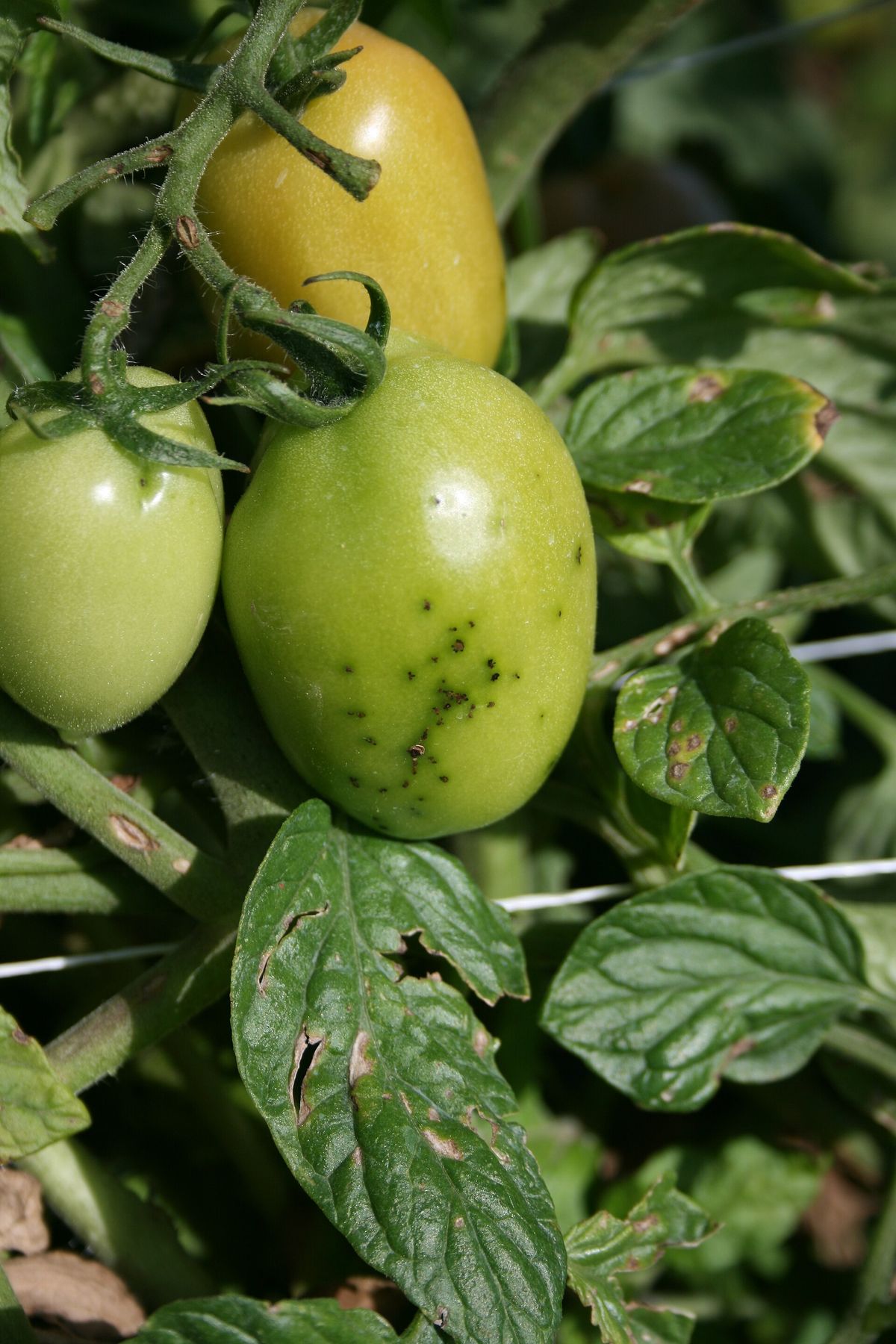
How to identify bacterial speck
A cool-weather bacterium that produces tiny, dark, pinprick-sized specks on tomato leaves and fruit, often surrounded by a thin yellow halo.
Symptoms
- Very small (pinhead-sized) dark brown-to-black specks on leaves, often with a yellow halo
- Specks on green fruit stay superficial, small, and slightly sunken; don't enlarge much as fruit ripens
- Heavily specked leaves can yellow and drop in cool, wet springs
Host crops
Tomato.
How it spreads
Seedborne, spreads by cool rain, overhead irrigation, and handling wet plants.
Favorable conditions
Cool, wet weather (60-75°F); more common in early spring plantings than midsummer heat.
Progression
- Early season onset (Cool, wet spring) — Tiny specks appear on lower/older leaves.
- Peak spread (Extended cool, damp weather) — Specks multiply on leaves and green fruit.
- Tapering (As weather warms) — Disease slows once temperatures rise above the mid-80s°F.
Organic treatment for bacterial speck
- 1. Copper fungicide/bactericide · medium effort
Apply an OMRI-listed fixed copper spray at first sign and repeat every 7-10 days during cool, wet spells.
When: Onset, cool wet weather
- 2. Avoid overhead watering and wet-weather handling · low effort
Switch to drip irrigation and stay out of the bed when leaves are wet.
When: All season
Prevention
- Use certified disease-free seed and transplants.
- Delay transplanting until weather warms if speck was a problem the prior spring.
- Rotate tomato ground for 1-2 years.
Easy to confuse with
Bacterial spot (larger, scabbier lesions), Septoria leaf spot (larger spots with black fruiting specks).